开局执white棋

Giuoco Pianissimo

The 'Very Quiet Game' — White builds a slow, positional setup with d3, c3, and piece maneuvering instead of the sharp c3-d4 center.

体验互动课程

简介

The Giuoco Pianissimo ("Very Quiet Game") is the positional cousin of the sharp Giuoco Piano main line. Instead of the aggressive c3-d4 pawn center, White plays 4. d3 — keeping the position closed and focusing on slow piece improvement. Despite the quiet name, the positions are rich with strategic ideas and the middlegame can become very sharp. This has become one of the most popular openings at all levels in modern chess, favored by top grandmasters like Magnus Carlsen and Fabiano Caruana. White's plan revolves around Re1, c3, Nbd2-f1-g3, and an eventual d4 break at the right moment.

课程内容

8
7
6
5
4
3
2
1
a
b
c
d
e
f
g
h
1. e4

The King's Pawn opening — White claims the center and opens diagonals for the queen and kingside bishop. The most popular first move in chess. Black's main responses: - 1. ..e5 — Open Game, matching White's center - 1. ..c5 — Sicilian Defense, fighting for d4 asymmetrically - 1. ..e6 — French Defense, preparing ..d5 - 1. ..c6 — Caro-Kann, also preparing ..d5

中心控制出子
1
2
3
4
5
6
7
8
h
g
f
e
d
c
b
a
1. ..e5

Black mirrors White's central claim, establishing a symmetrical pawn center. This leads to the Open Games — the oldest and most classical family of openings. The e5 pawn controls d4 and f4, limiting White's expansion options.

中心控制
8
7
6
5
4
3
2
1
a
b
c
d
e
f
g
h
2. Nf3

White develops the knight to its most natural square, attacking the e5 pawn immediately. The knight also controls d4 and prepares kingside castling. This is the most common second move, leading to a vast tree of openings including the Italian, Ruy Lopez, and Scotch.

出子威胁
1
2
3
4
5
6
7
8
h
g
f
e
d
c
b
a
2. ..Nc6

Black defends the e5 pawn with the most natural developing move. The knight on c6 also controls the important d4 and e5 squares. From here White's third move defines the opening: - 3. Bc4 — Italian Game - 3. Bb5 — Ruy Lopez - 3. d4 — Scotch Game - 3. Nc3 — Four Knights / Vienna hybrid

出子中心控制
8
7
6
5
4
3
2
1
a
b
c
d
e
f
g
h
3. Bc4

The bishop develops to c4, aiming at Black's vulnerable f7 square — the weakest point in the starting position since only the king defends it. This is the defining move of the Italian Game. White's alternatives here lead to entirely different openings: - 3. Bb5 — the Ruy Lopez, pressuring the Nc6 defender - 3. d4 — the Scotch Game, immediately challenging the center - 3. Nc3 — the Three/Four Knights, delaying the decision

出子威胁
1
2
3
4
5
6
7
8
h
g
f
e
d
c
b
a
3. ..Bc5

Black develops the bishop to its most active diagonal, mirroring White's pressure on the center. The Giuoco Piano ("Quiet Game") begins — though the name is deceptive, as sharp play often follows. The bishop on c5 eyes the f2 square and supports a future ..d5 break.

出子子力活跃度
8
7
6
5
4
3
2
1
a
b
c
d
e
f
g
h
4. d3

The Giuoco Pianissimo! Instead of the aggressive 4. c3 (preparing an immediate d4), White plays d3 — a more patient, positional approach. The pawn supports the e4 center and opens a path for the c1-bishop. White's alternatives set different tempos: - 4. c3 — the Giuoco Piano main line, preparing an immediate d4 center - 4. O-O — flexible, delaying the central structure - 4. b4 — the Evans Gambit, sacrificing a pawn for rapid development

中心控制兵形
替代走法
c3The Giuoco Piano main line — sharp and theoretical. d3 is quieter and more flexible.
b4The Evans Gambit — romantic and aggressive but risky. d3 is more solid.
1
2
3
4
5
6
7
8
h
g
f
e
d
c
b
a
4. ..Nf6

Black develops the knight to f6, counterattacking the e4 pawn. This is the most natural response — developing a piece, preparing castling, and creating pressure on White's center. Black can also play 4. ..d6 first, but Nf6 is more flexible, keeping options open for different pawn structures.

出子威胁
替代走法
d6Also solid, but Nf6 is more active — it develops a piece and pressures e4 immediately.
8
7
6
5
4
3
2
1
a
b
c
d
e
f
g
h
5. O-O

Castling early is a hallmark of the Pianissimo — White gets the king to safety and connects the rooks before committing to a central plan. The rook on f1 will soon move to e1 to support the e4 pawn. There's no rush to expand — the whole point of the Pianissimo is patient improvement.

王的安全出子
替代走法
Nc3Develops, but blocks the c-pawn. In the Pianissimo, White wants c3 for the pawn, not the knight.
1
2
3
4
5
6
7
8
h
g
f
e
d
c
b
a
5. ..d6

Black solidifies the center by supporting the e5 pawn with the d-pawn. This also opens the diagonal for the c8-bishop to develop. The move order is flexible — Black could also play ...O-O or ..a6 first, but d6 is the most principled, reinforcing the center immediately.

中心控制兵形
8
7
6
5
4
3
2
1
a
b
c
d
e
f
g
h
6. c3

A key positional move — the c3 pawn supports a future d4 advance, which is White's long-term plan. Unlike the Giuoco Piano main line where c3+d4 happens quickly, here White takes time to prepare it thoroughly. The pawn also controls the d4 square and provides a retreat square for the Bc4 via b3-c2 if needed.

中心控制空间
替代走法
Bg5Pins the knight, but c3 is more flexible — it supports the whole central plan.
1
2
3
4
5
6
7
8
h
g
f
e
d
c
b
a
6. ..O-O

Black castles kingside, completing basic development. Both kings are now safe, and the real strategic battle begins. The position is balanced but rich in ideas — White will maneuver pieces toward the kingside while preparing d4, and Black will seek counterplay with ..a6, ..Ba7, and potentially ..d5.

王的安全
8
7
6
5
4
3
2
1
a
b
c
d
e
f
g
h
7. Re1

The rook moves to the half-open e-file, adding support to the e4 pawn. This is a standard move in nearly every Italian Game setup — the rook defends e4 and eyes the potentially open e-file. With the rook on e1, the d4 push becomes better supported since e4 won't hang after central exchanges.

子力活跃度预防性着法
替代走法
Nbd2Also good, but Re1 first is more flexible — the knight can go to d2 or a3 later.
1
2
3
4
5
6
7
8
h
g
f
e
d
c
b
a
7. ..a6

A prophylactic move — Black prevents Bb5 or b4-b5 ideas and prepares to retreat the bishop to a7 if needed. The pawn on a6 also supports a future ..b5 expansion on the queenside. This is a typical waiting move in the Pianissimo, improving the position before committing to a plan.

预防性着法空间
8
7
6
5
4
3
2
1
a
b
c
d
e
f
g
h
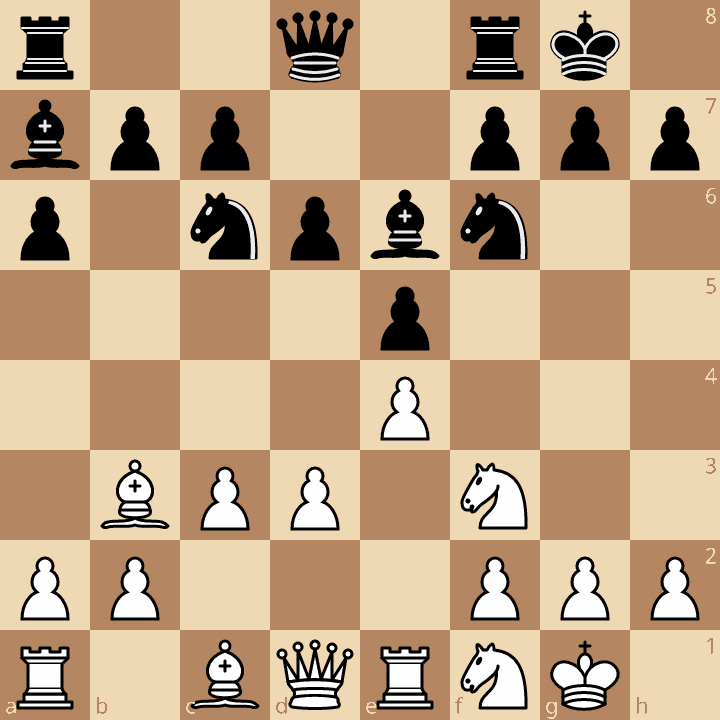
8. Bb3

The bishop retreats to b3, maintaining the a2-g8 diagonal while avoiding a future ..Na5 hitting the bishop on c4. From b3, the bishop can later reroute to c2, pointing at the kingside. This is the standard maneuver in the Pianissimo — Bc4-b3-c2 keeps the bishop active while clearing space for the knight maneuvers.

子力活跃度预防性着法
替代走法
a4Grabs queenside space but weakens b4 and b3. Bb3 is the standard retreat.
1
2
3
4
5
6
7
8
h
g
f
e
d
c
b
a
8. ..Ba7

Black tucks the bishop to a7, where it's safe from d4-d5 discoveries and still eyes the f2 square along the diagonal. The bishop is slightly passive here but very secure. From a7 the bishop keeps long-term pressure on the a7-g1 diagonal, which can become relevant if White ever plays d4 and the center opens.

子力活跃度预防性着法
8
7
6
5
4
3
2
1
a
b
c
d
e
f
g
h
9. Nbd2

The knight develops to d2 — not its final destination but a key transit square. From d2, the knight will reroute to f1 and then g3, targeting the kingside. This Nbd2-f1-g3 maneuver is the signature plan of the Pianissimo. The knight on d2 also supports e4 and keeps the c-file clear for the queen.

出子子力活跃度
替代走法
h3Useful prophylaxis against ...Bg4, but Nbd2 is more constructive — it starts the knight maneuver immediately.
1
2
3
4
5
6
7
8
h
g
f
e
d
c
b
a
9. ..Be6

Black develops the last minor piece, connecting the rooks. The bishop on e6 eyes the b3-bishop and controls key central squares like d5. If White ever trades bishops with Bxe6, Black recaptures with ..fxe6, opening the f-file for the rook — a double-edged exchange.

出子子力活跃度
8
7
6
5
4
3
2
1
a
b
c
d
e
f
g
h
10. Nf1

The knight begins its journey to g3 — the signature maneuver of the Pianissimo! From g3 the knight controls f5 and h5, supports a kingside attack, and can jump to f5 at the right moment. This patient piece improvement is what makes the Pianissimo unique. White builds up slowly, improving every piece before launching any action.

子力活跃度预防性着法
替代走法
d4Premature — White hasn't finished maneuvering. Nf1-g3 first, then d4 when fully prepared.

要点总结

  • 4.d3 is the quiet alternative to 4.c3 — patient over aggressive
  • The Nbd2-f1-g3 knight maneuver is the signature plan
  • Bc4-b3 (later c2) keeps the bishop active while avoiding ...Na5
  • Re1 supports e4 and prepares the eventual d4 break
  • White builds up slowly — don't rush d4 before pieces are optimally placed

总结

You've learned the Giuoco Pianissimo — White's patient, positional approach in the Italian Game. Instead of the sharp c3-d4 center, White plays d3 and focuses on slow piece improvement: Bc4-b3-c2, Nbd2-f1-g3, and Re1. The d4 break comes later, when fully prepared.

准备好练习了吗?

相关课程