
KI Fianchetto-Variante
Weiß spiegelt die Fianchetto-Strategie von Schwarz, was zu strategischen Kämpfen führt, in denen beide Läufer das Zentrum von den Flanken aus ins Visier nehmen.
Interaktive Lektion startenEinleitung
Lektionsinhalt
Die Damenbauern-Eröffnung — Weiß beansprucht das Zentrum mit dem d-Bauern, der sofort von der Dame gedeckt ist. Dies führt tendenziell zu strategischeren, geschlosseneren Stellungen im Vergleich zu 1. e4. Hauptantworten von Schwarz: - 1. ..d5 — Damengambit und Slawische Varianten - 1. ..Nf6 — Indische Verteidigungen (Königsindisch, Nimzowitsch-Indisch usw.) - 1. ..f5 — Holländische Verteidigung
Schwarz entwickelt den Springer und kontrolliert e4, wodurch Weiß das ideale e4+d4-Zentrum nicht leicht aufbauen kann. Dies ist der Zugang zu allen Indischen Verteidigungssystemen. Schwarz verzögert die Festlegung der Bauernstruktur und behält Flexibilität für die Wahl zwischen Königsindisch, Nimzowitsch-Indisch, Damenindisch und mehr.
Alternative Züge
Weiß verstärkt die Kontrolle über d5 und gewinnt mehr Raum. In Kombination mit d4 dominieren die zwei Bauern das Zentrum. Die Antwort von Schwarz bestimmt das Eröffnungssystem: - 2. ..e6 — Nimzowitsch-Indisch (nach 3. Nc3 Bb4) oder Damenindisch - 2. ..g6 — Königsindisch oder Grünfeld - 2. ..c5 — Benoni-Strukturen - 2. ..e5 — Budapester Gambit
Schwarz bereitet das Fianchetto des Läufers auf g7 vor, was zur Königsindischen Verteidigung (..d6, ..Bg7) oder zur Grünfeld-Verteidigung (..d5, ..Bg7) führt. Beide sind hypermodern — Schwarz erlaubt Weiß ein großes Zentrum und greift es dann an. Die Wahl zwischen Königsindisch und Grünfeld fällt typischerweise im 3. oder 4. Zug.
Alternative Züge
Weiß entwickelt sich natürlich und hält Optionen offen. Dieser flexible Zug kann zur Fianchetto-Variante (g3, Bg2) führen oder in andere Systeme transponieren. Die Alternativen von Weiß bestimmen den Charakter der Partie: - 3. Nc3 — Hauptlinie der Königsindischen, erlaubt die Klassische und Sämisch - 3. f3 — Sämisch-Aufbau direkt - 3. g3 — sofortige Fianchetto-Festlegung
Der Läufer nimmt seine mächtige Diagonale ein und kontrolliert die lange Diagonale a1-h8. Dies ist die Signatur-Figur der Königsindischen — der Bg7 ist ein schlafender Drache, der mächtig wird, wenn das Zentrum sich öffnet. Der Läufer unterstützt die Durchbrüche ..e5 und ..d5 und übt gleichzeitig latenten Druck auf den Damenflügel von Weiß aus.
Alternative Züge
Die Fianchetto-Variante! Weiß spiegelt den Aufbau von Schwarz und bereitet Bg2 vor. Dies ist der positionellste Ansatz gegen die Königsindische — Weiß vermeidet die scharfen Bauernvorstöße der Klassischen (e4+d5) und Sämisch (f3). Die Doppelfianchetto-Struktur führt zu einem strategischen Kampf, in dem beide Läufer von den Flanken aus operieren. Karpow und Kramnik waren Meister dieses Systems.
Schwarz rochiert früh und sichert die Königssicherheit vor der Festlegung auf eine zentrale Bauernstruktur. Dies ist flexibler als sofortiges ..d6 — Schwarz behält Optionen wie ..d5 (Grünfeld-Stil) oder ..c5 (Benoni-Stil). Rochieren verbindet auch die Türme und bereitet ..Re8 vor, um den kommenden Durchbruch ..e5 zu unterstützen.
Alternative Züge
Weiß vervollständigt das Fianchetto. Der Bg2 kontrolliert die lange Diagonale h1-a8, übt Druck auf d5 aus und unterstützt das Bauernzentrum c4/d4. Zusammen mit Nf3 ist Weiß bereit zu rochieren. Der Bg2 ist die Schlüsselfigur von Weiß in diesem System — er unterstützt das Zentrum, verteidigt den König und kann im Endspiel sehr mächtig werden.
Schwarz legt sich auf die Königsindische Struktur fest und unterstützt ein zukünftiges ..e5. Der Bauer d6 kontrolliert e5 und c5 und bildet das Rückgrat der schwarzen Stellung. Dieser Zug unterscheidet Königsindisch von Grünfeld (wo Schwarz ..d5 spielt). Der Plan von Schwarz ist, mit ..Nbd7, ..e5 aufzubauen und dann Gegenspiel mit ..f5 oder ..c6 + ..d5 zu suchen.
Alternative Züge
Weiß rochiert und vervollständigt die Königsflügel-Entwicklung. Beide Könige sind nun sicher hinter ihren Fianchetto-Läufern. Die Partie geht von der Eröffnung ins strategische Mittelspiel über. Weiß wird nun Nc3 spielen, das Zentrum festigen und e4 vorbereiten, um mehr Raum zu beanspruchen.
Schwarz entwickelt den Springer nach d7 und unterstützt den Vorstoß ..e5. Der Springer auf d7 ist flexibel — er kann nach c5 gehen (Druck auf e4), e8-f6 (Unterstützung eines Königsflügel-Angriffs) oder b6 (Angriff auf c4). Dies ist der Standard-Entwicklungszug im KI-Fianchetto, bevorzugt gegenüber ..Nc6, das den c-Bauern blockieren würde.
Alternative Züge
Weiß entwickelt die letzte Leichtfigur, unterstützt e4 und verstärkt d5. Der Springer auf c3 ist das Rückgrat der weißen Zentrumskontrolle. Nun ist Weiß bereit, e4 zu spielen und ein starkes Bauernduo d4+e4 zu errichten, das bedeutenden zentralen Raum beansprucht.
Der entscheidende Zentrumsvorstoß! Schwarz erhebt Anspruch auf das Zentrum und aktiviert den Bg7, der nun eine freie Diagonale hat. Der Bauer auf e5 schränkt auch den Nf3 ein und kämpft um die Kontrolle von d4. Dies ist der definierende Zug der Klassischen Königsindischen — Schwarz ist bereit, mit ..Re8, ..c6 und schließlich dem thematischen Durchbruch ..f5 oder ..d5 fortzufahren.
Alternative Züge
Weiß errichtet das große Bauernzentrum d4+e4, beansprucht Raum und kontrolliert Schlüsselfelder im Zentrum. Das Zentrum steht nun unter Spannung — d4 gegen e5. Der e4-Bauer gibt dem Bg2 auch mehr Reichweite entlang der Diagonale und unterstützt einen zukünftigen d5-Vorstoß für noch mehr Raum.
Ein vielseitiger prophylaktischer Zug. Der c6-Bauer verhindert Nd5 von Weiß, unterstützt einen zukünftigen Durchbruch ..d5 und bietet dem Springer von d7 ein Rückzugsfeld über c5-e6. Dies ist das Markenzeichen des Klassischen Fianchetto — Schwarz baut zuerst eine solide Struktur auf und sucht dann Gegenspiel. Die Stellung ist reich an strategischen Ideen für beide Seiten.
Alternative Züge
Ein nützlicher prophylaktischer Zug — Weiß verhindert ..Bg4 oder ..Ng4 und bereitet Be3 ungestört vor. Der Bauer auf h3 unterstützt auch einen zukünftigen g4-Vorstoß, falls Weiß am Königsflügel spielen möchte. Dieser ruhige Zug ist typisch für den strategischen Charakter der Fianchetto-Variante — beide Seiten verbessern ihre Stellungen allmählich.
Der Turm zieht auf die halboffene e-Linie und unterstützt den e5-Bauern zusätzlich, bereit für taktische Möglichkeiten bei Öffnung des Zentrums. Der Turm nimmt auch den e4-Bauern ins Visier, der zum Ziel werden könnte. Von hier hat Schwarz mehrere Pläne: ..Nf8-e6, ..a5 für Damenflügelspiel oder den thematischen Durchbruch ..f5 zum Angriff auf das weiße Zentrum.
Alternative Züge
Wichtigste Erkenntnisse
- Das Fianchetto (g3, Bg2) ist das positionellste System von Weiß in der Königsindischen
- ...Nbd7 + ...e5 von Schwarz baut eine solide zentrale Präsenz auf
- ...c6 ist entscheidend — verhindert Nd5 und bereitet den Durchbruch ...d5 vor
- Der Bg7 wird mächtig, sobald das Zentrum sich öffnet
- Beide Seiten manövrieren um Vorteil — Schwarz zielt auf die Durchbrüche ...f5 oder ...d5
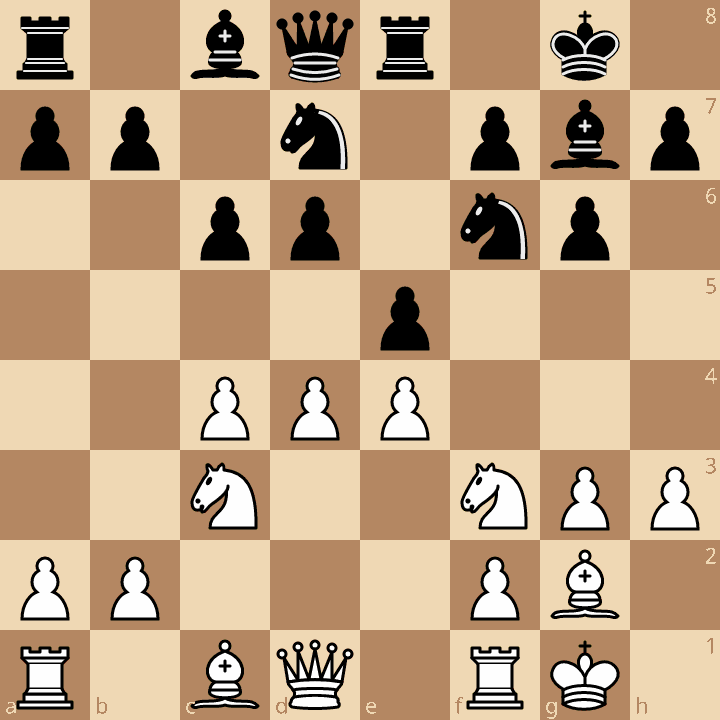
Jetzt selbst durchspielen
Geh jeden Zug am echten Brett durch, probier die falschen aus – und frag Knighty, warum sie scheitern.
Zusammenfassung
Bereit zum Üben?
Lektion mitnehmen
Kostenloses Konto erforderlichMit allen Varianten — öffnet in Lichess & ChessBase