
Gambito Rousseau
Un gambito agudo donde las negras juegan 3...f5 en la Italiana, sacrificando un peón a cambio de líneas abiertas y contrajuego rápido.
Probar lección interactivaIntroducción
Contenido de la lección
La apertura del Peón Rey — las blancas reclaman el centro y abren diagonales para la dama y el alfil de rey. La primera jugada más popular del ajedrez. Respuestas principales de las negras: - 1. ..e5 — Juego Abierto, igualando el centro - 1. ..c5 — Defensa Siciliana, luchando por d4 asimétricamente - 1. ..e6 — Defensa Francesa, preparando ..d5 - 1. ..c6 — Caro-Kann, también preparando ..d5
Las negras reflejan la reclamación central de las blancas, estableciendo un centro de peones simétrico. Esto conduce a los Juegos Abiertos — la familia de aperturas más antigua y clásica. El peón e5 controla d4 y f4, limitando las opciones de expansión blanca.
Las blancas desarrollan el caballo a su casilla más natural, atacando el peón e5 inmediatamente. El caballo también controla d4 y prepara el enroque corto. Esta es la segunda jugada más común, que conduce a un vasto árbol de aperturas incluyendo la Italiana, la Ruy López y la Escocesa.
Las negras defienden el peón e5 con la jugada de desarrollo más natural. El caballo en c6 también controla las importantes casillas d4 y e5. Desde aquí, la tercera jugada de las blancas define la apertura: - 3. Bc4 — Apertura Italiana - 3. Bb5 — Ruy López - 3. d4 — Escocesa - 3. Nc3 — Cuatro Caballos / híbrido Vienesa
El alfil se desarrolla a c4, apuntando a la vulnerable casilla f7 — el punto más débil de la posición inicial ya que solo el rey la defiende. Esta es la jugada que define la Apertura Italiana. Las alternativas de las blancas conducen a aperturas completamente diferentes: - 3. Bb5 — la Ruy López, presionando al defensor Nc6 - 3. d4 — la Escocesa, desafiando el centro inmediatamente - 3. Nc3 — los Tres/Cuatro Caballos, retrasando la decisión
¡El Gambito Rousseau! Las negras golpean el peón e4 con el peón f, creando tensión central inmediata. Es una alternativa poco común y agresiva frente al estándar 3. ..Bc5 o 3. ..Nf6. El gambito abre la columna f para la torre negra y desafía el centro blanco antes de que pueda consolidarse. El costo es debilitar la posición del rey, pero las negras apuestan al juego activo de piezas como compensación.
Jugadas alternativas
La respuesta más fuerte de las blancas — abriendo el centro inmediatamente mientras el flanco de rey negro está debilitado. El avance d4 aprovecha que el peón f negro se ha ido, creando presión táctica. Alternativas de las blancas: - 4. exf5 — aceptando el gambito, pero las negras se desarrollan rápido con ..d5 - 4. d3 — tranquilo, pero permite juego cómodo tras ..fxe4 5. dxe4 Nf6
Las negras capturan el peón e4, ganando material y despejando la columna f. El peón e4 era la columna vertebral del centro blanco — eliminarlo crea desequilibrios que las negras pueden aprovechar. Ahora la posición se vuelve aguda: las blancas tienen más espacio central con el peón d4, pero las negras tienen un peón extra y la columna f abierta como recurso ofensivo futuro.
Jugadas alternativas
Las blancas capturan el peón e5 con el caballo, centralizándose poderosamente. El caballo en e5 es una bestia — ataca c6, d7 y f7, creando múltiples amenazas tácticas. Las blancas sacrifican temporalmente el apoyo del peón d4 para colocar el caballo en este puesto dominante, confiando en que la presión táctica compensará de sobra.
¡Las negras contraatacan en el centro! El avance d5 ataca el Bc4, ganando un tempo mientras establece un fuerte peón central. Esta es la jugada clave para que el gambito funcione. Las negras ahora tienen un peón de más con presencia central, aunque el caballo en e5 y la ventaja de desarrollo de las blancas proporcionan compensación.
Jugadas alternativas
Las blancas retiran el alfil a b5, clavando el Nc6 contra el rey. Esta es la continuación más crítica — la clavada crea presión táctica que limita la coordinación de las negras. Las blancas amenazan cambiar en c6 y dañar la estructura de peones negra, lo que crearía debilidades a largo plazo.
La dama se desarrolla a d6, defendiendo el caballo en c6 y preparándose para centralizar. La dama también vigila el flanco de rey, manteniendo presión indirecta sobre e5. Es una jugada polivalente: protege el caballo, prepara el desarrollo ..Nf6 y mantiene la dama activa en el centro donde puede influir en ambos flancos.
Jugadas alternativas
Las blancas enrocan, llevando al rey a seguridad y conectando las torres. Con el centro abierto, sacar al rey de la columna e es esencial. La torre blanca ahora ocupa la columna f semiabierta (irónico — ¡la columna que las negras abrieron!) y la ventaja de desarrollo de las blancas se vuelve más concreta.
Las negras desarrollan el caballo a f6, una jugada de desarrollo clave que ataca d5 indirectamente y prepara el enroque corto. El caballo también apoya el peón e4. Con esta jugada, las negras tienen dos piezas menores desarrolladas y se acercan a estar listas para enrocar. La posición sigue siendo compleja con oportunidades para ambos bandos.
Las blancas golpean el peón d5 negro, socavando el centro. El avance c4 desafía el control central negro y abre líneas para las piezas blancas en el flanco de dama. Combinado con el caballo en e5 y la clavada del Bb5, esto crea una presión significativa que las negras deben manejar con cuidado.
Las negras desafían directamente al Bb5, forzando una decisión. Las blancas deben retirarse o cambiar en c6. Es la respuesta más lógica — las negras quieren resolver la clavada antes de seguir desarrollándose. Si las blancas cambian, las negras obtienen la pareja de alfiles y la columna b abierta, a pesar de los peones doblados en c.
Jugadas alternativas
Las blancas cambian el alfil por el caballo, doblando los peones c de las negras. Aunque esto entrega la pareja de alfiles, la estructura dañada en c6 y c7 crea debilidades duraderas. El jaque además obliga a las negras a recapturar de una forma específica, manteniendo la ventaja estructural blanca.
La recaptura hacia el centro es forzada — la única recaptura legal. Las negras ahora tienen peones doblados en c pero ganan la columna b semiabierta para la torre. La estructura de peones está dañada pero las negras tienen compensación: la pareja de alfiles, la columna b abierta y el peón e4 extra. La posición ofrece contrajuego dinámico.
Las blancas desarrollan el caballo a c3, apuntando al peón e4 y al peón d5. El caballo se une al ataque contra el centro negro, aumentando la presión. Con ambos caballos desarrollados y el rey seguro, las blancas tienen una clara ventaja de desarrollo. El Ne5 y Nc3 juntos dominan el centro.
Las negras desarrollan el alfil a e7, preparando el enroque y completando el desarrollo del flanco de rey. El alfil está colocado modestamente pero es funcional — apoya el enroque y mantiene la posición sólida. Llevar al rey a seguridad es ahora la máxima prioridad de las negras. Una vez enrocadas, pueden activar las torres y empezar a usar las columnas abiertas.
Jugadas alternativas
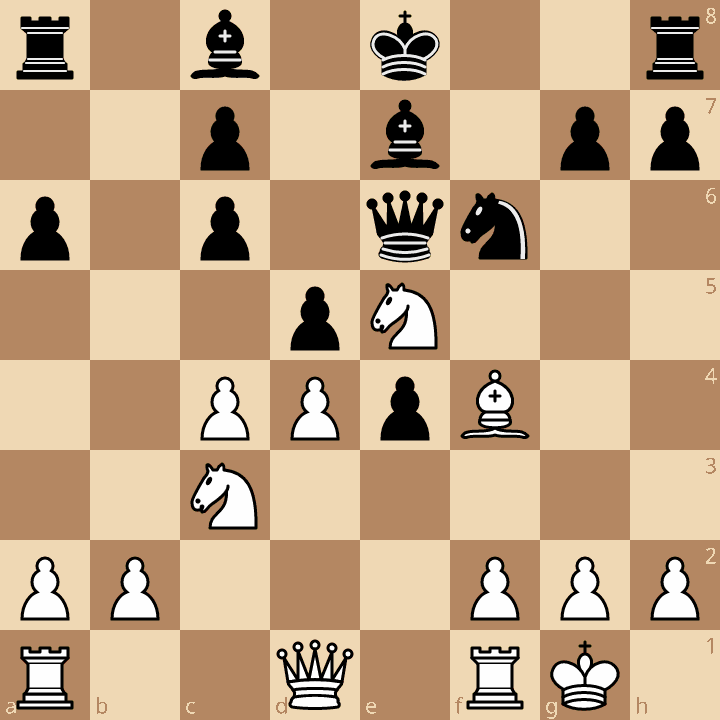
Las blancas desarrollan la última pieza menor, apuntando a la dama negra en d6. El alfil en f4 es muy activo — presiona d6, controla la diagonal e5-c1 y apoya al caballo central. Esto obliga a la dama negra a moverse, ganando otro tempo para el ya superior desarrollo de las blancas.
La dama se retira a e6, manteniendo presencia central mientras permanece conectada a la defensa. Desde e6, la dama vigila el flanco de rey y mantiene d5 protegido. Las negras están listas para enrocar en la siguiente jugada. A pesar de estar bajo presión, la posición sigue rica en posibilidades — el peón e4 y la pareja de alfiles ofrecen compensación a largo plazo.
Puntos clave
- 3...f5 desafía inmediatamente el centro e4 de las blancas y abre la columna f
- 4...fxe4 seguido de 5...d5 es la secuencia clave para activar las piezas negras
- La dama en d6 cumple múltiples funciones como defensora y atacante
- Acepta los peones doblados en c a cambio de la pareja de alfiles y la columna b abierta
- Enroca rápido — el rey negro es vulnerable en el centro
Ahora juégalo tú
Recorre cada jugada en un tablero real, prueba las malas y pregúntale a Knighty por qué fallan.
Resumen
¿Listo para practicar?
Llévate esta lección
Requiere una cuenta gratuitaCon todas las variantes: se abre en Lichess y ChessBase