
Caro-Kann - Attaque des Deux Cavaliers
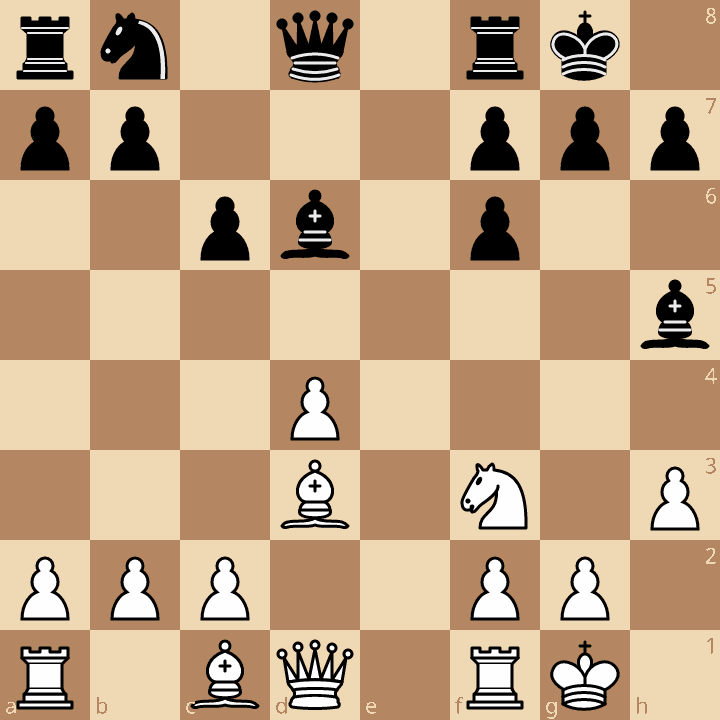
Les Blancs développent les deux Cavaliers agressivement avant d'échanger en f6, créant un déséquilibre structurel où les pions doublés font face à la paire de Fous.
Essayer la leçon interactiveIntroduction
Contenu de la leçon
L'ouverture du pion Roi — les Blancs occupent le centre et ouvrent des diagonales pour la Dame et le Fou du flanc Roi. Le premier coup le plus populaire aux échecs. Réponses principales des Noirs : - 1. ..e5 — Partie ouverte, répliquant au centre des Blancs - 1. ..c5 — Défense sicilienne, luttant pour d4 de manière asymétrique - 1. ..e6 — Défense française, préparant ..d5 - 1. ..c6 — Caro-Kann, préparant aussi ..d5
La défense Caro-Kann — comme la française, les Noirs préparent ..d5, mais via c6 au lieu de e6. L'avantage clé : le Fou de cases blanches reste libre. La Caro-Kann est considérée comme l'une des défenses les plus solides contre 1. e4, favorisée par les joueurs qui veulent une structure fiable et peu risquée.
Les Blancs développent le Cavalier vers le centre au lieu du classique 2. d4. C'est la première étape du système des Deux Cavaliers — les Blancs visent à développer les deux Cavaliers rapidement et ne décident de la structure de pions qu'ensuite. Les alternatives des Blancs mènent aux lignes principales de la Caro-Kann : - 2. d4 — l'approche classique, permettant 2. ..d5 3. Nc3/Nd2/e5/exd5 - 2. d3 — le dispositif Attaque Roi-Indien
Coups alternatifs
Les Noirs exécutent le plan préparé par ..c6, défiant le pion e4. Le pion c6 soutient d5 tout en laissant le Fou de cases blanches libre de se développer — l'avantage emblématique de la Caro-Kann par rapport à la française.
L'Attaque des Deux Cavaliers ! Les Blancs développent le second Cavalier, renforçant la pression sur la défense de d5 par e4. Les deux Cavaliers visent désormais le centre, et les Blancs sont prêts à reprendre en e4 avec le Cavalier si les Noirs échangent. C'est plus agressif que 3. d4, qui transposerait dans les lignes classiques de la Caro-Kann. Le dispositif des Deux Cavaliers vise une structure favorable après un échange précoce.
Coups alternatifs
Les Noirs capturent le pion e4, la réponse la plus principielle. Prendre maintenant est pratiquement forcé — maintenir la tension avec ..Nf6 permet aux Blancs de la résoudre favorablement, et ..Bg4 est l'alternative principale menant à la tranchante Variante Mindeno. Après cette capture, les Blancs obtiennent la puissante reprise du Cavalier en e4.
Coups alternatifs
La reprise avec le Cavalier le place sur une case centrale dominante. Le Cavalier en e4 contrôle des cases clés (d6, f6, c5, g5) et crée une pression tactique immédiate — notamment la menace de Nd6+ dans certaines lignes. C'est toute l'idée des Blancs derrière le dispositif des Deux Cavaliers — un Cavalier puissamment centralisé que les Noirs doivent gérer.
Les Noirs développent le Cavalier et défient le puissant Ne4. C'est la réponse la plus naturelle — développer une pièce tout en forçant les Blancs à décider du sort du Cavalier. Alternatives des Noirs : - 4. ..Bf5 — développe le Fou en premier, mais 5. Ng3 Bg6 6. h4 donne aux Blancs l'initiative au flanc Roi - 4. ..Bg4 — cloue le Nf3, mais 5. h3 donne la paire de Fous aux Blancs
Les Blancs échangent le Cavalier centralisé, doublant les pions f des Noirs. C'est l'idée stratégique déterminante de la ligne des Deux Cavaliers — les Blancs échangent une pièce bien placée contre un avantage structurel durable. Les pions f doublés affaiblissent le flanc Roi des Noirs et rendent la création d'un pion passé plus difficile. En contrepartie, les Noirs obtiennent la paire de Fous et une colonne e ouverte.
Coups alternatifs
Les Noirs reprennent vers le centre, le choix nettement préféré. Prendre avec le pion e ouvre la colonne e pour la Tour et garde la structure de pions aussi compacte que possible. Les pions f doublés contrôlent e5 et g5, ce qui n'est pas si mal. L'alternative 5. ..gxf6 est bien pire — elle détruit le flanc Roi et donne aux Blancs un avantage net après 6. d4.
Maintenant les Blancs occupent le centre avec d4, établissant une forte présence de pions. Le pion d4 contrôle c5 et e5, restreignant les pièces des Noirs. Les Blancs ont un centre classique avec d'excellentes perspectives de développement. La combinaison d'une structure de pions propre et du contrôle central donne aux Blancs un jeu confortable — le fruit stratégique de l'échange des Deux Cavaliers.
Coups alternatifs
Les Noirs développent le Fou en d6, la case la plus active disponible. Depuis d6, le Fou contrôle les diagonales a3-f8 et b8-h2, et soutient une future rupture ..f5 pour libérer les pions doublés. C'est la meilleure pièce des Noirs — la paire de Fous est la principale compensation pour les dégâts structurels.
Les Blancs développent le Fou en d3, visant le flanc Roi — en particulier la case h7, qui pourrait devenir vulnérable après le roque des Noirs. Le Fou en d3 soutient aussi une future case e4 si les Blancs veulent réorienter des pièces. Les deux Fous sont maintenant développés, et les Blancs sont prêts à roquer.
Coups alternatifs
Les Noirs roquent au flanc Roi, mettant le Roi en sécurité et connectant les Tours. La Tour en f8 glissera naturellement en e8, utilisant la colonne e ouverte — la principale source de contre-jeu des Noirs dans cette structure.
Les Blancs roquent, complétant le développement. Les deux camps ont roqué et le milieu de jeu commence. Le plan des Blancs tourne autour de l'exploitation de la structure de pions plus propre — cibler les pions f doublés et maintenir le contrôle central. Parmi les idées typiques : Re1 pour contester la colonne e, c3 pour solidifier le centre, et Be3 ou Bf4 pour développer la dernière pièce mineure.
Les Noirs activent le Fou de cases blanches — la pièce emblématique de la Caro-Kann. Contrairement à la défense française, ce Fou n'a jamais été bloqué par ..e6 et se développe agressivement, clouant le Nf3 contre la Dame. C'est la pièce la plus efficace des Noirs et compense significativement les pions doublés.
Mise au défi du Fou — il doit choisir entre capturer en f3 ou battre en retraite. Ce coup utile crée aussi du luft pour le Roi et prive définitivement les pièces noires de la case g4. Après la retraite du Fou en h5, les Blancs peuvent enchaîner avec g4 pour gagner davantage d'espace au flanc Roi et potentiellement piéger le Fou.
Coups alternatifs
Le Fou se retire en h5, maintenant la pression sur le Cavalier f3. Il reste actif depuis cette case mais est légèrement vulnérable — les Blancs peuvent jouer g4 plus tard pour le repousser davantage en g6, où il deviendrait passif. Le plan des Noirs est d'utiliser la colonne e ouverte (Re8), développer le Cavalier (Nd7), et chercher du contre-jeu avant que le Fou ne soit mis hors jeu.
Points clés
- 2.Nc3 et 3.Nf3 exercent une pression immédiate sur d5 — le dispositif des Deux Cavaliers
- Nxf6+ double les pions des Noirs, créant un avantage structurel durable
- Les Noirs reprennent avec ...exf6 (pas ...gxf6) pour garder la structure intacte
- Compensation des Noirs : la paire de Fous et la colonne e ouverte pour le contre-jeu
- Les Blancs exploitent la structure de pions ; les Noirs activent les Fous
À toi de la jouer
Parcours chaque coup sur un vrai échiquier, tente les mauvais, et demande à Knighty pourquoi ils échouent.
Résumé
Prêt à pratiquer ?
Emporter cette leçon
Compte gratuit requisAvec toutes les variantes — s'ouvre dans Lichess et ChessBase