
Jeu du Centre
Les blancs sacrifient un temps en reprenant avec la dame pour ouvrir la position tôt et viser un développement rapide.
Essayer la leçon interactiveIntroduction
Contenu de la leçon
L'ouverture du pion roi — les blancs revendiquent le centre et ouvrent les diagonales pour la dame et le fou de roi. Le premier coup le plus populaire aux échecs. Réponses principales des noirs : - 1. ..e5 — Jeu Ouvert, imitant le centre blanc - 1. ..c5 — Défense Sicilienne, luttant pour d4 de façon asymétrique - 1. ..e6 — Défense Française, préparant ..d5 - 1. ..c6 — Caro-Kann, préparant également ..d5
Les noirs imitent la revendication centrale des blancs, établissant un centre de pions symétrique. Cela mène aux Jeux Ouverts — la famille d'ouvertures la plus ancienne et classique. Le pion e5 contrôle d4 et f4, limitant les options d'expansion des blancs.
Le Jeu du Centre commence ! Les blancs défient immédiatement le pion e5 des noirs en frappant au centre avec d4. C'est plus direct que 2. Nf3 — les blancs veulent ouvrir la position tout de suite. Après 2. ..exd4, les blancs reprendront avec la dame plutôt qu'avec un cavalier, ce qui est la caractéristique fondamentale du Jeu du Centre.
Coups alternatifs
Les noirs capturent le pion d4 — la réponse la plus naturelle et la meilleure. Décliner avec 2. ..d6 donne aux blancs un confortable avantage d'espace après 3. Nc3. Les blancs font maintenant face à un choix décisif : reprendre avec la dame (Jeu du Centre) ou avec le cavalier (Partie Écossaise).
Coups alternatifs
Le coup emblématique du Jeu du Centre — les blancs reprennent avec la dame, la plaçant activement au centre. La dame contrôle d4, d5, a4, h4 et e5 depuis cette position. L'inconvénient est évident : développer la dame tôt enfreint un principe classique, et les noirs gagneront un temps en l'attaquant avec ..Nc6. Mais les blancs comptent compenser par un développement rapide des pièces.
Coups alternatifs
Les noirs se développent avec gain de tempo, attaquant la dame et la forçant à bouger à nouveau. C'est la raison principale pour laquelle le Jeu du Centre est considéré comme légèrement douteux au plus haut niveau — les blancs perdent du temps. Le cavalier en c6 se développe naturellement, défend e5 (si nécessaire plus tard) et contrôle d4.
L'Attaque Paulsen — la dame se retire en e3, où elle reste active et flexible. Depuis e3, la dame soutient à la fois e4 et une future attaque sur l'aile roi, tout en laissant la colonne d ouverte pour une tour. Alternatives des blancs : - 4. Qa4 — clouage le long de la diagonale a4-e8, légèrement préféré par les moteurs - 4. Qd1 — trop passif, gaspille toute l'idée - 4. Qc4 — jouable aussi mais moins harmonieux
Coups alternatifs
Les noirs poursuivent leur développement rapide, attaquant le pion e4 et préparant le petit roque. Le cavalier en f6 est la meilleure pièce des noirs — il contrôle d5, e4 et g4. Cette position est la Variante Berger du Jeu du Centre, une tabiya bien connue.
Les blancs défendent le pion e4 tout en développant le cavalier sur sa meilleure case. Nc3 contrôle aussi d5 et prépare un développement rapide. Avec les deux cavaliers développés, les blancs sont prêts à sortir les fous et à roquer — l'essentiel est de rattraper le retard de développement après l'excursion précoce de la dame.
Coups alternatifs
Les noirs clouent le Nc3 au roi en e1 — un clouage absolu le long de la diagonale b4-c3-e1. Le cavalier ne peut absolument pas bouger, ce qui signifie que e4 n'est défendu que par la dame. C'est un motif typique de style Nimzo-Indien : le fou exerce une pression depuis b4 et les blancs doivent répondre au clouage avant de compléter leur développement.
Les blancs brisent le clouage avec un coup de développement naturel. Le fou en d2 défend c3 et connecte l'aile dame, préparant O-O-O. C'est le choix le plus pratique. La position se dirige vers un roque opposé — la marque de fabrique du Jeu du Centre — où les deux camps attaqueront le roi adverse.
Coups alternatifs
Les noirs roquent pour se mettre en sécurité — un coup naturel et fort. Le roi est à l'abri en g8, et la tour sera bientôt active sur la colonne e, visant le pion e4 des blancs. Les noirs ont complété davantage de développement que les blancs à ce stade, mais les blancs vont rattraper leur retard avec le roque à l'aile dame.
Roque à l'aile dame ! C'est l'idée clé du Jeu du Centre — le roque opposé crée un jeu dynamique et offensif. Les deux rois sont sur des ailes différentes, donc les poussées de pions ne fragilisent pas votre propre roi. La tour atterrit directement en d1, surveillant la colonne d ouverte. Les blancs sont maintenant prêts à développer les pièces restantes de manière agressive.
Coups alternatifs
Les noirs placent la tour sur la colonne e semi-ouverte, créant une pression directe contre e4. La tour vise aussi la dame en e3 en enfilade, ce qui pourrait devenir gênant. C'est une idée clé de défense et de contre-attaque — les noirs exploitent la colonne ouverte avant que les blancs ne puissent organiser pleinement leur attaque.
Le fou se développe sur sa diagonale la plus active, visant f7 — le point faible classique dans la position des noirs. Combiné avec la dame en e3 et la tour en d1, les blancs construisent une formation d'attaque redoutable. Les pièces blanches se coordonnent désormais rapidement. Le fou en c4 soutient aussi une future percée Ng5.
Coups alternatifs
Les noirs consolident avec ..d6, ouvrant la diagonale pour le fou c8 et renforçant le centre. Le pion en d6 empêche aussi toute astuce Nc3-d5. Les noirs sont bien développés et solides, mais doivent rester vigilants face au potentiel d'attaque des blancs sur l'aile roi.
La dernière pièce mineure entre en jeu — les blancs ont maintenant achevé leur développement complet. Le cavalier en f3 contrôle e5 et g5, deux cases d'attaque importantes. La position des blancs est harmonieuse : les pièces visent l'aile roi, la tour contrôle la colonne d, et la dame soutient l'ensemble depuis e3.
Les noirs développent leur dernière pièce mineure, défiant le puissant Bc4. L'échange des fous allégerait le fardeau défensif des noirs en éliminant une des pièces d'attaque des blancs. Le fou en e6 surveille aussi le pion a2 et aide à contrôler la case d5 — une décision sensée et pratique.
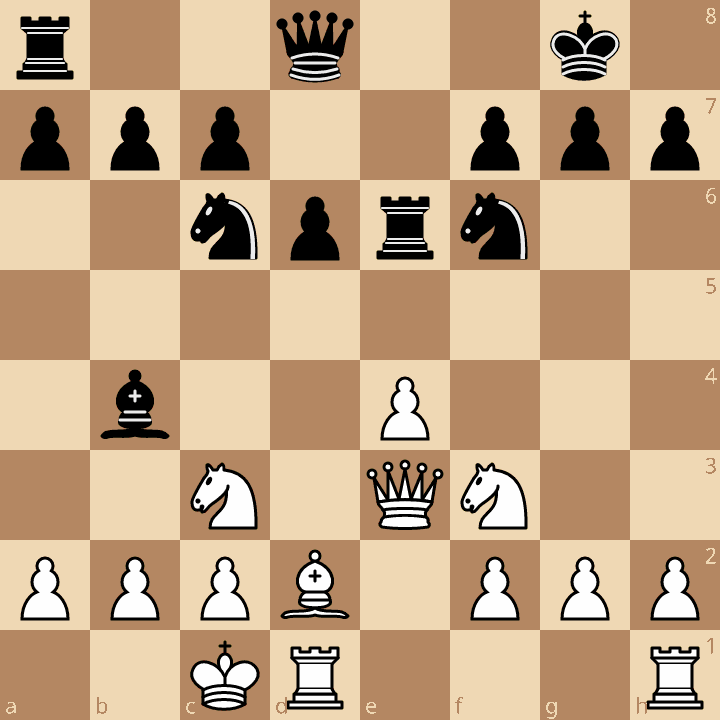
Les blancs échangent les fous. Normalement on préfère garder les pièces d'attaque, mais cet échange ouvre la colonne f et oblige les noirs à affaiblir leur structure de pions ou à utiliser la tour pour reprendre. Après 10. ..Rxe6, la tour des noirs est bien placée mais ne se trouve plus sur le point de pression de la colonne e. La position est à peu près équilibrée — un milieu de jeu typique du Jeu du Centre.
Coups alternatifs
Les noirs reprennent avec la tour, gardant la structure de pions intacte. La tour est activement placée en e6, défendant l'aile roi latéralement tout en restant sur une colonne ouverte. La position est dynamiquement équilibrée. Les blancs ont une formation active avec le roque opposé, tandis que les noirs disposent d'un développement solide et d'une structure de pions flexible. La bataille du milieu de jeu commence !
Coups alternatifs
Points clés
- Le Jeu du Centre ouvre la position immédiatement avec 2.d4 — plus direct que 2.Nf3
- 3.Qxd4 perd un temps face à ...Nc6 mais les blancs compensent par un développement rapide des pièces
- 4.Qe3 (Attaque Paulsen) maintient la dame active et soutient e4
- Le roque opposé (O-O-O) est l'idée stratégique clé — les deux camps attaquent le roi adverse
- Plan des blancs : se développer vite, roquer à l'aile dame et lancer une attaque sur l'aile roi avec les pièces
À toi de la jouer
Parcours chaque coup sur un vrai échiquier, tente les mauvais, et demande à Knighty pourquoi ils échouent.
Résumé
Prêt à pratiquer ?
Emporter cette leçon
Compte gratuit requisAvec toutes les variantes — s'ouvre dans Lichess et ChessBase