
Défense Chigorine
Une défense dynamique contre le Gambit Dame où les Noirs développent le cavalier en c6 au lieu de soutenir d5 par un pion, privilégiant l'activité des pièces à la structure de pions.
Essayer la leçon interactiveIntroduction
Contenu de la leçon
L'ouverture du pion Dame — les Blancs occupent le centre et ouvrent une diagonale pour le fou de cases noires. Le pion d4 est immédiatement défendu par la Dame, ce qui le rend plus difficile à contester que e4. Réponses principales des Noirs : - 1. ..d5 — Gambit Dame et systèmes slaves - 1. ..Nf6 — Défenses indiennes (Est-Indienne, Nimzo-Indienne, etc.) - 1. ..f5 — Défense hollandaise
Les Noirs répondent symétriquement au centre, menant au Jeu du pion Dame. Le centre symétrique conduit généralement à des manœuvres stratégiques plutôt qu'à des batailles tactiques immédiates. La suite la plus populaire des Blancs est 2. c4 — le Gambit Dame.
Le Gambit Dame — les Blancs offrent un pion pour attirer le pion d5 des Noirs hors du centre. Ce n'est pas un vrai gambit car les Noirs ne peuvent pas conserver le pion à long terme. Choix principaux des Noirs : - 2. ..e6 — Gambit Dame Décliné, solide et classique - 2. ..c6 — Défense slave, soutenant d5 tout en gardant le fou libre - 2. ..dxc4 — Gambit Dame Accepté - 2. ..Nc6 — Défense Chigorine, notre coup !
La Défense Chigorine ! Au lieu d'un coup de pion, les Noirs développent le cavalier en c6 — un choix surprenant et dynamique. Le cavalier attaque d4 et soutient une future rupture centrale ..e5. La théorie classique juge ce coup douteux car le cavalier bloque le pion c. Mais Chigorine a prouvé que le jeu actif des pièces peut compenser les concessions structurelles. Le cavalier exerce une pression immédiate sur le centre des Blancs.
Coups alternatifs
Les Blancs développent naturellement, défendant d4 et préparant le développement côté Roi. C'est la réponse la plus courante à la Chigorine. Alternatives des Blancs : - 3. Nc3 — également populaire, menant à des variantes différentes - 3. cxd5 — échange précoce, simplifiant la position - 3. e3 — solide mais passif
Coups alternatifs
La marque de fabrique de la Défense Chigorine — les Noirs clouent le Nf3 contre la Dame ! C'est la suite la plus agressive et thématique. Les Noirs ont l'intention d'échanger ce fou contre le cavalier, détruisant la structure de pions des Blancs. Le clouage sur f3 rend aussi plus difficile pour les Blancs de maintenir le duo de pions d4-c4, puisque le cavalier est le défenseur clé de d4.
Coups alternatifs
Les Blancs prennent en d5, forçant les Noirs à prendre une décision. C'est la réponse la plus principielle — en échangeant les pions, les Blancs cherchent à prouver que le dispositif des Noirs présente des faiblesses après l'inévitable échange fou-cavalier. Alternatives des Blancs : - 4. Qa4 — la Variante Alekhine, développant la Dame tôt - 4. e3 — solide mais permet aux Noirs de maintenir le clouage
Les Noirs prennent le cavalier, infligeant aux Blancs des pions f doublés. C'est tout l'enjeu de la Chigorine — les Noirs échangent un fou contre un cavalier pour endommager définitivement la structure de pions des Blancs. Les pions f doublés sont une faiblesse à long terme. Les Noirs cèdent la paire de fous, mais la structure de pions ruinée côté Roi et les pions f maladroits des Blancs offrent une compensation durable.
Coups alternatifs
Les Blancs reprennent avec le pion g — forcé, car exf3 bloquerait le fou f1 définitivement. Les Blancs ont désormais des pions f doublés (f2 et f3) et une colonne g ouverte, qui peut devenir une arme en milieu de jeu. La position est déséquilibrée : les Blancs ont la paire de fous et des pions centraux, tandis que les Noirs ont une meilleure structure de pions.
Les Noirs reprennent en d5 avec la Dame, rétablissant l'égalité matérielle. La Dame est centralisée et active, contrôlant des cases clés. Le plan des Noirs est maintenant de jouer ..e5 pour contester le pion d4 des Blancs. Depuis d5, la Dame surveille aussi les diagonales a2 et h1, gardant les Blancs sous pression.
Les Blancs consolident le pion d4 et préparent le développement du fou de cases noires. Le pion e3 ouvre aussi la diagonale pour le fou f1, qui pourra se développer en d3 ou e2. Les Blancs jouent modestement ici — les pions f doublés signifient que l'aile Roi est déjà compromise, donc les Blancs se concentrent sur un développement solide.
La rupture centrale thématique ! Les Noirs contestent directement le pion d4 des Blancs, créant des lignes ouvertes et un jeu actif. C'est la récompense d'avoir placé le cavalier en c6 — il soutient parfaitement ..e5. La poussée e5 ouvre aussi la diagonale du fou de cases noires et crée une tension que les Blancs doivent résoudre.
Coups alternatifs
Les Blancs développent le cavalier en c3, attaquant la Dame centralisée des Noirs. Le cavalier soutient aussi une potentielle avancée d5 et défend e4. Les Blancs misent sur la paire de fous et l'espace central pour compenser la structure de pions endommagée.
Les Noirs développent le fou avec gain de temps, clouant le Nc3 contre le Roi. Cela crée une pression immédiate et menace de doubler à nouveau les pions des Blancs avec ..Bxc3. Le fou en b4 est très actif — il cloue le cavalier, contrôle la diagonale a5-e1, et empêche les Blancs de roquer confortablement.
Coups alternatifs
Les Blancs bloquent le clouage en développant le fou en d2. C'est la réponse la plus naturelle — elle prépare la reprise en c3 avec le fou si les Noirs échangent. Les Blancs évitent le maladroit a3 (qui affaiblit l'aile Dame) et gardent les pièces coordonnées.
Les Noirs échangent le fou contre le cavalier, créant un pion c isolé pour les Blancs après la reprise forcée bxc3 ! Combiné aux pions f déjà doublés, la structure de pions des Blancs est gravement compromise. Les cavaliers noirs seront supérieurs aux fous blancs dans cette structure endommagée. L'échange suit la philosophie Chigorine : sacrifier la paire de fous pour détruire la structure de pions des Blancs.
Coups alternatifs
Les Blancs reprennent avec le pion b, créant un pion c3 isolé sans pion b pour le soutenir. Combiné aux pions f doublés, la structure de pions des Blancs est gravement affaiblie — le pion a2 est également isolé. Cependant, les Blancs conservent les deux fous et des lignes ouvertes pour une compensation dynamique.
La Dame se replie en d6, une case centrale solide. Depuis d6, la Dame soutient le pion e5, surveille l'aile Roi et reste à l'abri des pièges tactiques sur la colonne d. La position des Noirs est très confortable — structure de pions saine, pièces actives et plans clairs. La Dame surveille aussi la colonne d et peut basculer sur l'aile Roi si nécessaire.
Coups alternatifs
Les Blancs activent la Tour sur la colonne g ouverte — l'un des avantages des pions f doublés. La Tour presse g7 et prépare un jeu d'attaque sur l'aile Roi. C'est le principal atout des Blancs : utiliser la colonne g ouverte et la paire de fous pour créer des chances d'attaque avant que la structure supérieure des Noirs ne s'impose en finale.
Les Noirs défendent calmement sur la colonne g, empêchant toute infiltration immédiate par Rg7. Le pion g6 prépare aussi une potentielle case de développement ..Bg7 (bien que dans cette ligne le fou de cases noires soit déjà échangé). Plus important encore, g6 permet aux Noirs de roquer côté Roi en toute sécurité — le Roi sera bien protégé derrière la chaîne de pions g6-f7.
Coups alternatifs
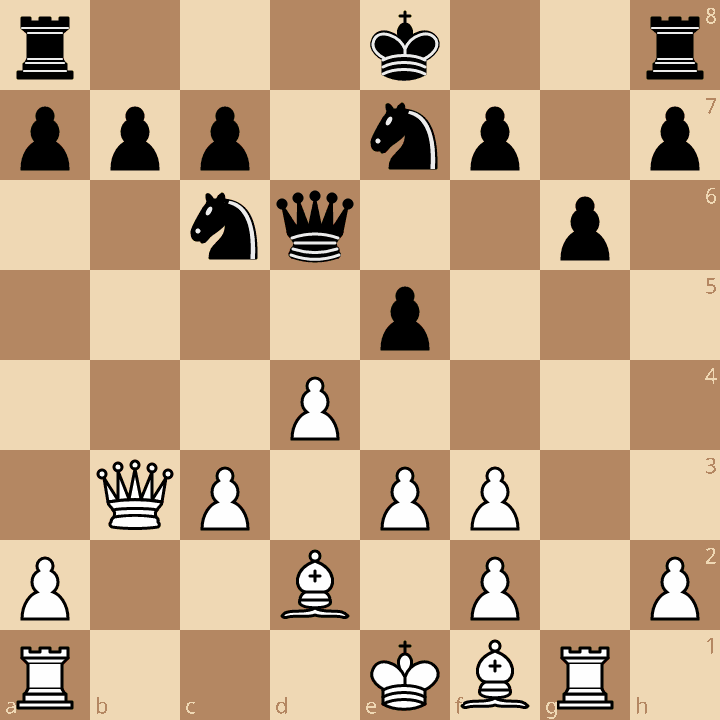
Les Blancs développent la Dame en b3, visant le pion b7 et la case f7. La Dame est activement placée et crée des menaces le long de la diagonale a2-g8. Les Blancs cherchent à créer de l'initiative avant que les Noirs ne terminent leur développement et consolident leur avantage structurel.
Les Noirs développent la dernière pièce mineure, préparant le petit roque. Le cavalier se dirige vers e7 plutôt que f6 pour garder le pion f libre d'avancer et soutenir le Nc6. Avec ..Nge7, les Noirs sont prêts à roquer et entrer dans un milieu de jeu favorable — structure solide, cavaliers bien placés et cibles sur les pions doublés des Blancs.
Coups alternatifs
Points clés
- 2...Nc6 conteste d4 avec une pièce plutôt qu'un pion — la philosophie Chigorine
- 3...Bg4 cloue le cavalier et prépare la destruction de la structure de pions des Blancs
- L'échange Bxf3 inflige aux Blancs des pions f doublés — une faiblesse permanente
- La rupture ...e5 est le défi central clé, soutenu par le Nc6
- Les cavaliers noirs surpassent les fous blancs dans les positions fermées qui en résultent
À toi de la jouer
Parcours chaque coup sur un vrai échiquier, tente les mauvais, et demande à Knighty pourquoi ils échouent.
Résumé
Prêt à pratiquer ?
Emporter cette leçon
Compte gratuit requisAvec toutes les variantes — s'ouvre dans Lichess et ChessBase