
Défense Baltique
Une réponse peu orthodoxe au Gambit Dame où les noirs développent le fou en f5 avant de jouer e6, évitant le problème du "mauvais fou".
Essayer la leçon interactiveIntroduction
Contenu de la leçon
L'ouverture du Pion Dame — les blancs revendiquent le centre avec le pion d, immédiatement défendu par la dame. Cela mène à des positions plus stratégiques et fermées comparé à 1. e4. Réponses principales des noirs : - 1. ..d5 — Gambit Dame et systèmes Slaves - 1. ..Nf6 — Défenses Indiennes (Est-Indienne, Nimzo-Indienne, etc.) - 1. ..f5 — Défense Hollandaise
Les noirs égalisent au centre, menant à l'Ouverture du Pion Dame. Le centre symétrique débouche généralement sur des manœuvres stratégiques plutôt que des combats tactiques immédiats. La continuation la plus populaire des blancs est 2. c4 — le Gambit Dame.
Le Gambit Dame — les blancs offrent un pion pour éloigner le pion d5 du centre. Ce n'est pas un vrai gambit car les noirs ne peuvent pas garder le pion à long terme. Choix principaux des noirs : - 2. ..e6 — Gambit Dame Refusé, solide et classique - 2. ..c6 — Défense Slave, soutient d5 en gardant le fou libre - 2. ..dxc4 — Gambit Dame Accepté - 2. ..Bf5 — Défense Baltique, développant le fou immédiatement !
La Défense Baltique ! Les noirs développent le fou de cases claires *avant* de jouer e6. C'est tout l'intérêt de l'ouverture — dans le GDR standard (2. ..e6), ce fou passe souvent toute la partie enfermé derrière la chaîne e6-d5. En le sortant maintenant, les noirs assurent un jeu de pièces actif. L'inconvénient est que le fou peut être exposé, et les noirs n'ont pas encore renforcé le centre.
Coups alternatifs
Les blancs développent le cavalier naturellement, renforçant le contrôle de d5 et e4. C'est la réponse la plus flexible — les blancs retardent leur engagement dans un plan anti-Baltique spécifique. Alternatives des blancs : - 3. cxd5 — le test critique, gagnant la paire de fous après 3. ..Bxb1 4. Rxb1 Qxd5 - 3. Qb3 — visant directement b7 et d5 - 3. Nf3 — similaire à 3. Nc3, transpose souvent
Maintenant que le fou est développé en sécurité, les noirs jouent e6 pour renforcer d5. C'est l'ordre de coups idéal — le fou est déjà actif en f5, donc e6 ne l'enferme pas. La structure des noirs avec d5+e6 est solide, et le fou de cases claires reste en dehors de la chaîne de pions.
Coups alternatifs
Les blancs poursuivent le développement naturel, amenant le cavalier sur sa meilleure case. Le cavalier contrôle e5 et d4 tout en préparant le petit roque. Les blancs conservent un léger avantage d'espace mais la position des noirs est très solide.
Les noirs développent le cavalier sur sa case la plus naturelle, contre-attaquant la case e4 et préparant le roque. Le cavalier en f6 est la pierre angulaire du dispositif noir dans la Baltique. Les noirs visent maintenant à compléter le développement avec ..c6, ..Nbd7 et ..Be7.
Les blancs clouent le Nf6 contre la dame, une idée thématique dans les ouvertures en d4. Le clouage crée une pression subtile — si les noirs jouent ..Be7, les blancs maintiennent la tension ; si les noirs rompent le clouage avec ..h6, cela affaiblit le flanc roi. C'est une approche plus agressive que 5. e3, qui bloquerait le propre fou de cases sombres des blancs.
Les noirs renforcent le pion d5 avec le pion c, créant une structure centrale inébranlable. Le triangle de pions d5-e6-c6 est extrêmement robuste — les blancs ne peuvent pas percer facilement. Cela prépare aussi ..Nbd7, qui évite de bloquer le pion c et garde la diagonale de la dame ouverte.
Coups alternatifs
Les blancs solidifient le pion d4 et préparent le développement du fou en d3. Le pion en e3 soutient le centre tout en ouvrant la diagonale f1-a6 pour le fou. Le plan des blancs est Bd3, échangeant le bon fou des noirs, suivi du roque et de la construction d'une initiative sur le flanc roi.
Le cavalier se développe en d7 — la case standard dans le système Baltique. Depuis d7, le cavalier soutient e5 (un avant-poste potentiel) et peut se rediriger vers f8-g6 ou b6 selon la position. Les noirs évitent ..Nc6 car cela bloquerait le pion c et l'accès de la dame au flanc dame.
Coups alternatifs
Les blancs développent le fou en d3, défiant directement le Bf5 noir. Les blancs veulent échanger les fous — éliminant la meilleure pièce des noirs et gagnant la paire de fous ou un tempo. C'est l'approche la plus logique, ciblant le fou que les noirs se sont efforcés de développer tôt.
Les noirs échangent le fou. Bien que cela puisse sembler contre-productif de céder la pièce que l'ouverture visait à développer, l'échange est bon — le fou a rempli sa mission en évitant l'enfermement, et la reprise en d3 place la dame blanche sur une case légèrement exposée. Les pièces restantes des noirs seront bien coordonnées dans la structure compacte d5-e6-c6.
Coups alternatifs
Les blancs reprennent avec la dame, la centralisant en d3. La dame vise le flanc roi (h7) et peut soutenir une future poussée e4. Cependant, elle est quelque peu exposée en d3 et pourrait devoir bouger plus tard. Les blancs conservent un petit avantage grâce à la paire de fous et l'espace.
Les noirs développent la dernière pièce mineure, préparant le roque. Le fou en e7 est modeste mais solide — il soutient le petit roque et peut aller en f6 plus tard si les fous de cases sombres sont échangés. Avec ..Be7 et ...O-O, les noirs complètent le développement et atteignent une position confortable, légèrement passive mais très solide.
Coups alternatifs
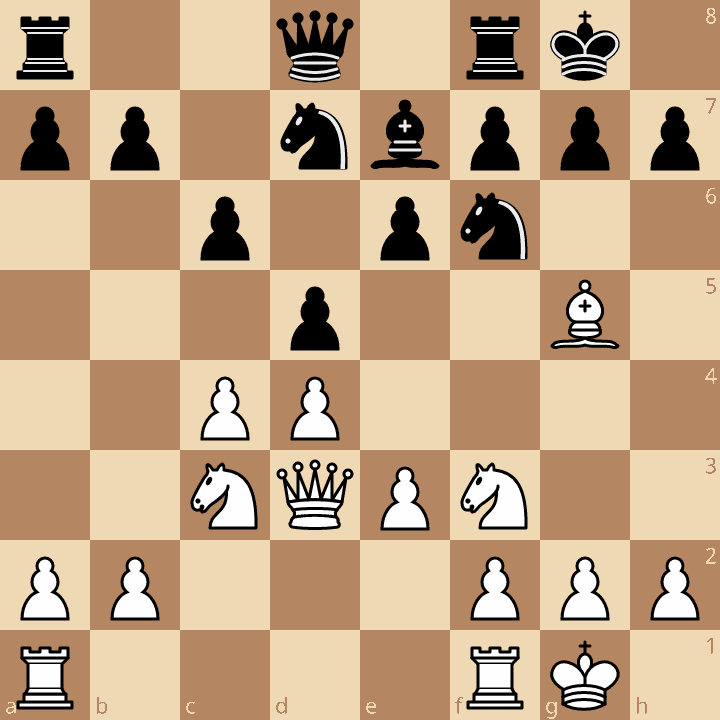
Les blancs roquent côté roi, mettant le roi en sécurité et connectant les tours. Les blancs ont complété le développement avec une position agréable — léger avantage d'espace, la paire de fous et le potentiel d'expansion au centre avec e4. Les noirs doivent aussi roquer immédiatement pour neutraliser toute idée sur le flanc roi.
Les noirs roquent, complétant le développement mutuel. La position est à peu près égale — les blancs ont un petit avantage d'espace, mais la position des noirs est solide comme le roc sans faiblesses. Les plans typiques du milieu de partie pour les noirs incluent ..dxc4 suivi de ..c5 pour libérer la position, ou ..Re8 et ..Nf8 pour regrouper le cavalier.
Points clés
- 2...Bf5 développe le fou avant que e6 ne l'enferme — l'idée clé de la Baltique
- Le triangle de pions d5-e6-c6 crée un centre inébranlable
- Nbd7 (pas Nc6) garde le pion c flexible et le flanc dame ouvert
- Échanger en d3 est correct — le fou a déjà rempli sa mission d'éviter l'enfermement
- Les noirs atteignent une position solide, légèrement passive mais confortable avec des plans clairs
À toi de la jouer
Parcours chaque coup sur un vrai échiquier, tente les mauvais, et demande à Knighty pourquoi ils échouent.
Résumé
Prêt à pratiquer ?
Emporter cette leçon
Compte gratuit requisAvec toutes les variantes — s'ouvre dans Lichess et ChessBase