
Gambit Letton
Un contre-gambit audacieux où les Noirs sacrifient le pion f pour un jeu de pièces actif et des complications tactiques après 1.e4 e5 2.Nf3 f5.
Essayer la leçon interactiveIntroduction
Contenu de la leçon
L'ouverture du Pion Roi — les Blancs revendiquent le centre et ouvrent les diagonales pour la dame et le fou de roi. Le premier coup le plus populaire aux échecs. Réponses principales des Noirs : - 1. ..e5 — Jeu Ouvert, égalant au centre - 1. ..c5 — Défense Sicilienne, luttant pour d4 de manière asymétrique - 1. ..e6 — Défense Française, préparant ..d5 - 1. ..c6 — Caro-Kann, préparant aussi ..d5
Les Noirs imitent la revendication centrale des Blancs, établissant un centre de pions symétrique. Cela mène aux Jeux Ouverts — la famille d'ouvertures la plus ancienne et classique. Le pion e5 contrôle d4 et f4, limitant les options d'expansion des Blancs.
Les Blancs développent le cavalier sur sa case la plus naturelle, attaquant immédiatement le pion e5. Le cavalier contrôle aussi d4 et prépare le petit roque. C'est le deuxième coup le plus courant, menant à un vaste arbre d'ouvertures incluant l'Italienne, la Ruy López et l'Écossaise.
Le Gambit Letton ! Au lieu de défendre e5 avec le naturel 2. ..Nc6, les Noirs contre-attaquent directement le pion e4. C'est un choix audacieux — les Noirs affaiblissent le flanc roi et permettent 3. Nxe5, mais en retour obtiennent un contre-jeu dynamique et des lignes ouvertes pour les pièces. Le coup crée une tension immédiate : les Blancs doivent décider comment gérer à la fois le pion e4 attaqué et le pion e5 sans défense.
Coups alternatifs
Les Blancs acceptent le défi en capturant le pion e5 non défendu avec le cavalier. C'est la réponse la plus principielle — les Blancs gagnent un pion et occupent une forte case centrale. Des alternatives comme 3. Bc4 ou 3. Nc3 donnent aussi de bonnes chances aux Blancs, mais 3. Nxe5 teste directement la solidité du gambit.
Coups alternatifs
La ligne principale classique du Gambit Letton. La dame attaque directement le Ne5, le forçant à bouger. Bien que les sorties précoces de dame soient habituellement déconseillées, ici la dame remplit un rôle clair — après le retrait du cavalier et la capture en e4, la dame visera aussi la case f2 le long de la colonne f ouverte. Alternatives des Noirs : - 3. ..Nf6 — l'approche moderne, développant une pièce - 3. ..Qe7 — attaque aussi le cavalier mais est plus passive
Coups alternatifs
Les Blancs retirent le cavalier en c4, une case utile d'où il surveille d6 et e5. Le cavalier ne peut pas rester en e5 à cause de l'attaque de la dame, et Nc4 le maintient activement placé plutôt que de le retirer passivement. Depuis c4, le cavalier pourra se rediriger vers e3 ou e5, maintenant la pression sur la position noire.
Coups alternatifs
Les Noirs capturent le pion e4, récupérant du matériel et ouvrant la colonne f. La position est maintenant égale en matériel (pion pour pion), et les Noirs ont le pion central e4 supplémentaire comme compensation pour le flanc roi affaibli. La colonne f ouverte deviendra un atout offensif important plus tard, surtout après le développement et le grand roque.
Coups alternatifs
Les Blancs développent le cavalier en c3, attaquant le pion avancé e4 et se préparant à contrôler le centre. Les deux cavaliers sont maintenant activement placés — Nc3 vise d5 et e4, tandis que Nc4 contrôle d6 et e5. L'avantage de développement des Blancs est la principale compensation pour l'égalité matérielle.
La dame se retire en f7, une case sûre où elle protège le pion e indirectement et reste connectée au flanc roi. C'est la meilleure case — la dame évite le harcèlement tout en surveillant la diagonale b3-g8. Depuis f7, la dame soutient une future rupture centrale ..d5, l'idée égalisatrice clé des Noirs.
Coups alternatifs
Les Blancs redirigent le cavalier de c4 vers e3, une excellente case centralisée. Le cavalier en e3 vise d5 et f5, des cases clés au centre et sur le flanc roi affaibli des Noirs. La manœuvre Nc4-e3 est un thème courant — les Blancs utilisent les deux cavaliers pour presser d5 et restreindre les ruptures de pion noires.
La rupture centrale critique ! Les Noirs poussent ..d5 pour défier le contrôle blanc et ouvrir des lignes pour les pièces. C'est le coup thématique du Gambit Letton — les Noirs doivent lutter pour le centre avant que les Blancs ne consolident. L'avance d5 libère aussi le fou de c8, enfermé depuis l'ouverture. Sans cette rupture, la position noire deviendrait étriquée.
Coups alternatifs
Les Blancs capturent en d5 avec le cavalier d'e3, occupant un puissant avant-poste central. Le cavalier en d5 contrôle des cases clés (c7, e7, b6, f6) et restreint le développement noir. Les Blancs choisissent Nexd5 plutôt que Ncxd5 pour garder le cavalier de c3 sous pression sur le pion e4 — une décision pratique qui maintient la tension maximale.
Les Noirs chassent le puissant cavalier de d5. Ce coup de pion est forcé dans l'esprit — laisser le cavalier en d5 sans le contester donnerait aux Blancs une position dominante. Après le retrait du cavalier, les Noirs auront une structure de pions plus confortable avec la configuration c6-d5 possible. Le pion c6 fournit aussi une base solide pour le développement du flanc dame noir.
Coups alternatifs
Le cavalier retourne en e3, maintenant son influence centrale. Le retrait peut sembler du temps perdu, mais Ne3 garde la pièce sur une case active où elle vise toujours d5 et f5. L'avance en développement des Blancs persiste — les deux cavaliers sont bien placés tandis que les Noirs doivent encore développer les fous et roquer.
Les Noirs développent le cavalier sur sa case la plus naturelle, contrôlant d5 et e4. Le cavalier en f6 est l'épine dorsale de la position noire — il défend des cases centrales clés et prépare le roque court ou long. Avec ..Nf6, les Noirs commencent à rattraper leur retard de développement après l'aventure précoce de la dame.
Les Blancs défient le pion avancé e4 avec d3. C'est la façon la plus naturelle de saper le pion central supplémentaire noir — après l'échange, le fou blanc se développera activement en d3 avec tempo. La rupture d3 ouvre la position pour la paire de fous blancs et complète la lutte pour le centre.
Coups alternatifs
Les Noirs capturent en d3, ouvrant la position. Le pion e4 est échangé, mais c'était inévitable — le maintenir à long terme était impraticable avec les deux cavaliers blancs le pressant. L'échange ouvre la colonne d et la diagonale pour le fou blanc, mais les Noirs rattrapent en développement.
Les Blancs reprennent avec le fou, qui se retrouve activement placé en d3. Le fou vise le pion h7 et contrôle la diagonale b1-h7 — une ressource d'attaque dangereuse si les Noirs font le petit roque. Les Blancs ont complété le développement des deux cavaliers et du fou, et sont prêts à roquer au prochain coup.
Les Noirs développent enfin le fou de cases claires, enfermé depuis le premier coup. Le fou en e6 est activement placé — il soutient ..d5, surveille la diagonale a2-g8, et prépare le grand roque. Développer le fou en e6 plutôt que sur d'autres cases donne aux Noirs une configuration solide et coordonnée. La dame en f7 et le fou en e6 forment une puissante batterie.
Coups alternatifs
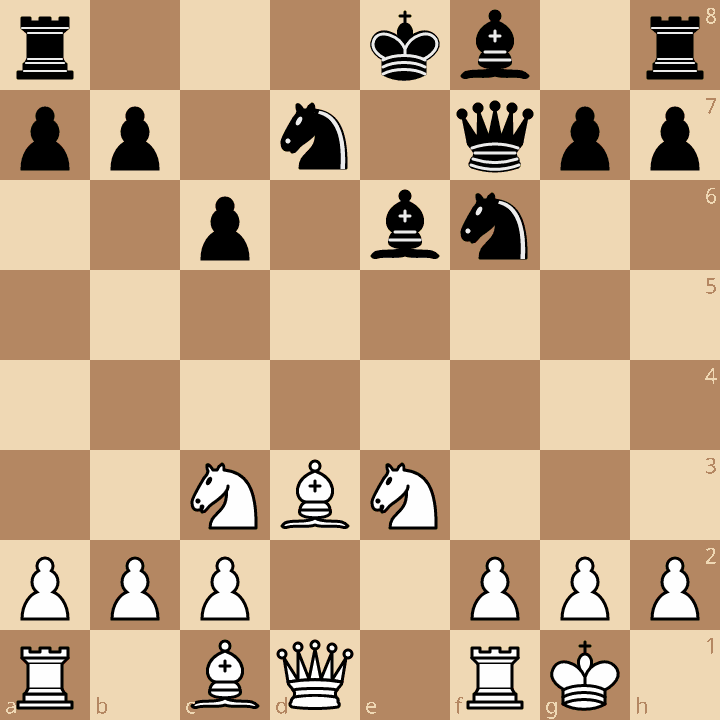
Les Blancs roquent du côté roi, mettant le roi en sécurité et connectant les tours. Avec le développement presque complet et le fou activement placé en d3, les Blancs ont une position confortable avec une pression durable. Les plans typiques des Blancs incluent Nf5 (attaquant le fou), Nc4-d6, ou le doublement des tours sur la colonne d.
Les Noirs développent la dernière pièce mineure, préparant le grand roque avec ...O-O-O. Le cavalier en d7 soutient le Nf6, contrôle e5 et maintient la position flexible. Avec toutes les pièces mineures développées, les Noirs sont prêts à roquer du côté dame et activer les tours. Malgré la position légèrement inférieure, les Noirs ont une compensation sous forme de pièces actives et d'une structure de pions solide.
Coups alternatifs
Points clés
- 2...f5 contre-attaque le pion e4 au lieu de défendre e5
- 3...Qf6 attaque le cavalier et crée des menaces contre f2
- La rupture ...d5 est essentielle pour libérer les pièces noires et lutter pour le centre
- Les Noirs roquent souvent du côté dame pour utiliser la colonne f ouverte à l'attaque
- Les Blancs doivent jouer avec précision — le Letton crée une complexité tactique qui récompense le joueur préparé
À toi de la jouer
Parcours chaque coup sur un vrai échiquier, tente les mauvais, et demande à Knighty pourquoi ils échouent.
Résumé
Prêt à pratiquer ?
Emporter cette leçon
Compte gratuit requisAvec toutes les variantes — s'ouvre dans Lichess et ChessBase