
Gambit Rousseau
Un gambit tranchant où les Noirs jouent 3...f5 dans la Partie Italienne, sacrifiant un pion pour des lignes ouvertes et un contre-jeu rapide.
Essayer la leçon interactiveIntroduction
Contenu de la leçon
L'ouverture du Pion Roi — les Blancs revendiquent le centre et ouvrent des diagonales pour la dame et le fou de roi. Le premier coup le plus populaire aux échecs. Réponses principales des Noirs : - 1. ..e5 — Partie Ouverte, égalant le centre - 1. ..c5 — Défense Sicilienne, luttant pour d4 asymétriquement - 1. ..e6 — Défense Française, préparant ..d5 - 1. ..c6 — Caro-Kann, préparant aussi ..d5
Les Noirs reflètent la prise de centre des Blancs, établissant un centre de pions symétrique. Cela mène aux Parties Ouvertes — la famille d'ouvertures la plus ancienne et la plus classique. Le pion e5 contrôle d4 et f4, limitant les options d'expansion des Blancs.
Les Blancs développent le cavalier sur sa case la plus naturelle, attaquant le pion e5 immédiatement. Le cavalier contrôle aussi d4 et prépare le petit roque. C'est le deuxième coup le plus courant, menant à un vaste arbre d'ouvertures incluant l'Italienne, l'Espagnole et l'Écossaise.
Les Noirs défendent le pion e5 avec le coup de développement le plus naturel. Le cavalier en c6 contrôle aussi les cases importantes d4 et e5. À partir de là, le troisième coup des Blancs définit l'ouverture : - 3. Bc4 — Partie Italienne - 3. Bb5 — Partie Espagnole - 3. d4 — Partie Écossaise - 3. Nc3 — Quatre Cavaliers / hybride Viennoise
Le fou se développe en c4, visant la case vulnérable f7 — le point le plus faible de la position initiale car seul le roi la défend. C'est le coup qui définit la Partie Italienne. Les alternatives des Blancs mènent à des ouvertures entièrement différentes : - 3. Bb5 — la Partie Espagnole, mettant la pression sur le défenseur Nc6 - 3. d4 — l'Écossaise, contestant le centre immédiatement - 3. Nc3 — les Trois/Quatre Cavaliers, repoussant la décision
Le Gambit Rousseau ! Les Noirs frappent le pion e4 avec le pion f, créant une tension centrale immédiate. C'est une alternative rare et agressive face au standard 3. ..Bc5 ou 3. ..Nf6. Le gambit ouvre la colonne f pour la tour noire et conteste le centre blanc avant qu'il ne puisse se consolider. Le coût est l'affaiblissement de la position du roi, mais les Noirs misent sur le jeu actif de pièces pour compenser.
Coups alternatifs
La réponse la plus forte des Blancs — ouvrant le centre immédiatement pendant que le flanc roi noir est affaibli. La poussée d4 exploite le fait que le pion f noir est parti, créant une pression tactique. Alternatives des Blancs : - 4. exf5 — acceptant le gambit, mais les Noirs se développent vite avec ..d5 - 4. d3 — calme, mais permet un jeu confortable après ..fxe4 5. dxe4 Nf6
Les Noirs capturent le pion e4, gagnant du matériel et dégageant la colonne f. Le pion e4 était l'épine dorsale du centre blanc — le supprimer crée des déséquilibres que les Noirs peuvent exploiter. La position devient maintenant tranchante : les Blancs ont plus d'espace central avec le pion d4, mais les Noirs ont un pion supplémentaire et la colonne f ouverte comme ressource offensive.
Coups alternatifs
Les Blancs capturent le pion e5 avec le cavalier, se centralisant puissamment. Le cavalier en e5 est une bête — il attaque c6, d7 et f7, créant de multiples menaces tactiques. Les Blancs sacrifient temporairement le soutien du pion d4 pour placer le cavalier sur cet avant-poste dominant, comptant sur la pression tactique pour plus que compenser.
Les Noirs contre-attaquent au centre ! La poussée d5 attaque le Bc4, gagnant un tempo tout en établissant un fort pion central. C'est le coup clé pour faire fonctionner le gambit. Les Noirs ont maintenant un pion de plus avec une présence centrale, bien que le cavalier en e5 et l'avance de développement des Blancs fournissent une compensation.
Coups alternatifs
Les Blancs retirent le fou en b5, clouant le Nc6 contre le roi. C'est la continuation la plus critique — le clouage crée une pression tactique qui limite la coordination des Noirs. Les Blancs menacent d'échanger en c6 et d'abîmer la structure de pions noire, ce qui créerait des faiblesses durables à cibler.
La dame se développe en d6, défendant le cavalier c6 et se préparant à centraliser. La dame surveille aussi le flanc roi, maintenant une pression indirecte sur e5. C'est un coup polyvalent : il protège le cavalier, prépare le développement ..Nf6 et garde la dame active au centre où elle peut influencer les deux flancs.
Coups alternatifs
Les Blancs roquent, mettant le roi en sécurité et connectant les tours. Avec le centre ouvert, sortir le roi de la colonne e est essentiel. La tour blanche occupe maintenant la colonne f semi-ouverte (ironique — la colonne que les Noirs ont ouverte !) et l'avance de développement des Blancs devient plus concrète.
Les Noirs développent le cavalier en f6, un coup de développement clé qui attaque d5 indirectement et prépare le petit roque. Le cavalier soutient aussi le pion e4. Avec ce coup, les Noirs ont deux pièces mineures développées et approchent de la capacité à roquer. La position reste complexe avec des chances pour les deux camps.
Les Blancs frappent le pion d5 noir, sapant le centre. La poussée c4 conteste le contrôle central des Noirs et ouvre des lignes pour les pièces blanches sur le flanc dame. Combiné avec le cavalier en e5 et le clouage du Bb5, cela crée une pression significative que les Noirs doivent gérer avec soin.
Les Noirs contestent le Bb5 directement, forçant une décision. Les Blancs doivent soit se retirer soit échanger en c6. C'est la réponse la plus logique — les Noirs veulent résoudre le clouage avant de poursuivre le développement. Si les Blancs échangent, les Noirs obtiennent la paire de fous et la colonne b ouverte, malgré les pions doublés en c.
Coups alternatifs
Les Blancs échangent le fou contre le cavalier, doublant les pions c des Noirs. Bien que cela abandonne la paire de fous, la structure endommagée en c6 et c7 crée des faiblesses durables. L'échec force aussi les Noirs à reprendre d'une manière spécifique, maintenant l'avantage structurel des Blancs.
La reprise vers le centre est forcée — la seule reprise légale. Les Noirs ont maintenant des pions doublés en c mais gagnent la colonne b semi-ouverte pour la tour. La structure de pions est endommagée mais les Noirs ont une compensation : la paire de fous, la colonne b ouverte et le pion e4 supplémentaire. La position offre un contre-jeu dynamique.
Les Blancs développent le cavalier en c3, ciblant le pion e4 et le pion d5. Le cavalier rejoint l'attaque contre le centre noir, augmentant la pression. Avec les deux cavaliers développés et le roi en sécurité, les Blancs ont un net avantage de développement. Le Ne5 et Nc3 ensemble dominent le centre.
Les Noirs développent le fou en e7, préparant le roque et complétant le développement du flanc roi. Le fou est modestement placé mais fonctionnel — il soutient le roque et garde la position solide. Mettre le roi en sécurité est maintenant la priorité absolue des Noirs. Une fois roqués, ils peuvent activer les tours et commencer à utiliser les colonnes ouvertes.
Coups alternatifs
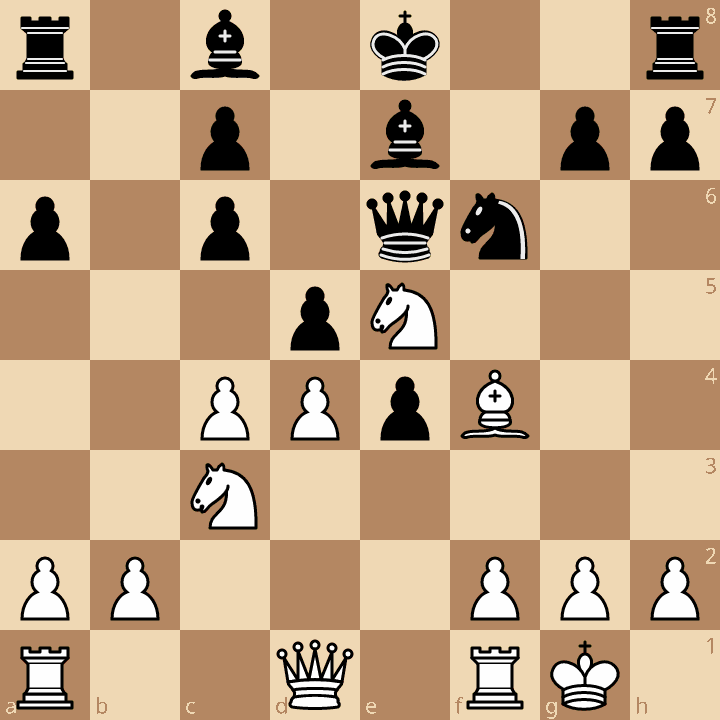
Les Blancs développent la dernière pièce mineure, visant la dame noire en d6. Le fou en f4 est très actif — il presse d6, contrôle la diagonale e5-c1 et soutient le cavalier central. Cela force la dame noire à bouger, gagnant un autre tempo pour le développement déjà supérieur des Blancs.
La dame se replie en e6, maintenant une présence centrale tout en restant connectée à la défense. Depuis e6, la dame surveille le flanc roi et garde d5 protégé. Les Noirs sont prêts à roquer au prochain coup. Malgré la pression, la position reste riche en possibilités — le pion e4 et la paire de fous offrent une compensation à long terme.
Points clés
- 3...f5 conteste immédiatement le centre e4 des Blancs et ouvre la colonne f
- 4...fxe4 suivi de 5...d5 est la séquence clé pour activer les pièces noires
- La dame en d6 remplit plusieurs fonctions en tant que défenseur et attaquant
- Accepter les pions doublés en c pour la paire de fous et la colonne b ouverte
- Roquer vite — le roi noir est vulnérable au centre
À toi de la jouer
Parcours chaque coup sur un vrai échiquier, tente les mauvais, et demande à Knighty pourquoi ils échouent.
Résumé
Prêt à pratiquer ?
Emporter cette leçon
Compte gratuit requisAvec toutes les variantes — s'ouvre dans Lichess et ChessBase