
Sistema Ouriço
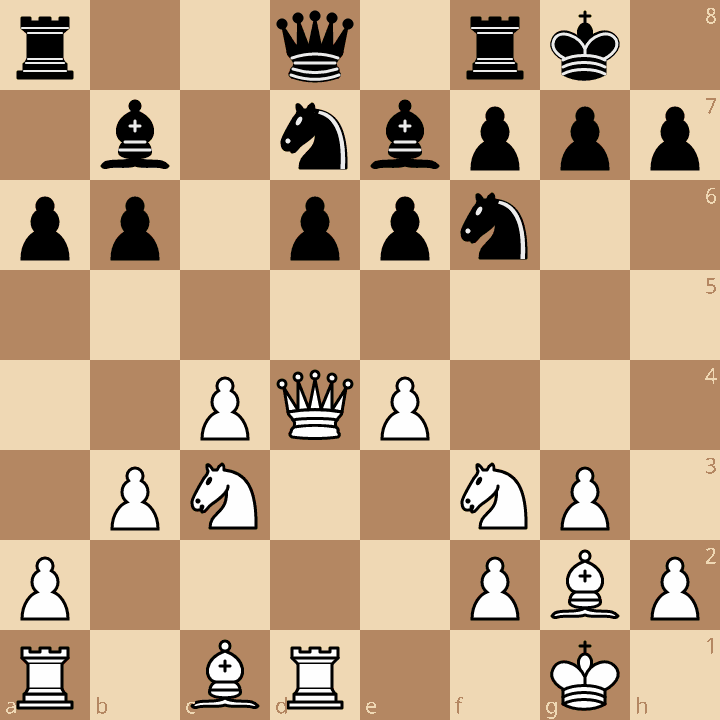
Um sistema flexível para as pretas com peões em a6, b6, d6, e6 — as peças se enrolam atrás da muralha de peões, esperando o momento de golpear com ...b5 ou ...d5.
Experimentar lição interativaIntrodução
Conteúdo da lição
A Abertura Inglesa — as brancas controlam d5 pelo flanco sem comprometer o peão d. Uma abertura flexível e posicional que pode transpor para muitas linhas de 1. d4 ou levar a sistemas ingleses únicos. Opções principais das pretas: - 1. ..c5 — Inglesa Simétrica - 1. ..e5 — Siciliana Invertida - 1. ..Nf6 — pode transpor para esquemas indianos
A Inglesa Simétrica — as pretas espelham o controle de flanco das brancas, lutando pela casa d4. Esta é a porta de entrada para o Sistema Ouriço. Ao jogar ..c5 cedo, as pretas sinalizam disposição para entrar em estruturas onde ambos os lados se desenvolvem atrás de seus peões antes de se comprometer com a ação central.
Lances alternativos
As brancas desenvolvem o cavalo para sua casa mais natural, controlando d4 e e5 enquanto preparam o roque curto. Um lance flexível que mantém muitos esquemas disponíveis.
As pretas desenvolvem o cavalo, controlando d5 e e4. Isso impede as brancas de construir um centro e4 sem oposição e prepara um desenvolvimento flexível. O cavalo em f6 é um pilar do Ouriço — ele apoia tanto a ruptura ..d5 quanto ..e5 mais adiante.
Lances alternativos
As brancas desenvolvem o segundo cavalo, reforçando o controle de d5 e e4. A Variante dos Três Cavalos da Inglesa Simétrica. O plano das brancas tipicamente inclui g3, Bg2, O-O e eventualmente d4 — construindo um centro forte enquanto fiancheta o bispo.
As pretas jogam ..e6, preparando a estrutura de peões do Ouriço. Este lance apoia uma futura ruptura ..d5 e controla d5, mantendo a posição flexível. O peão em e6 se tornará parte da característica muralha do Ouriço — peões em a6, b6, d6, e6.
Lances alternativos
As brancas preparam o fiancheto no flanco do rei com Bg2. O bispo em g2 pressionará a grande diagonal (a8-h1), mirando o flanco da dama das pretas. Este é o esquema mais comum das brancas na Inglesa Simétrica — o bispo de fiancheto combina bem com o peão c4 para controlar d5.
As pretas preparam o fiancheto do bispo de casas claras em b7, contrapondo diretamente o Bg2 das brancas na grande diagonal. O peão ..b6 também passa a integrar a muralha do Ouriço. Com ..Bb7 por vir, as pretas estabelecerão influência poderosa ao longo da diagonal a8-h1, disputando o bispo de fiancheto das brancas.
Lances alternativos
As brancas completam o fiancheto. O bispo em g2 é uma peça poderosa, exercendo pressão ao longo de toda a grande diagonal de a8 a h1. Este bispo será especialmente forte quando o centro se abrir, podendo mirar os peões do flanco da dama das pretas e o bispo b7.
As pretas completam o fiancheto, colocando o bispo na grande diagonal onde disputa o Bg2 das brancas. O Bb7 é uma peça-chave do Ouriço — apoia a futura ruptura ..d5 e cria pressão oculta. A batalha diagonal entre Bg2 e Bb7 é uma característica definidora desta abertura.
Lances alternativos
As brancas fazem o roque curto, protegendo o rei e conectando as torres. Com o fiancheto completo e ambos os cavalos desenvolvidos, as brancas estão prontas para lutar pelo centro com d4. O roque também ativa a torre de f1, que pode apoiar e4 ou se deslocar para a coluna d.
As pretas desenvolvem o bispo modestamente para e7, mantendo uma posição compacta. Esta é a filosofia típica do Ouriço — evitar comprometer peças em casas agressivas cedo demais. O bispo em e7 apoia o roque curto e pode se reposicionar para f6 ou d8 conforme necessário. Ao contrário de ..Bb4 ou ..Bc5, este desenvolvimento tranquilo não cria alvos para o ataque das brancas.
Lances alternativos
As brancas atacam o centro, aproveitando as peças desenvolvidas para ganhar espaço. Este é o momento crítico — as brancas desafiam as pretas a definir a estrutura de peões. Após d4, as brancas visam um grande centro com c4+d4 (e possivelmente e4), que dá mais espaço mas também cria alvos para o contrajogo das pretas.
As pretas capturam em d4 — a troca que define o Ouriço. Ao abrir mão do peão c5, as pretas concedem o centro temporariamente mas ganham um plano claro: montar a compacta muralha de peões em a6-b6-d6-e6 e esperar o momento certo para golpear. Esta troca é a base estratégica do Ouriço. As brancas obtêm mais espaço; as pretas obtêm uma estrutura resiliente com contrajogo latente.
Lances alternativos
As brancas recapturam com a dama, centralizando-a poderosamente em d4. A dama controla casas-chave e vigia ambos os flancos. O plano das brancas agora é construir com e4, criando um centro massivo de peões. A dama centralizada apoia esta expansão enquanto mantém pressão sobre a posição das pretas.
As pretas jogam ..d6, construindo o terceiro peão da muralha do Ouriço. O peão em d6 é modesto mas crítico — controla e5, impede o cavalo branco de ocupar d5 facilmente e mantém a posição sólida. Três dos quatro peões do Ouriço já estão posicionados: b6, d6, e6. Falta apenas ..a6.
Lances alternativos
As brancas constroem o centro de peões ideal — c4 e e4 controlam todas as casas centrais chave (d5, e5, d3, f5). Esta é a formação da Ligadura Maroczy, dando às brancas uma vantagem significativa de espaço. A vantagem de espaço das brancas parece imponente, mas a filosofia do Ouriço abraça isso: as pretas são compactas, flexíveis e prontas para contra-atacar no momento certo.
O último peão da muralha do Ouriço! Com peões em a6, b6, d6 e e6, a formação característica das pretas está completa. O peão ..a6 previne Nb5 e prepara a crucial ruptura ..b5. O Ouriço está totalmente montado. As peças pretas se desenvolverão atrás desta muralha — Nbd7, Qc7, Rfc8/Rfe8 — enrolando-se antes de desencadear ..b5 ou ..d5.
Lances alternativos
As brancas colocam a torre na coluna d aberta, adicionando pressão ao peão d6 das pretas. A torre também apoia possíveis avanços centrais. O plano das brancas inclui consolidar a vantagem de espaço com lances como b3, Bb2, e possivelmente Nd4 para aumentar o controle central.
As pretas desenvolvem o cavalo para d7 — a casa ideal no Ouriço. De d7, o cavalo apoia tanto ..b5 (via Nb6 ou Nc5) quanto ..d5 (reforçando o peão). Ele também mira e5 e c5. Esta é a colocação clássica de peças do Ouriço: o cavalo em d7 é flexível e contribui para múltiplos planos sem se comprometer em excesso.
Lances alternativos
As brancas preparam o desenvolvimento do bispo de casas escuras para b2, completando o desenvolvimento. O bispo em b2 adicionará pressão ao longo da diagonal a1-h8 e apoiará os peões centrais. Com b3, as brancas também reforçam o peão c4 e criam uma sólida cadeia de peões. A posição das brancas é forte mas deve ter cuidado — empurrar agressivamente demais pode desencadear o contra-ataque das pretas.
As pretas fazem o roque curto, completando o desenvolvimento. A formação do Ouriço está agora totalmente implantada — muralha compacta de peões em a6-b6-d6-e6, par de bispos em b7 e e7, cavalos em d7 e f6. A partir daqui, o plano das pretas inclui Qc7, dobrar torres na coluna c ou e, e esperar o momento perfeito para jogar ..b5 ou ..d5. A paciência é a arma mais poderosa do Ouriço.
Lances alternativos
Pontos-chave
- A muralha de peões do Ouriço (a6, b6, d6, e6) é compacta mas cheia de energia latente
- A paciência é fundamental — desenvolva todas as peças antes de tentar ...b5 ou ...d5
- O Bb7 disputa a grande diagonal e apoia as futuras rupturas centrais
- Nbd7 é a colocação ideal do cavalo, apoiando tanto ...b5 quanto ...d5
- A vantagem de espaço das brancas parece imponente mas a posição das pretas é muito difícil de romper
Agora jogue você
Percorra cada lance num tabuleiro de verdade, tente os errados e pergunte ao Knighty por que falham.
Resumo
Pronto para praticar?
Leve esta lição com você
Requer conta gratuitaCom todas as variantes — abre no Lichess e no ChessBase