
English Opening - Reversed Sicilian
Play the King's English with a fianchetto setup, trading pawns in the center to reach a flexible middlegame
Try Interactive LessonIntroduction
Lesson Content
Control d5 from the flank.
c4 — The English Opening — White controls d5 from the flank without committing the d-pawn. This is a flexible, positional opening that can transpose into many 1. d4 lines or lead to unique English systems. Black's main options: - 1. ..e5 — Reversed Sicilian - 1. ..♘︎f6 — can transpose to Indian setups - 1. ..c5 — Symmetrical English
Alternative Moves
Black grabs central space with the king pawn, creating a ♖︎eversed Sicilian structure. Just as Black plays 1. ..c5 against 1. e4 in the Sicilian, here White has played 1. c4 — the mirror image. White gets the extra tempo since it's White's move. Black's alternatives: - 1. ..c5 — Symmetrical English - 1. ..♘︎f6 — Indian Defense transpositions
Develop your knight to reinforce d5.
♘︎c3 — White develops the queenside knight to its natural square, reinforcing control over d5 and preparing to challenge Black's center. This is the defining move of the King's English (A21). White's alternatives: - 2. ♘︎f3 — also common, can transpose - 2. g3 — immediate fianchetto
Alternative Moves
Black develops the kingside knight, controlling d5 and e4. This leads to the Two Knights Variation (A22) — a flexible setup where Black keeps options open for ..d5, ..♗︎b4, or ..♗︎c5.
Prepare the fianchetto — the signature English setup.
The ♗︎remen/Carls System — White prepares the kingside fianchetto, the hallmark of the English Opening. The bishop on g2 will control the long a8-h1 diagonal, supporting the fight for d5 and pressuring Black's queenside. White's alternatives: - 3. ♘︎f3 — develops first, keeping g3 in reserve - 3. e3 — modest but solid
Alternative Moves
Black strikes in the center immediately! This is the most principled response — challenging White's c4 pawn before the fianchetto is completed. After the trade on d5, Black will recapture with the knight and try to use the resulting open position.
Capture to half-open the c-file for your rook.
cxd5 — White captures, half-opening the c-file. Black must recapture to restore the material balance, and White keeps the half-open c-file for the rook later.
Alternative Moves
Black recaptures with the knight, centralizing it powerfully on d5. The knight eyes c3, e3, and f4. However, White can challenge it with ♘︎xd5 or pressure it with the ♗︎g2 fianchetto.
Complete the fianchetto — your key piece.
♗︎g2 — The fianchetto is complete! The bishop on g2 is a monster — it controls the long diagonal, pressures d5, and will become even stronger once the center opens. This is the strategic foundation of the English Opening.
Alternative Moves
Black retreats the knight to b6, out of ♗︎g2's crosshairs. From b6 the knight eyes c4 and d5. This is the strongest move — maintaining a solid position. Black's alternative: - 5. ..♘︎xc3 — trades knights but gives White the half-open b-file after bxc3
Complete your knight development.
♘︎f3 — White develops the second knight to its ideal square, controlling d4 and e5 while preparing to castle. Both of White's knights are now developed — a model opening setup.
Alternative Moves
Black develops the second knight, reinforcing e5 and controlling d4. Both sides now have their knights developed, and the position is balanced. Black's next priority is to develop the bishops and castle.
Secure your king behind the fianchetto.
O-O — White castles, securing the king behind the fianchettoed bishop. The rook on f1 can support a future f4 push, and the king is perfectly safe behind the g3/♗︎g2 structure.
Alternative Moves
Black develops the bishop to a solid square, preparing to castle. ♗︎e7 is the most common choice — it doesn't commit to an aggressive diagonal yet and keeps the option of ..♗︎f6 or ..♗︎f8 later.
Support your bishop and prepare piece development.
White plays a modest d3, supporting the ♗︎g2 and preparing ♗︎e3. This is the typical English approach — controlling the center with pieces rather than pawns. The d3/e2 pawn structure keeps the ♗︎g2 active on the long diagonal.
Alternative Moves
Black castles, mirroring White. Both kings are now safe. The middlegame battle will revolve around White's plans to expand (a3-b4 on the queenside, or e4 in the center) versus Black's counterplay on the central files.
Develop your last minor piece to an active square.
♗︎e3 — White develops the last minor piece to e3, where it controls d4, supports a future d4 push, and eyes the b6 knight. All of White's pieces are now harmoniously developed — a textbook English Opening setup.
Alternative Moves
Black develops the bishop to e6, controlling d5 and supporting the ♘︎b6. The bishop also eyes the a2 pawn and prepares possible ..♘︎d5 maneuvers. Black's position is solid and well-coordinated.
Place your rook on the half-open file.
♖︎c1 — The rook swings to the half-open c-file — the natural home for White's rook in the English. From c1 it pressures c6/c7 and supports a potential c-file invasion. White's position is a model of harmonious development: fianchettoed bishop, centralized knights, active rook, and a safe king.
Alternative Moves
Black activates the rook on the e-file, supporting the e5 pawn and preparing potential ..e4 breaks. The position is roughly equal with both sides having clear plans — White aims for queenside expansion (a3-b4) or central play (♘︎d5 or e4).
Key Takeaways
- The ♗︎g2 fianchetto is the strategic foundation — it controls d5 and the long diagonal
- After 3...d5 4.cxd5 ♘︎xd5, the c-file is half-open for White's rook
- Develop all pieces before starting pawn expansion (a3-b4 or e4)
- The d3+♗︎g2 structure keeps the bishop active on the long diagonal
- ♖︎c1 on the half-open c-file is a key English Opening principle
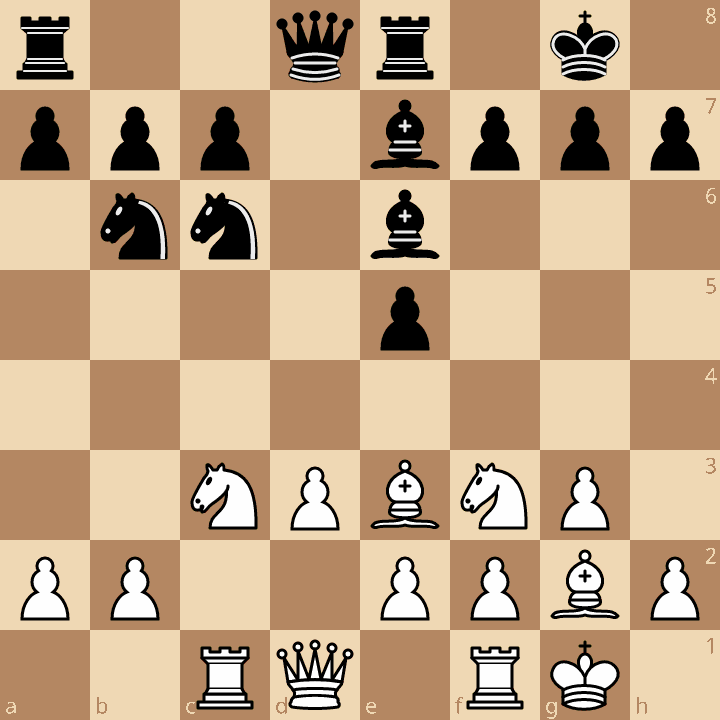
Now play it through
Step through every move on a real board, try the wrong ones, and ask Knighty why they fail.
Related Lessons
Summary
Ready to Practice?
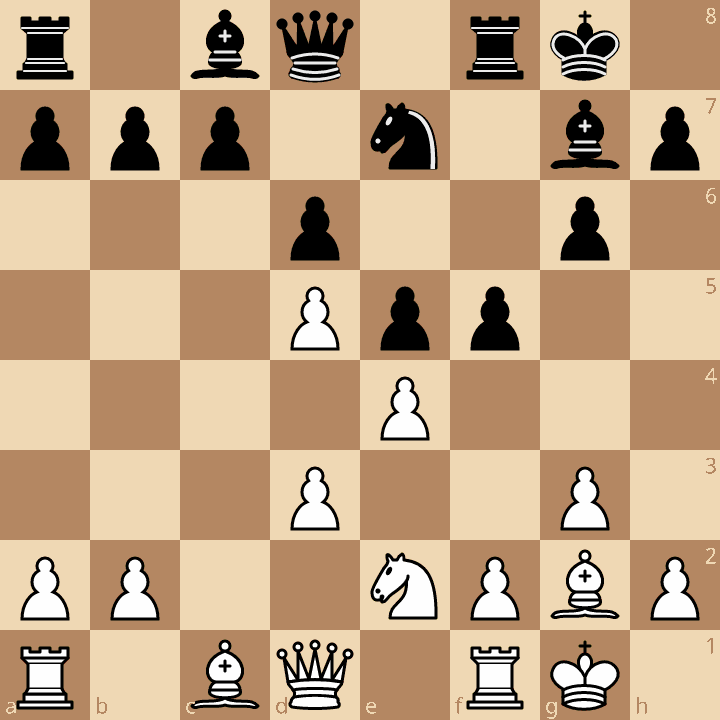
Next in this opening family
English Botvinnik System
Take this lesson with you
Free account requiredWith every variation — opens in Lichess & ChessBase