
DIR Variante Fianchetto
As brancas imitam a estratégia de fianchetto das pretas, levando a batalhas estratégicas onde ambos bispos miram o centro a partir dos flancos.
Experimentar lição interativaIntrodução
Conteúdo da lição
A abertura do Peão da Dama — as brancas reivindicam o centro com o peão d, que fica imediatamente defendido pela dama. Isto tende a levar a posições mais estratégicas e fechadas comparado com 1. e4. Respostas principais das pretas: - 1. ..d5 — Gambito da Dama e variantes Eslavas - 1. ..Nf6 — Defesas Índias (Índia do Rei, Nimzo-Índia, etc.) - 1. ..f5 — Defesa Holandesa
As pretas desenvolvem o cavalo e controlam e4, impedindo as brancas de construir facilmente o centro ideal e4+d4. Esta é a porta de entrada para todos os sistemas de Defesa Índia. As pretas adiam comprometer a estrutura de peões, mantendo flexibilidade para escolher entre Índia do Rei, Nimzo-Índia, Índia da Dama e mais.
Lances alternativos
As brancas reforçam o controle de d5 e ganham mais espaço. Combinado com d4, os dois peões dominam o centro. A resposta das pretas determina o sistema de abertura: - 2. ..e6 — Nimzo-Índia (após 3. Nc3 Bb4) ou Índia da Dama - 2. ..g6 — Índia do Rei ou Grünfeld - 2. ..c5 — Estruturas Benoni - 2. ..e5 — Gambito Budapeste
As pretas preparam o fianchetto do bispo em g7, levando à Defesa Índia do Rei (..d6, ..Bg7) ou à Defesa Grünfeld (..d5, ..Bg7). Ambas são hipermodernas — as pretas permitem um grande centro branco e depois o atacam. A escolha entre Índia do Rei e Grünfeld tipicamente acontece no lance 3 ou 4.
Lances alternativos
As brancas se desenvolvem naturalmente, mantendo opções abertas. Este lance flexível pode levar à Variante Fianchetto (g3, Bg2) ou transpor para outros sistemas. As alternativas das brancas definem o caráter da partida: - 3. Nc3 — linha principal da Índia do Rei, permitindo a Clássica e a Sämisch - 3. f3 — montagem Sämisch diretamente - 3. g3 — compromisso imediato com o fianchetto
O bispo toma sua poderosa diagonal, controlando a grande diagonal a1-h8. Esta é a peça característica da Índia do Rei — o Bg7 é um dragão adormecido que se torna poderoso quando o centro se abre. O bispo apoia as rupturas ..e5 e ..d5 enquanto fornece pressão latente sobre o flanco da dama das brancas.
Lances alternativos
A Variante Fianchetto! As brancas imitam a formação das pretas preparando Bg2. Esta é a abordagem mais posicional contra a Índia do Rei — as brancas evitam os agudos avanços de peões da Clássica (e4+d5) e da Sämisch (f3). A estrutura de duplo fianchetto leva a uma batalha estratégica onde ambos os bispos operam a partir dos flancos. Karpov e Kramnik eram mestres deste sistema.
As pretas rocam cedo, garantindo a segurança do rei antes de comprometer-se com uma estrutura central de peões. Isto é mais flexível do que jogar imediatamente ..d6 — as pretas retêm opções como ..d5 (estilo Grünfeld) ou ..c5 (estilo Benoni). Rocar também conecta as torres e prepara ..Re8 para apoiar a próxima ruptura ..e5.
Lances alternativos
As brancas completam o fianchetto. O Bg2 controla a grande diagonal h1-a8, exercendo pressão sobre d5 e apoiando o centro de peões c4/d4. Junto com Nf3, as brancas estão prontas para rocar. O Bg2 é a peça-chave das brancas neste sistema — apoia o centro, defende o rei e pode tornar-se muito poderoso nos finais.
As pretas comprometem-se com a estrutura da Índia do Rei apoiando um futuro ..e5. O peão d6 controla e5 e c5, formando a espinha dorsal da posição das pretas. Este lance distingue a Índia do Rei da Grünfeld (onde as pretas jogam ..d5). O plano das pretas é construir com ..Nbd7, ..e5, e depois buscar contrajogo com ..f5 ou ..c6 + ..d5.
Lances alternativos
As brancas rocam, completando o desenvolvimento do flanco do rei. Ambos os reis estão agora seguros atrás de seus bispos em fianchetto. A partida transiciona da abertura para um meio-jogo estratégico. As brancas agora jogarão Nc3, solidificando o centro e preparando e4 para reivindicar mais espaço.
As pretas desenvolvem o cavalo para d7, apoiando o avanço ..e5. O cavalo em d7 é flexível — pode ir para c5 (pressionando e4), e8-f6 (apoiando um ataque no flanco do rei), ou b6 (atacando c4). Este é o lance de desenvolvimento padrão no Fianchetto da Índia do Rei, preferido sobre ..Nc6 que bloquearia o peão c.
Lances alternativos
As brancas desenvolvem a última peça menor, apoiando e4 e reforçando d5. O cavalo em c3 é a espinha dorsal do controle central das brancas. Agora as brancas estão prontas para jogar e4, estabelecendo um forte duo de peões d4+e4 que reivindica espaço central significativo.
O avanço central fundamental! As pretas reivindicam o centro e ativam o Bg7, que agora tem uma diagonal clara. O peão em e5 também restringe o Nf3 e luta pelo controle de d4. Este é o lance definitório da Índia do Rei Clássica — as pretas estão prontas para continuar com ..Re8, ..c6, e eventualmente a temática ruptura ..f5 ou ..d5.
Lances alternativos
As brancas estabelecem o grande centro de peões d4+e4, reivindicando espaço e controlando casas centrais fundamentais. O centro está agora em tensão — d4 vs e5. O peão e4 também dá mais alcance ao Bg2 ao longo da diagonal e apoia um futuro avanço d5 para ganhar ainda mais espaço.
Um lance profilático multiuso. O peão c6 impede o Nd5 das brancas, apoia uma futura ruptura ..d5 e fornece uma casa de recuo para o cavalo de d7 via c5-e6. Esta é a marca do Fianchetto Clássico — as pretas constroem uma estrutura sólida primeiro, depois buscam contrajogo. A posição é rica em ideias estratégicas para ambos os lados.
Lances alternativos
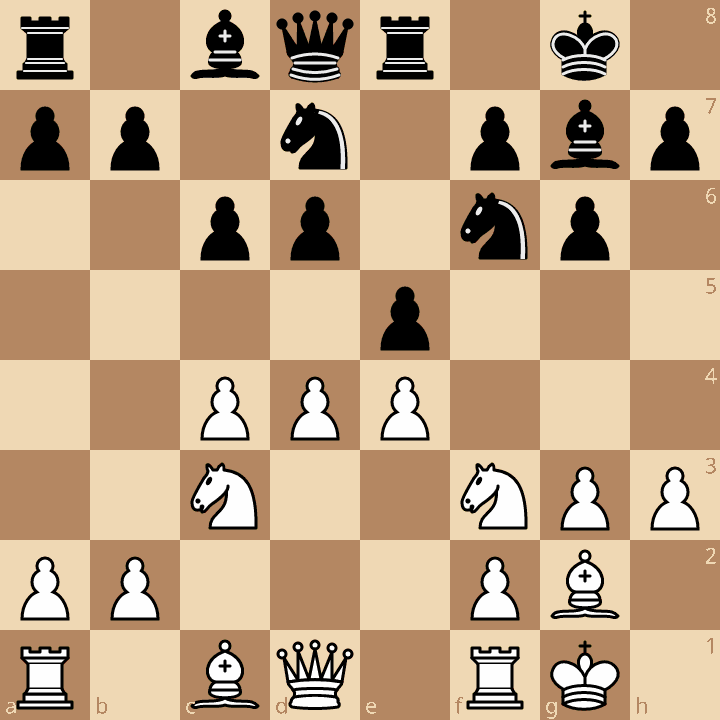
Um útil lance profilático — as brancas impedem ..Bg4 ou ..Ng4 e preparam Be3 sem serem perturbadas. O peão em h3 também apoia um futuro avanço g4 se as brancas quiserem jogar no flanco do rei. Este lance tranquilo é típico do caráter estratégico da Variante Fianchetto — ambos os lados melhoram suas posições gradualmente.
A torre move-se para a coluna e semiaberta, adicionando suporte ao peão e5 e preparando-se para possibilidades táticas se o centro se abrir. A torre também mira o peão e4, que pode tornar-se um alvo. Daqui as pretas têm múltiplos planos: ..Nf8-e6, ..a5 para jogo no flanco da dama, ou a temática ruptura ..f5 para atacar o centro branco.
Lances alternativos
Pontos-chave
- O Fianchetto (g3, Bg2) é o sistema mais posicional das brancas contra a Índia do Rei
- ...Nbd7 + ...e5 das pretas constrói uma sólida presença central
- ...c6 é fundamental — impede Nd5 e prepara a ruptura ...d5
- O Bg7 torna-se poderoso quando o centro se abre
- Ambos os lados manobram para obter vantagem — as pretas visam as rupturas ...f5 ou ...d5
Agora jogue você
Percorra cada lance num tabuleiro de verdade, tente os errados e pergunte ao Knighty por que falham.
Resumo
Pronto para praticar?
Leve esta lição com você
Requer conta gratuitaCom todas as variantes — abre no Lichess e no ChessBase