
Dänisches Gambit
Ein kühnes Doppelbauernopfer für schnelle Entwicklung und mächtige Angriffläufer.
Interaktive Lektion startenEinleitung
Lektionsinhalt
Die Königsbauern-Eröffnung — Weiß beansprucht das Zentrum und öffnet Diagonalen für Dame und Königsläufer. Der beliebteste erste Zug im Schach. Hauptantworten von Schwarz: - 1. ..e5 — Offenes Spiel, das Zentrum spiegelnd - 1. ..c5 — Sizilianische Verteidigung, asymmetrisch um d4 kämpfend - 1. ..e6 — Französische Verteidigung, ..d5 vorbereitend - 1. ..c6 — Caro-Kann, ebenfalls ..d5 vorbereitend
Schwarz spiegelt den zentralen Anspruch von Weiß und etabliert ein symmetrisches Bauernzentrum. Dies führt zu den Offenen Spielen — der ältesten und klassischsten Eröffnungsfamilie. Der e5-Bauer kontrolliert d4 und f4 und begrenzt die Expansionsmöglichkeiten von Weiß.
Weiß fordert sofort das Zentrum heraus! Anders als 2. Nf3, das ruhig entwickelt, ist 2. d4 direkt und ehrgeizig — wenn Schwarz schlägt, wird Weiß die offenen Linien zur schnellen Entwicklung nutzen. Dies ist der Ausgangspunkt der Mittelgambit-Familie, einschließlich des Dänischen Gambits nach 3. c3.
Alternative Züge
Schwarz nimmt den d4-Bauern. Ablehnen mit 2. ..d6 oder 2. ..Nc6 ist möglich, aber passiv — annehmen ist die natürlichste Antwort, da es schwer zu rechtfertigen ist, einen freien Zentrumsbauern zu ignorieren. Jetzt definiert die Wahl von Weiß die Eröffnung: 3. Qxd4 ist das Mittelgambit, während 3. c3 das Dänische Gambit einleitet.
Das Dänische Gambit beginnt! Weiß bietet einen zweiten Bauern an, um die Entwicklung zu beschleunigen. Die Idee ist brillant — nach ..dxc3 und ..cxb2 nimmt Weiß mit dem Läufer zurück und erhält zwei mächtige Läufer auf offenen Diagonalen, während Schwarz Zeit mit Bauernschlagen verschwendet. Alternativen von Weiß: - 3. Qxd4 — das Mittelgambit, sofortige Rückeroberung - 3. Nf3 — Übergang zur Schottischen, ruhiger
Alternative Züge
Schwarz akzeptiert den ersten Gambitbauern. Die Alternative 3. ..d5 (Sörensen-Verteidigung) lehnt das Gambit ab und ist eine solide Wahl. Annehmen ist riskanter, testet aber die Kompensation von Weiß direkt. Nach 3. ..dxc3 droht der Bauer, auf b2 zu schlagen und einen dritten Bauern zu gewinnen — aber Weiß hat einen Plan.
Alternative Züge
Weiß entwickelt den Läufer auf sein aggressivstes Feld, zielt auf f7 — und lässt Schwarz einen dritten Bauern auf b2 nehmen! Das ist das Herzstück des Dänischen Gambits: Weiß investiert Material für einen massiven Entwicklungsvorsprung. Der Läufer auf c4 wird im Zusammenspiel mit dem kommenden Läufer auf b2 verheerenden Doppeldiagonaldruck erzeugen.
Alternative Züge
Schwarz greift den zweiten Gambitbauern, setzt alles auf Material. Schwarz hat zwei Bauern Vorteil — hat aber drei Züge mit Bauernschlagen verbracht, während Weiß einen Läufer auf einem aggressiven Posten entwickelt hat. Ablehnen mit 4. ..d5 ist eine sicherere Alternative, die sofort Material für Entwicklung zurückgibt.
Alternative Züge
Der dunkelfeldrige Läufer nimmt zurück und vollendet den Gambitaufbau. Weiß steht zwei Bauern zurück, hat aber eine Traumstellung: der Bc4 zielt auf f7, der Bb2 beherrscht die lange Diagonale Richtung g7, und das Zentrum ist weit offen für schnellen Figureneinsatz. Plan von Weiß: Nf3 entwickeln, O-O und einen Königsangriff starten, bevor Schwarz konsolidieren kann.
Die Schlechter-Verteidigung — die berühmteste Antwort von Schwarz. Durch den Vorstoß ..d5 gibt Schwarz einen Bauern zurück, um den zentralen Griff von Weiß zu brechen und den hellfeldrigen Läufer zu befreien. Dies gilt als die solideste Verteidigung. Alternativen von Schwarz: - 5. ..Nf6 — die Klassische Verteidigung, entwickelt aber lässt das Zentrum intakt - 5. ..Bb4+ — stört die Koordination von Weiß mit einem Schach
Alternative Züge
Mit dem Läufer schlagen hält ihn aktiv auf dem starken Vorposten d5. Von hier überwacht er sowohl den Damenflügel (a8) als auch den Königsflügel (f7/g8). Weiß steht jetzt nur einen Bauern zurück und behält ausgezeichnete Figurenaktivität. Die Alternative 6. exd5 ist spielbar, blockiert aber vorübergehend die Diagonale des Bb2.
Alternative Züge
Schwarz entwickelt den Springer und greift sowohl den Bd5 als auch den e4-Bauern an. Dies ist die Fortsetzung der Klassischen Verteidigung — natürliche Entwicklung, läuft aber in eine spektakuläre taktische Sequenz. Das stärkere 6. ..Nd7 vermeidet die kommende Taktik, indem es die Verteidigung der Dame auf d8 nicht blockiert, obwohl es weniger aktiv entwickelt.
Alternative Züge
Ein atemberaubendes Läuferopfer! Weiß gibt den Läufer, um die Königsstellung von Schwarz aufzureißen. Nach Kxf7 (erzwungen) öffnet sich die d-Linie vollständig — und die weiße Dame hat eine direkte Linie zur schwarzen Dame auf d8. Dies ist das taktische Schlüsselmotiv des Dänischen Gambits: die Kombination aus offenen Linien und Figurenaktivität verwandelt Materialopfer in konkrete Drohungen.
Der König nimmt den Läufer — während Ke7 technisch legal ist, lässt es den Läufer am Leben und die schwarze Stellung in Trümmern. Der schwarze König steht nun exponiert auf f7, hat das Rochaderecht verloren. Noch kritischer: die d-Linie ist komplett offen und die schwarze Dame auf d8 ist verwundbar.
Weiß nimmt die schwarze Dame! Die d-Linie wurde durch das Läuferopfer geräumt und ermöglicht diesen verheerenden Schlag. Weiß opferte einen Läufer, gewann aber die Dame — ein enormer Materialumschwung. Die Stellung begünstigt jetzt Weiß entscheidend, trotz der zwei weniger Bauern vom ursprünglichen Gambit.
Schwarz gibt ein Zwischenschach mit dem Läufer, um die Koordination von Weiß zu stören, bevor die Stellung hoffnungslos wird. Das Schach zwingt Weiß, darauf zu reagieren, bevor konsolidiert werden kann.
Das Schach wird geblockt, während der Springer auf ein starkes Zentralfeld entwickelt wird. Dies ist viel stärker als 9. Qd2, was Schwarz erlauben würde, Damen zu tauschen und den weißen Vorteil zu reduzieren. Mit dem Springer auf c3 hat Weiß ausgezeichnete Entwicklung und bleibt eine Dame gegen einen Läufer im Vorteil.
Alternative Züge
Schwarz entwickelt den Springer und greift die weiße Dame auf d8 an. Mit dem exponierten König und einer Dame weniger gegen einen Läufer ist Schwarz in ernsthaften Schwierigkeiten, versucht aber Figuren zu aktivieren.
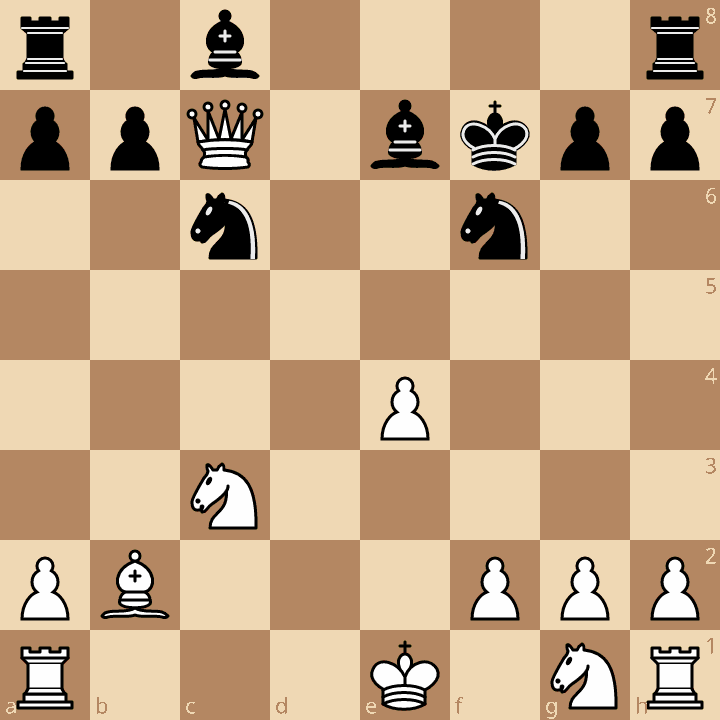
Die Dame weicht dem Angriff aus und nimmt gleichzeitig einen weiteren Bauern mit Schach! Die Dame auf c7 greift den König entlang der 7. Reihe an und sammelt Material. Der Vorteil von Weiß ist jetzt überwältigend.
Schwarz blockt das Schach mit dem Läufer. Weiß hat einen gewinnenden Vorteil — Dame und Bauer gegen zwei Läufer, mit besserer Entwicklung. Die taktische Kraft des Dänischen Gambits wurde voll demonstriert.
Wichtigste Erkenntnisse
- Das Dänische Gambit opfert zwei Bauern für schnelle Läuferentwicklung
- Das Läuferpaar Bc4 + Bb2 erzeugt Doppeldiagonaldruck auf f7 und g7
- 5...d5 (Schlechter-Verteidigung) ist die beste Antwort von Schwarz — Material zurückgeben zum Ausgleich
- Nach 6...Nf6 gewinnt das Opfer Bxf7+ die Dame über die offene d-Linie
- Im Gambitspiel können Entwicklung und offene Linien das Material aufwiegen
Jetzt selbst durchspielen
Geh jeden Zug am echten Brett durch, probier die falschen aus – und frag Knighty, warum sie scheitern.
Zusammenfassung
Bereit zum Üben?
Lektion mitnehmen
Kostenloses Konto erforderlichMit allen Varianten — öffnet in Lichess & ChessBase