
Botvinnik-System der Englischen Eröffnung
Ein kraftvolles Aufbauschema der Englischen Eröffnung, bei dem Weiß ein Bauerndreieck auf c4-d3-e4 mit Königsfianchetto aufbaut und einen flexiblen positionellen Rahmen schafft.
Interaktive Lektion startenEinleitung
Lektionsinhalt
Die Englische Eröffnung — Weiß kontrolliert d5 vom Flügel aus, ohne den d-Bauern festzulegen. Eine flexible, positionelle Eröffnung, die in viele 1. d4-Varianten übergehen kann oder zu einzigartigen englischen Systemen führt. Hauptoptionen von Schwarz: - 1. ..e5 — Umgekehrte Sizilianisch - 1. ..Nf6 — kann in indische Aufstellungen übergehen - 1. ..c5 — Symmetrisch Englisch
Alternative Züge
Schwarz beansprucht zentralen Raum und öffnet die Diagonale für den dunkelfeldrigen Läufer. Dies ist die ambitionierteste Antwort — die entstehenden Stellungen spiegeln eine Umgekehrte Sizilianisch wider, bei der Weiß ein Tempo mehr hat. Der e5-Bauer kontrolliert d4 und f4 und etabliert eine klassische Zentralstruktur.
Weiß entwickelt den Springer auf sein natürlichstes Feld und verstärkt die Kontrolle von d5 und e4. Der Springer auf c3 ist ein Eckpfeiler des Botvinnik-Systems — er wird später den e4-Vorstoß unterstützen und möglicherweise nach d5 springen. Dies ist der Hauptzug, der in den Komplex der Königsenglisch führt.
Alternative Züge
Schwarz entwickelt den Springer, verteidigt e5 und kontrolliert d4. Dies führt zum Geschlossenen Englisch — ein strategisches Schlachtfeld, auf dem beide Seiten langsam aufbauen, bevor sie sich festlegen. Schwarz spiegelt die Entwicklungsphilosophie von Weiß und hält die Stellung vorerst symmetrisch.
Vorbereitung des Königsfianchettos — ein Schlüsselelement des Botvinnik-Systems. Der Läufer auf g2 wird die lange Diagonale (a8-h1) kontrollieren und aus sicherer Entfernung Druck auf Zentrum und Damenflügel ausüben. Das Fianchetto bereitet auch die Rochade vor und harmoniert mit dem kommenden e4-Vorstoß.
Alternative Züge
Schwarz spiegelt den Fianchetto-Plan von Weiß. Der Läufer auf g7 wird eine starke Figur auf der langen Diagonale (a1-h8) sein, Druck auf das Zentrum ausüben und ..f5-Durchbrüche unterstützen. Dieses symmetrische Fianchetto führt zu einem strategischen Kampf, bei dem beide Läufer das Zentrum von den Flügeln aus anvisieren.
Der Läufer nimmt seinen Platz auf der langen Diagonale ein und vollendet das Fianchetto. Von g2 aus kontrolliert er d5 und übt Druck auf die gesamte Diagonale a8-h1 aus — besonders stark, wenn sich das Zentrum öffnet. Der Bg2 ist eine der wichtigsten Figuren von Weiß im Botvinnik-System und unterstützt sowohl den e4-Vorstoß als auch Nd5-Sprünge.
Schwarz vollendet das symmetrische Fianchetto. Der Bg7 ist eine starke Verteidigungs- und Angriffsfigur — er schützt die dunklen Felder um den König und kann verheerend werden, wenn sich das Zentrum öffnet. Mit beiden Läufern im Fianchetto ähnelt die Stellung einer Königsindischen Verteidigung mit vertauschten Farben.
Der bestimmende Zug des Botvinnik-Systems — Weiß ergreift das Zentrum mit Bauern auf c4 und e4. Dies schafft das charakteristische Bauernduo, das d5 kontrolliert, die schwarzen Figuren einschränkt und das ideale d3-Dreieck vorbereitet. Die c4+e4-Struktur ist äußerst flexibel: Weiß kann d3 für Solidität oder d4 für einen zentralen Durchbruch spielen.
Alternative Züge
Schwarz unterstützt den e5-Bauern und bereitet ..Nge7 gefolgt von ..f5 vor — den thematischen Gegenangriff gegen das weiße Zentrum. Der d6-Bauer verhindert auch, dass Weiß e5 vorstoßen kann. Dieser solide Aufbau gibt Schwarz eine flexible Stellung mit Plänen an beiden Flügeln.
Der Springer geht nach e2 — nicht f3! Dies ist ein Markenzeichen des Botvinnik-Systems. Auf e2 hält der Springer den f-Bauern frei für einen möglichen f4-Vorstoß, vermeidet die Blockade der Bg2-Diagonale und kann sich nach c3-d5 oder f4 umleiten. Nge2 unterstützt auch ein zukünftiges d3, ohne irgendeine Figur zu blockieren — ein perfekt koordinierter Aufbau.
Alternative Züge
Schwarz folgt derselben Logik — der Springer geht nach e7 statt f6, um den f-Bauern für den kritischen ..f5-Durchbruch freizuhalten. Von e7 aus kann sich der Springer auch nach c6-d4 umleiten oder ..f5 unterstützen. Beide Seiten sind nun voll dem Doppelfianchetto + Springer-auf-e2-Aufbau verpflichtet.
Vollendung des Botvinnik-Bauerndreiecks — c4, d3, e4. Dies ist eine der solidesten Zentralstrukturen im Schach. Der d3-Bauer verteidigt e4 von unten und hält die Stellung geschlossen und strategisch. Der Plan von Weiß ist klar: rochieren, dann den d5-Vorposten nutzen und f4- oder b4-Durchbrüche vorbereiten.
Alternative Züge
Schwarz rochiert in Sicherheit, verbindet die Türme und bereitet den ..f5-Gegenangriff vor. Mit dem König in Sicherheit kann sich Schwarz auf den Kampf im Zentrum und am Königsflügel konzentrieren. Der Turm auf f8 wird den kommenden ..f5-Vorstoß unterstützen — Schwarz' Hauptplan in dieser Struktur.
Weiß rochiert ebenfalls und vollendet die Entwicklung. Beide Seiten sind nun voll entwickelt mit symmetrischen Fianchetto-Strukturen — der eigentliche strategische Kampf beginnt. Typische Pläne von Weiß umfassen Nd5 (Besetzung des Vorpostens), Be3+Qd2 (Vorbereitung von Damenflügelspiel) oder f4 (wenn Schwarz ..f5 verzögert).
Der thematische Gegenangriff! Schwarz schlägt gegen den e4-Bauern von Weiß, das Fundament des Botvinnik-Dreiecks. Dies ist Schwarz' Hauptplan — die f-Linie für den Turm öffnen und Königsflügelspiel erzeugen. Die Spannung auf e4 zwingt Weiß zu einer Entscheidung: schlagen (Linien öffnen), verteidigen (Struktur erhalten) oder mit Nd5 kontern.
Weiß besetzt den mächtigen d5-Vorposten, bevor die f5-Spannung behandelt wird. Der Springer auf d5 ist eine dominierende Figur — er kann nicht leicht von Bauern vertrieben werden und kontrolliert Schlüsselfelder (b4, c3, e3, f4, b6, c7, e7, f6). Dies ist eine klassische Botvinnik-Idee: das durch die c4+e4-Struktur geschaffene d5-Feld nutzen, um eine Figur zu platzieren, die das Brett beherrscht.
Alternative Züge
Schwarz tauscht den Springer, um die dominierende Figur von Weiß auf d5 zu beseitigen. Obwohl dies den Vorposten-Springer entfernt, erlaubt es Weiß, mit dem c-Bauern zurückzuschlagen und die Bauernstruktur grundlegend zu verändern. Dieser Abtausch ist eine strategische Schlüsselentscheidung — Schwarz beseitigt den starken Springer, gibt Weiß aber einen potenziellen Freibauern auf d.
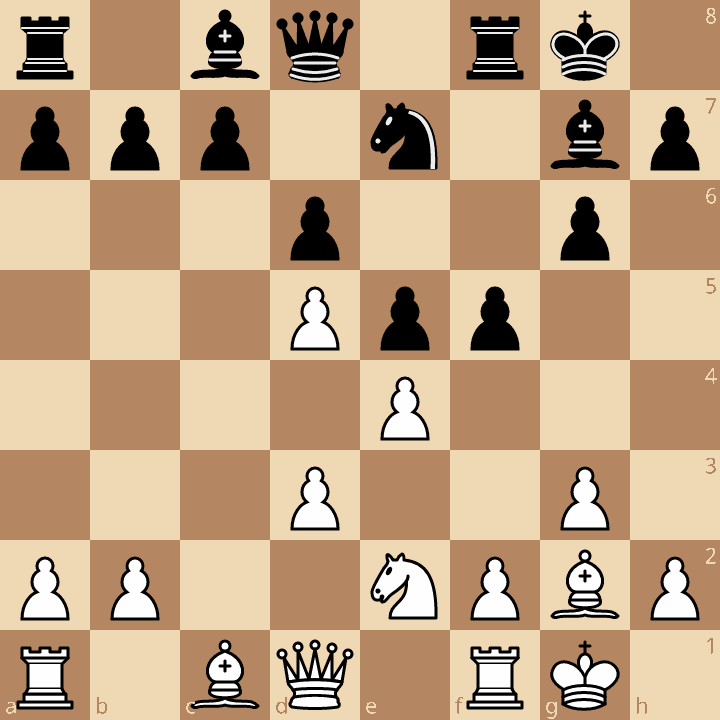
Das Zurückschlagen mit dem c-Bauern erzeugt einen mächtigen zentralen Bauernkeil auf d5. Dieser Bauer schränkt den Nc6 ein und verriegelt das Zentrum. Weiß hat nun einen Raumvorteil und klare Pläne: den d-Bauern vorstoßen, am Damenflügel mit a4-a5 spielen oder die offene c-Linie nutzen. Der Bauer auf d5 ist ein dauerhafter Aktivposten — er kontrolliert c6 und e6 und schränkt die Aktivität der schwarzen Figuren ein.
Alternative Züge
Der Springer zieht sich nach e7 zurück und unterstützt einen zukünftigen ..c6-Durchbruch, um den d5-Bauern herauszufordern. Von e7 aus visiert der Springer auch d5 und f5 an — Schlüsselfelder für das schwarze Gegenspiel. Die Stellung ist strategisch komplex: Weiß hat einen Raumvorteil und den d5-Keil, während Schwarz das Läuferpaar und potenzielles Königsflügelspiel mit ..f4 hat.
Wichtigste Erkenntnisse
- Das Botvinnik-Dreieck (c4-d3-e4) schafft ein felsenfestes, flexibles Zentrum
- Nge2 (nicht Nf3) hält den f-Bauern und die Diagonale des Bg2 frei
- Das Feld d5 ist ein mächtiger Vorposten für den Springer
- Schwarz kontert hauptsächlich mit ...f5, das die e4-Basis des Dreiecks angreift
- Nach Nd5 und cxd5 gibt der zentrale Bauernkeil Weiß anhaltenden Druck
Jetzt selbst durchspielen
Geh jeden Zug am echten Brett durch, probier die falschen aus – und frag Knighty, warum sie scheitern.
Zusammenfassung
Bereit zum Üben?
Lektion mitnehmen
Kostenloses Konto erforderlichMit allen Varianten — öffnet in Lichess & ChessBase