
Grünfeld-Verteidigung - Russisches System
Die weiße Dame übt aktiv Druck auf d5 aus, doch Schwarz kontert mit ...dxc4, ...a6, ...b5 und ...c5, um das Zentrum zu untergraben
Interaktive Lektion startenEinleitung
Lektionsinhalt
Die Damenbauern-Eröffnung — Weiß beansprucht das Zentrum mit dem d-Bauern, der sofort von der Dame gedeckt ist. Dies führt tendenziell zu strategischeren, geschlosseneren Stellungen im Vergleich zu 1. e4. Hauptantworten von Schwarz: - 1. ..d5 — Damengambit und Slawische Varianten - 1. ..Nf6 — Indische Verteidigungen (Königsindisch, Nimzowitsch-Indisch usw.) - 1. ..f5 — Holländische Verteidigung
Schwarz entwickelt den Springer und kontrolliert e4, wodurch Weiß das ideale e4+d4-Zentrum nicht leicht aufbauen kann. Dies ist der Zugang zu allen Indischen Verteidigungssystemen. Schwarz verzögert die Festlegung der Bauernstruktur und behält Flexibilität für die Wahl zwischen Königsindisch, Nimzowitsch-Indisch, Damenindisch und mehr.
Weiß verstärkt die Kontrolle über d5 und gewinnt mehr Raum. Kombiniert mit d4 dominieren die beiden Bauern das Zentrum. Die Antwort von Schwarz bestimmt das Eröffnungssystem: - 2. ..e6 — Nimzowitsch-Indisch (nach 3. Nc3 Bb4) oder Damenindisch - 2. ..g6 — Königsindisch oder Grünfeld - 2. ..c5 — Benoni-Strukturen - 2. ..e5 — Budapester Gambit
Schwarz bereitet das Fianchetto des Läufers auf g7 vor, was zur Königsindischen Verteidigung (..d6, ..Bg7) oder zur Grünfeld-Verteidigung (..d5, ..Bg7) führt. Beide sind hypermodern — Schwarz erlaubt Weiß ein großes Zentrum und greift es dann an. Die Wahl zwischen Königsindisch und Grünfeld fällt typischerweise im 3. oder 4. Zug.
Weiß entwickelt den Springer auf sein natürliches Feld und verstärkt die Kontrolle über d5 und e4. Nun muss sich Schwarz entscheiden: 3. ..d5 führt in die Grünfeld-Verteidigung mit sofortiger Herausforderung des Zentrums, während 3. ..Bg7 gefolgt von ..d6 zur Königsindischen führt — ein langsamerer Aufbau.
Die Grünfeld-Verteidigung! Schwarz schlägt sofort ins Zentrum, statt zuerst zu fianchettieren. Das ist der Schlüsselunterschied zur Königsindischen — Schwarz fordert das Zentrum frontal heraus und lädt Komplikationen ein, statt Weiß ungestört aufbauen zu lassen.
Alternative Züge
Die Drei-Springer-Variante — Weiß entwickelt sich natürlich, bevor ein Plan gegen die Grünfeld-Verteidigung festgelegt wird. Dies ist ein flexibler Zug, der mehrere Systeme offenhält. Die Alternativen von Weiß definieren verschiedene Varianten: - 4. cxd5 — Abtauschvariante, die kritischste - 4. Bf4 — weniger verbreitet, hält das Zentrum beweglich - 4. Bg5 — eine provokative Fesselung
Alternative Züge
Der Läufer nimmt seinen Platz auf der langen Diagonale ein und zielt auf d4. Das ist die Seele der Grünfeld-Verteidigung — der Bg7 wird das weiße Zentrum die gesamte Partie über unter Druck setzen. Kombiniert mit dem kommenden ..c5 wird der Läufer zur dominierenden Kraft.
Das Russische System! Die weiße Dame springt nach b3 und übt direkten Druck auf den d5-Bauern und das Feld b7 aus. Das ist aggressiver als ruhige Ansätze wie 5. Bg5 oder 5. e3 — die Dame beteiligt sich aktiv am Kampf um das Zentrum. Die Alternativen von Weiß führen zu verschiedenen Systemen: - 5. cxd5 Nxd5 6.e4 — späte Abtauschvariante - 5. Bg5 — positioneller Ansatz - 5. e3 — solide, aber passiv
Alternative Züge
Schwarz gibt den Zentrumsbauern ab — aber das ist eine strategische Entscheidung, kein Zugeständnis. Indem die Dame zum Rückschlag auf c4 gezwungen wird, gewinnt Schwarz Zeit und bereitet die Damenflügel-Expansion mit ..a6 und ..b5 vor. Die Dame auf c4 wird zur Zielscheibe.
Alternative Züge
Erzwungener Rückschlag. Die Dame auf c4 ist aktiv platziert, aber exponiert — Schwarz wird sie mit ..a6 und ..b5 bedrängen und dabei Tempi gewinnen, während am Damenflügel expandiert wird. Dieser Damentanz ist ein Markenzeichen des Russischen Systems.
Schwarz rochiert in Sicherheit, bevor die Damenflügel-Offensive gestartet wird. Der König ist auf g8 sicher, der Turm aktiviert sich auf f8 und der Bg7 erhält zusätzlichen Schutz. Nun ist Schwarz bereit für ..a6 und ..b5.
Weiß besetzt das volle Zentrum mit d4+e4 und gewinnt erheblichen Raum. Dieses imposante Bauernduo sieht bedrohlich aus, aber Schwarz hat einen konkreten Plan, es zu untergraben. Das weiße Zentrum ist stark, aber auch eine Zielscheibe.
Die Ungarische Variante — Schwarz bereitet die Schlüsselexpansion ..b5 mit Tempo vor. Der a6-Bauer nimmt weißen Figuren das Feld b5 weg und bereitet den Bauernvormarsch am Damenflügel vor, der die weiße Dame herumscheuchen wird. Dies ist die Hauptlinie des Russischen Systems, die auf höchster Ebene von Kasparow und Carlsen ausgiebig gespielt wurde.
Alternative Züge
Die Dame zieht sich nach b3 zurück und hält den Druck auf der b-Linie aufrecht, mit Blick auf b7. Von b3 aus unterstützt die Dame e4 indirekt und bleibt mit den Plänen von Weiß verbunden. Aber Schwarz' nächster Zug wird die Damenflügel-Expansion fortsetzen.
Die Damenflügel-Expansion beginnt! Der b5-Bauer gewinnt Raum und bereitet den kritischen Durchbruch ..c5 vor. Schwarz' Plan ist klar: die Damenflügelbauern vorrücken, um das weiße Zentrum vom Flügel zu untergraben — klassische Grünfeld-Strategie.
Weiß entwickelt den Läufer auf ein sicheres Feld und bereitet die kurze Rochade vor. Be2 ist eine solide Wahl — er blockiert keine Figuren und passt in den Plan, die Entwicklung abzuschließen. Die Alternative von Weiß: - 9. e5 — aggressiv, aber verfrüht, gibt Schwarz Gegenspiel mit ..b4
Der thematische zentrale Gegenschlag! Kombiniert mit dem Bg7 auf der langen Diagonale greift dies d4 mit überwältigender Kraft an. Schwarz' Damenflügelbauern (a6, b5) und der Durchbruch ..c5 arbeiten zusammen, um das weiße Zentrum zu zerreißen — die Grünfeld-Verteidigung in Bestform.
Weiß schlägt und gewinnt vorübergehend einen Bauern. Aber der c5-Bauer ist schwer zu halten — Schwarz wird ihn mit ..Be6, ..Nbd7 und ..Rc8 angreifen. Das weiße Zentrum wurde aufgebrochen, was dem fianchettierten Läufer von Schwarz enorm zugute kommt.
Der Läufer entwickelt sich auf ein aktives Feld, zielt auf c4 und bereitet sich vor, den c5-Bauern zurückzugewinnen. Der Be6 verbindet sich auch mit dem Plan ..Nbd7, gefolgt von ..Nxc5 oder ..Rc8, um Druck auf der c-Linie aufzubauen.
Alternative Züge
Die Dame zieht sich nach c2 zurück, verteidigt den e4-Bauern und behält die c-Linie im Auge. Von c2 aus unterstützt die Dame das weiße Zentrum und vermeidet Belästigung. Weiß hat immer noch nicht rochiert — ein Zeichen für die Komplexität dieser Stellung.
Der Springer entwickelt sich Richtung c5 und bereitet den Rückgewinn des Bauern vor. Von d7 aus kann der Springer auch nach e5 oder b6 umgeleitet werden. Schwarz ist voll mobilisiert — beide Läufer aktiv, beide Springer entwickelt, und die c-Linie steht kurz davor, sich zu öffnen.
Weiß entwickelt die letzte Leichtfigur, verteidigt den c5-Bauern und bereitet die Rochade vor. Der Be3 unterstützt d4-Ideen und kontrolliert wichtige dunkle Felder. Weiß ist nahe daran, die Entwicklung abzuschließen, steht aber weiter unter Druck.
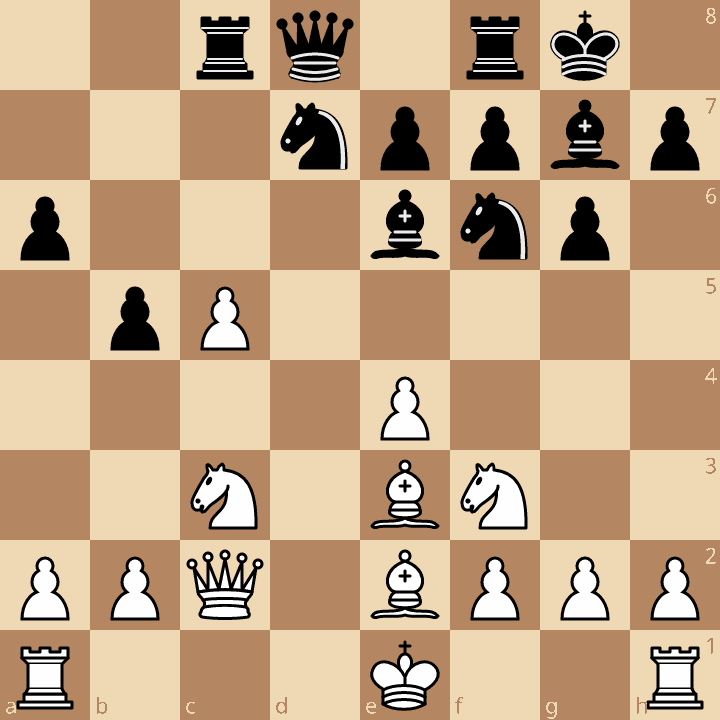
Der Turm schwenkt auf die offene c-Linie und baut Druck auf den c5-Bauern auf. Schwarz' Stellung ist ein Musterbeispiel für Grünfeld-Aktivität: der Bg7 beherrscht die lange Diagonale, der Be6 zielt auf c4, der Nbd7 visiert c5 an, und nun schließt sich der Turm dem Angriff an. Weiß muss präzise verteidigen, um den Mehrbauern zu halten.
Wichtigste Erkenntnisse
- 5.Qb3 ist das Russische System — die weiße Dame übt aktiv Druck auf d5 und b7 aus
- 5...dxc4 ist die Schlüsselantwort — das Zentrum vorübergehend aufgeben für Zeit und Damenflügel-Aktivität
- ...a6 und ...b5 vertreiben die Dame und bereiten den kritischen Durchbruch ...c5 vor
- Der Bg7 ist die Seele der Grünfeld-Verteidigung — er drückt auf d4 und dominiert nach Öffnung des Zentrums
- ...c5 kombiniert mit Figurendruck auf der c-Linie gibt Schwarz dynamische Kompensation
Jetzt selbst durchspielen
Geh jeden Zug am echten Brett durch, probier die falschen aus – und frag Knighty, warum sie scheitern.
Zusammenfassung
Bereit zum Üben?
Lektion mitnehmen
Kostenloses Konto erforderlichMit allen Varianten — öffnet in Lichess & ChessBase