
Spanische Partie - Abtauschvariante
Weiß tauscht den Läufer früh gegen den Springer, um einen dauerhaften strukturellen Vorteil durch eine überlegene Bauernmehrheit zu erzielen
Interaktive Lektion startenEinleitung
Lektionsinhalt
Die Königsbauern-Eröffnung — Weiß besetzt das Zentrum und öffnet Diagonalen für Dame und Königsläufer. Der beliebteste erste Zug im Schach. Hauptantworten von Schwarz: - 1. ..e5 — Offenes Spiel, Weiß' Zentrum spiegelnd - 1. ..c5 — Sizilianische Verteidigung, asymmetrischer Kampf um d4 - 1. ..e6 — Französische Verteidigung, ..d5 vorbereitend - 1. ..c6 — Caro-Kann, ebenfalls ..d5 vorbereitend
Alternative Züge
Schwarz spiegelt Weiß' Zentrumsanspruch und etabliert ein symmetrisches Bauernzentrum. Dies führt zu den Offenen Spielen — der ältesten und klassischsten Eröffnungsfamilie. Der e5-Bauer kontrolliert d4 und f4 und begrenzt Weiß' Expansionsmöglichkeiten.
Weiß entwickelt den Springer auf sein natürlichstes Feld und greift sofort den e5-Bauern an. Der Springer kontrolliert auch d4 und bereitet die kurze Rochade vor. Dies ist der häufigste zweite Zug und führt zu einem breiten Eröffnungsbaum einschließlich Italienisch, Spanisch und Schottisch.
Alternative Züge
Schwarz verteidigt den e5-Bauern mit dem natürlichsten Entwicklungszug. Der Springer auf c6 kontrolliert auch die wichtigen Felder d4 und e5. Von hier definiert Weiß' dritter Zug die Eröffnung: - 3. Bc4 — Italienische Partie - 3. Bb5 — Spanische Partie - 3. d4 — Schottische Partie - 3. Nc3 — Vierspringerspiel / Wiener Hybrid
Die Spanische Partie (Ruy Lopez) — eine der tiefgründigsten und angesehensten Eröffnungen. Weiß übt Druck auf den Nc6 aus — den Schlüsselverteidiger von e5. Wenn Schwarz später den d7-Bauern zieht, wird der Springer an den König gefesselt. Die Idee ist nicht sofort zu schlagen, sondern langfristigen Druck aufrechtzuerhalten. Hauptantworten von Schwarz: - 3. ..a6 — Morphy-Verteidigung (am beliebtesten), den Läufer herausfordernd - 3. ..Nf6 — Berliner Verteidigung, solide und remislastig - 3. ..d6 — Steinitz-Verteidigung, passiv aber solide
Alternative Züge
Die Morphy-Verteidigung — Schwarz hinterfragt sofort die Position des Läufers. Weiß muss entscheiden: Rückzug (4. Ba4, Spannung haltend) oder Tausch (4. Bxc6, Bauern verdoppelnd aber Läuferpaar aufgebend). 4. Ba4 ist die Hauptlinie und hält den Druck sowie die Option zum späteren Tausch aufrecht.
Die Abtauschvariante! Weiß tauscht sofort den Läufer gegen den Springer und schafft einen dauerhaften strukturellen Vorteil. Nach ..dxc6 hat Schwarz Doppelbauern auf der c-Linie und Weiß eine gesunde 4-gegen-3-Mehrheit am Königsflügel. Dies ist eine strategische Entscheidung — Weiß gibt das Läuferpaar auf im Tausch für eine überlegene Bauernstruktur, die im Endspiel entscheidend wird.
Alternative Züge
Zum Zentrum hin zurückschlagen ist korrekt — 4. ..bxc6 würde den a6-Bauern isoliert und schwach lassen. Nach ..dxc6 hat Schwarz Doppelbauern auf c, öffnet aber die d-Linie für die Dame und erhält das Läuferpaar. Schwarz' langfristiger Plan ist es, die Läufer und aktives Figurenspiel zu nutzen, um die strukturelle Schwäche zu kompensieren.
Sofortiges Rochieren ist der flexibelste Ansatz. Weiß bringt den König in Sicherheit und verbindet die Türme, bevor eine bestimmte Bauernstruktur festgelegt wird. Der Turm auf f1 beobachtet die f-Linie und unterstützt einen möglichen f4-Durchbruch später. Es besteht keine Eile, d4 zu spielen — Weiß kann zwischen d3 (solide) oder d4 (ambitioniert) wählen, je nach Schwarz' Aufbau.
Alternative Züge
Schwarz entwickelt den Läufer auf sein aktivstes Feld und fesselt den Nf3 gegen die Dame. Dies ist die erste Wahl der Engine — der Läufer wurde durch ..dxc6 befreit und findet sofort eine starke Diagonale. Schwarz erzeugt konkrete Drohungen (Bxf3, Weiß' Struktur beschädigend) bei natürlicher Entwicklung.
Alternative Züge
Dem Läufer eine wichtige Frage stellen — zurückziehen oder festlegen? Der Läufer muss zwischen dem aggressiven ..h5 (Druck haltend) oder dem ruhigen ..Bh5 (was später g4 erlaubt) wählen. Dies ist eine Standardidee gegen die Bg4-Fesselung. Weiß gewinnt nützliche Informationen über Schwarz' Absichten und schafft gleichzeitig ein Fluchtfeld für den König.
Alternative Züge
Die ambitionierteste Antwort — Schwarz hält den Läufer auf dem aggressiven g4-Feld und droht, ihn dort dauerhaft zu halten. Der Bauer auf h5 verhindert, dass g4 den Läufer vertreibt. Dies ist eine zweischneidige Wahl: Der h-Bauer ist vorgerückt und könnte zum Angriffsziel werden, aber der Läufer bleibt aktiv.
Alternative Züge
Ein solider, flexibler Bauernzug, der e4 stützt und die Diagonale c1-h6 für den Dunkelfeld-Läufer öffnet. Weiß vermeidet d4 vorerst — der Bauer steht in vielen Linien der Abtauschvariante besser auf d3, wo ein langsamer, strategischer Ansatz am besten funktioniert. Der Plan ist, mit Nbd2, Re1 zu entwickeln und d4 erst vorzubereiten, wenn alles bereit ist.
Alternative Züge
Schwarz zentralisiert die Dame auf f6 — ein ungewöhnliches, aber effektives Feld. Die Dame unterstützt den e5-Bauern, beobachtet den Königsflügel und behält die Option O-O-O bei. In der Abtauschvariante verzögert Schwarz oft die Rochade, um Flexibilität zu bewahren. Die Dame schützt auch gegen Nxe5-Ideen und bereitet eine mögliche ..g5-Expansion vor.
Alternative Züge
Den Springer nach d2 statt c3 zu entwickeln ist ein Kennzeichen der Abtauschvariante. Von d2 aus unterstützt der Springer das Feld c4 (ein wichtiger Vorposten) und kann je nach Stellung nach f1-g3 oder c4 umgeleitet werden. Der Springer auf d2 vermeidet auch das Blockieren des c-Bauern und bewahrt die Option c3 zur Unterstützung eines zukünftigen d4.
Alternative Züge
Schwarz entwickelt den Springer nach e7 und bereitet die Umleitung nach g6 vor, wo er f4 und h4 kontrolliert. Der Springer auf e7 stützt auch den c6-Bauern und vermeidet das Blockieren der f-Linie. Dies ist ein häufiges Manöver in der Abtauschvariante — der Springer findet sein bestes Feld über e7-g6.
Der Turm zieht auf die halboffene e-Linie und erhöht den Druck auf den e5-Bauern. Dies ist ein natürlicher Entwicklungszug, der d4 vorbereitet, indem er das Zentrum zusätzlich unterstützt. Mit Re1 vollendet Weiß die Entwicklung aller Leichtfiguren und Türme. Die Stellung ist reif für den zentralen Durchbruch.
Alternative Züge
Der Springer erreicht sein ideales Feld — g6 kontrolliert die Felder f4 und h4, verhindert, dass Weiß leicht f4 spielen kann, und unterstützt die Königsflügelverteidigung. Dies vollendet Schwarz' Figurenentwicklung. Von g6 aus kann der Springer auch nach f4 springen, wenn sich die Gelegenheit bietet, und starken Druck auf Weiß' Stellung erzeugen.
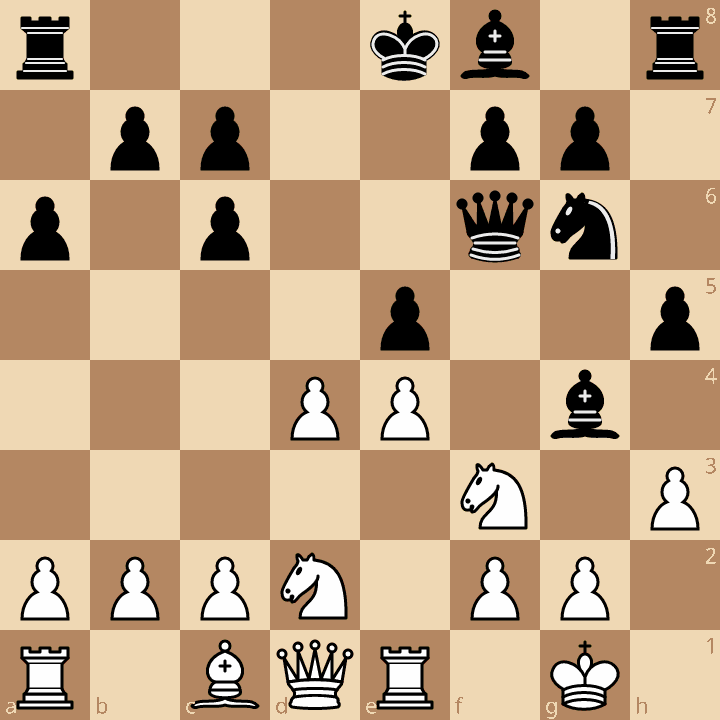
Der thematische zentrale Durchbruch! Nach sorgfältiger Vorbereitung mit d3, Nbd2 und Re1 schlägt Weiß endlich im Zentrum zu. Der d4-Vorstoß fordert Schwarz' e5-Bollwerk heraus und öffnet Linien für Weiß' Figuren. Dies ist die Krönung von Weiß' Strategie — die überlegene Bauernstruktur wird am relevantesten, wenn sich das Zentrum öffnet und das Spiel in Richtung Endspiel übergeht.
Alternative Züge
Wichtigste Erkenntnisse
- 4.Bxc6 dxc6 schafft einen dauerhaften strukturellen Vorteil — Weiß' Königsflügelmehrheit gegen Schwarz' verkrüppelte c-Bauern
- Schwarz kompensiert mit dem Läuferpaar und aktivem Figurenspiel
- Weiß entwickelt mit O-O, h3, d3, Nbd2, Re1 bevor d4 kommt
- Der Springer geht nach d2 (nicht c3), um den c-Bauern flexibel zu halten und c4 anzuvisieren
- Der d4-Durchbruch ist Weiß' primäres strategisches Ziel — das richtige Timing ist entscheidend
Jetzt selbst durchspielen
Geh jeden Zug am echten Brett durch, probier die falschen aus – und frag Knighty, warum sie scheitern.
Zusammenfassung
Bereit zum Üben?
Lektion mitnehmen
Kostenloses Konto erforderlichMit allen Varianten — öffnet in Lichess & ChessBase