
Ruy Lopez - Morphy Defense Main Line
Master the "Spanish Torture" with long-term positional pressure
Try Interactive LessonIntroduction
Lesson Content
Start with the king pawn for an open game.
e4 — The King's Pawn opening — White claims the center and opens diagonals for the queen and kingside bishop. The most popular first move in chess. Black's main responses: - 1. ..e5 — Open Game, matching White's center - 1. ..c5 — Sicilian Defense, fighting for d4 asymmetrically - 1. ..e6 — French Defense, preparing ..d5 - 1. ..c6 — Caro-Kann, also preparing ..d5
Alternative Moves
Black mirrors White's central claim, establishing a symmetrical pawn center. This leads to the Open Games — the oldest and most classical family of openings. The e5 pawn controls d4 and f4, limiting White's expansion options.
Attack the e5 pawn while developing.
♘︎f3 — White develops the knight to its most natural square, attacking the e5 pawn immediately. The knight also controls d4 and prepares kingside castling. This is the most common second move, leading to a vast tree of openings including the Italian, ♖︎uy Lopez, and Scotch.
Alternative Moves
Black defends the e5 pawn with the most natural developing move. The knight on c6 also controls the important d4 and e5 squares. From here White's third move defines the opening: - 3. ♗︎c4 — Italian Game - 3. ♗︎b5 — Ruy Lopez - 3. d4 — Scotch Game - 3. ♘︎c3 — Three Knights Game
Develop your bishop to attack the knight defending e5.
♗︎b5 — The ♖︎uy Lopez (Spanish Game) — one of the deepest and most respected openings. White puts pressure on the ♘︎c6 — the key defender of e5. If Black later moves the d7 pawn, the knight becomes pinned to the king. The idea is not to capture immediately but to maintain long-term pressure. Black's main responses: - 3. ..a6 — Morphy Defense (most popular), challenging the bishop - 3. ..♘︎f6 — Berlin Defense, solid and drawish - 3. ..d6 — Steinitz Defense, passive but solid
Alternative Moves
The Morphy Defense — Black immediately questions the bishop's position. White must decide: retreat (4. ♗︎a4, maintaining tension) or exchange (4. ♗︎xc6, doubling pawns but ceding the bishop pair). 4. ♗︎a4 is the main line, keeping the pressure and the option to exchange later.
Alternative Moves
Retreat the bishop but keep it on an active diagonal.
♗︎a4 — Retreating while maintaining pressure on the ♘︎c6. The bishop stays active on the a4-e8 diagonal, preserving the option to exchange on c6 at a more advantageous moment. This is the main line of the ♖︎uy Lopez — White keeps the tension and the bishop pair. The alternative 4. ♗︎xc6 (Exchange Variation) doubles Black's pawns but concedes the bishop pair.
Alternative Moves
Black develops the knight to f6, counterattacking the e4 pawn and preparing to castle kingside. This puts immediate pressure on White's center. White must now decide how to handle the e4 tension — castling first (5.O-O) is the main line, trusting that the e4 pawn is tactically defended.
Castle early to get your king safe before committing to a plan.
O-O — Early castling! White prioritizes king safety and keeps maximum flexibility — a hallmark of the ♖︎uy Lopez. The e4 pawn appears en prise, but 5. ..♘︎xe4 is met by ♖︎e1 and d4, winning the pawn back with interest. This is one of the deepest ideas in the Ruy Lopez: White trusts dynamic compensation rather than defending the pawn passively.
Alternative Moves
Black develops the bishop to e7, preparing to castle kingside. This is the most classical response — solid and flexible, keeping all options open. Black avoids the more combative 5. ..♘︎xe4 (Open Ruy Lopez) or 5. ..b5 followed by ..♗︎b7 (Arkhangelsk variation), choosing a slower but more reliable setup.
Support your e4 pawn and prepare the central break.
♖︎e1 — The rook supports the e4 pawn and prepares the d4 central break. This is the standard ♖︎uy Lopez plan — building up slowly before committing to the center. With the rook on e1, the e4 pawn is solidly defended and White can now consider d4 at the right moment. The rook also X-rays the Black king along the e-file.
Alternative Moves
Black gains space on the queenside and forces the bishop to retreat. This is a key part of Black's counterplay in the Morphy Defense — expanding on the queenside while preparing ..♘︎a5 to exchange the dangerous ♗︎b3. The b5 push also controls c4, limiting White's piece placement options.
Retreat the bishop to a safe square that maintains activity.
The bishop retreats to b3, a stable square where it cannot be further harassed by pawns. From b3 it maintains pressure on the f7 diagonal and supports the eventual d4 advance. The ♗︎b3 is a long-term asset in the ♖︎uy Lopez — it often plays a decisive role in middlegame attacks along the a2-g8 diagonal.
Black solidifies the e5 pawn and completes the defensive setup. The d6 pawn supports e5 and opens the c8-h3 diagonal for the bishop's future development. Without d6, the e5 pawn would be vulnerable to a future d4 break. Black's position is solid but somewhat cramped — the typical ♖︎uy Lopez dilemma.
Prepare the d4 pawn break.
Preparing d4 — the classic ♖︎uy Lopez plan. White will build the ideal pawn center with d4, leveraging the c3 pawn for support. This slow buildup is the essence of the "Spanish Torture." The d4 break is not yet urgent — White first ensures full preparation with ♖︎e1, ♗︎b3, and c3 before committing to the central advance.
Alternative Moves
Black castles to safety, completing basic development. Both kings are now safe — the real strategic battle begins. White will look to play d4, h3 (preventing ..♗︎g4), and build a kingside attack. Black seeks counterplay with ..♘︎a5 and the ..c5 or ..d5 breaks.
Key Takeaways
- ♗︎b5 indirectly attacks e5 by threatening its defender
- Early O-O (move 5) keeps maximum flexibility
- ♖︎e1 supports e4 and prepares the d4 break
- c3 prepares d4—the ideal pawn center
- The Ruy Lopez is about long-term pressure, not quick attacks
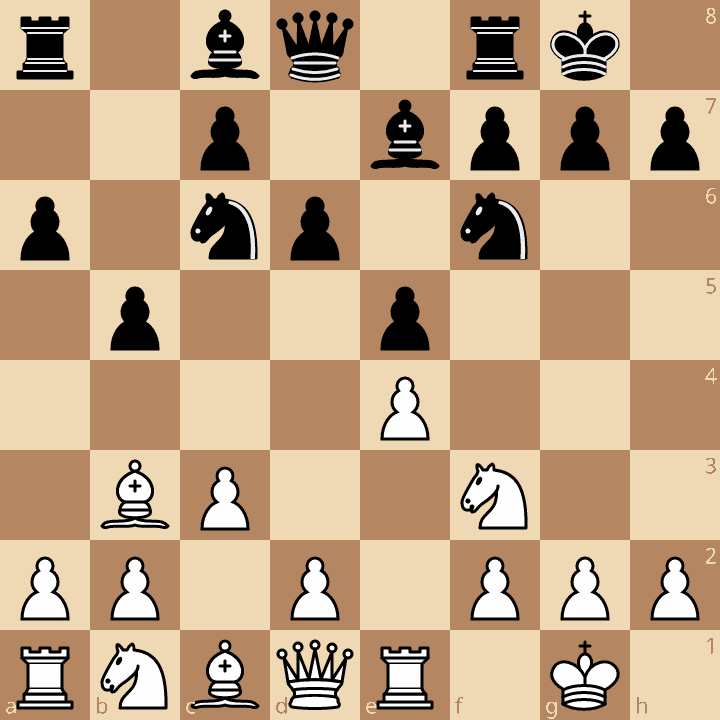
Now play it through
Step through every move on a real board, try the wrong ones, and ask Knighty why they fail.
Related Lessons
Summary
Ready to Practice?
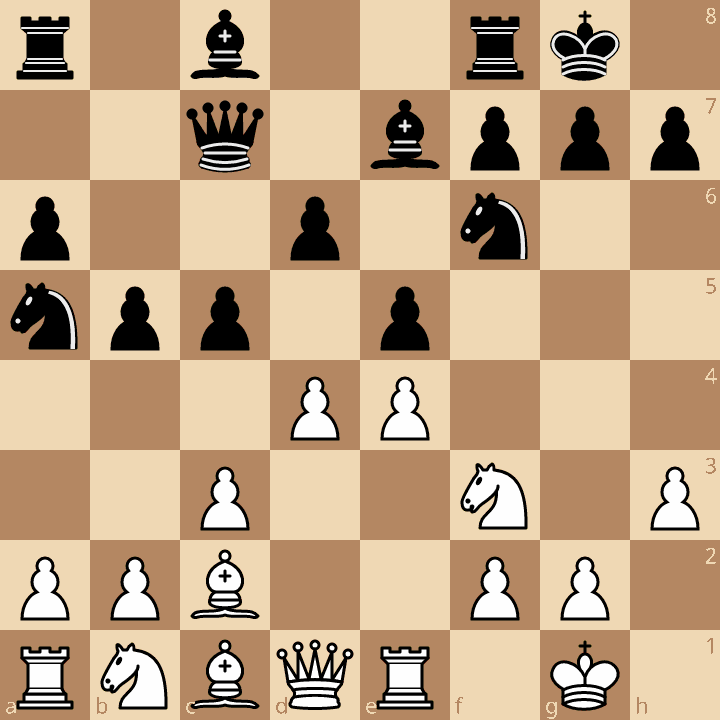
Next in this opening family
Ruy Lopez - Closed (Chigorin)
Take this lesson with you
Free account requiredWith every variation — opens in Lichess & ChessBase