
Sizilianisch - Beschleunigter Drache
Eine flexible Sizilianische Variante, in der Schwarz früh fianchettiert, um den starken Durchbruch ...d5 in einem Zug zu ermöglichen.
Interaktive Lektion startenEinleitung
Lektionsinhalt
Die Königsbauern-Eröffnung — Weiß beansprucht das Zentrum und öffnet Diagonalen für Dame und Königsläufer. Der beliebteste erste Zug im Schach. Hauptantworten von Schwarz: - 1. ..e5 — Offenes Spiel, Zentrumsausgleich - 1. ..c5 — Sizilianische Verteidigung, asymmetrischer Kampf um d4 - 1. ..e6 — Französische Verteidigung, Vorbereitung von ..d5 - 1. ..c6 — Caro-Kann, ebenfalls Vorbereitung von ..d5
Die Sizilianische Verteidigung — Schwarz' populärste und ambitionierteste Antwort auf 1. e4. Statt Weiß im Zentrum mit ..e5 zu spiegeln, kämpft Schwarz asymmetrisch um das Feld d4. Die Sizilianische führt zu unausgewogenen Stellungen, in denen beide Seiten Chancen haben. Weiß bekommt typischerweise einen Königsangriff; Schwarz Gegenspiel am Damenflügel und auf der c-Linie.
Alternative Züge
Die Offene Sizilianische beginnt. Weiß entwickelt natürlich und bereitet d4 vor, was die Stellung öffnen wird. Dies ist der solideste Ansatz gegen die Sizilianische. Schwarz' Hauptantworten bestimmen die konkrete Variante: - 2. ..d6 — Najdorf, Drache, Klassisch - 2. ..Nc6 — Sweschnikow, Kalaschnikow, Beschleunigter Drache - 2. ..e6 — Kan, Taimanow, Scheveninger
Schwarz entwickelt den Springer auf sein natürlichstes Feld, verteidigt den Bauern c5 und bereitet die Rückeroberung auf d4 vor. Der Springer auf c6 kontrolliert die kritischen Felder d4 und e5. Diese Zugfolge bewahrt maximale Flexibilität — Schwarz hat sich noch nicht auf ..d6 festgelegt, was der Kernpunkt des Beschleunigten Drachen ist.
Alternative Züge
Weiß schlägt im Zentrum zu mit dem thematischen d4-Vorstoß. Dies ist praktisch der einzige Weg, um in der Offenen Sizilianischen auf Vorteil zu spielen — Weiß bietet einen Bauerntausch an, um die Stellung zu öffnen und die Entwicklung zu beschleunigen. Schwarz sollte schlagen und die c-Linie für zukünftiges Gegenspiel öffnen.
Schwarz schlägt und öffnet die c-Linie, die zu einem langfristigen Aktivposten wird. Die halboffene c-Linie gibt Schwarz' Turm natürliches Gegenspiel gegen Weiß' Damenflügel. Dieser Abtausch ist Standard in der Offenen Sizilianischen — Schwarz tauscht einen Randbauern gegen einen Zentrumsbauern und schafft die asymmetrische Struktur, die die Sizilianische definiert.
Weiß nimmt mit dem Springer zurück und zentralisiert ihn kraftvoll auf d4. Der Springer kontrolliert Schlüsselfelder (b5, c6, e6, f5) und kann später auf verschiedene Vorposten springen. Von hier aus bestimmt Schwarz' nächster Zug die Variante — und hier weicht der Beschleunigte Drache vom normalen Drachen ab.
Der Beschleunigte Drache! Schwarz bereitet das Fianchetto des Läufers auf g7 vor, ohne vorher ..d6 zu spielen. Dies ist der zentrale Unterschied zum normalen Drachen (wo ..d6 zuerst kommt). Durch das Verzögern von ..d6 bewahrt Schwarz die Option, ..d5 in einem Zug zu spielen — ein kraftvoller zentraler Durchbruch, der im normalen Drachen unmöglich ist. Der Nachteil: Weiß kann den Maroczy-Bind mit c4 versuchen und d5 blockieren.
Alternative Züge
Weiß entwickelt den Springer nach c3 und unterstützt e4 sowie die Kontrolle über d5. Dies ist der natürliche Entwicklungszug, erlaubt aber Schwarz, den Fianchetto-Plan fortzusetzen. Die Hauptalternative von Weiß ist 5. c4 — der Maroczy-Bind, der ..d5 direkt verhindert, indem er dieses Feld mit Bauern kontrolliert. Der Maroczy-Bind führt zu einem langsameren, strategischeren Spiel.
Schwarz vollendet das Fianchetto und platziert den Läufer auf der mächtigen langen Diagonale (a1-h8). Der Bg7 ist das Prunkstück des Beschleunigten Drachen — er übt Druck auf das Zentrum und den Damenflügel aus, besonders auf das Feld d4. Der Läufer trägt nach der Rochade auch zur Königssicherheit bei und bildet eine solide Verteidigungsstruktur um den schwarzen König.
Weiß entwickelt den dunkelfeldrigen Läufer nach e3 und unterstützt den Nd4 sowie die Entwicklung am Königsflügel. Der Läufer hat auch das Feld a7 im Visier und unterstützt mögliches Spiel am Damenflügel. Dies ist die beliebteste Fortsetzung. Weiß' Plan umfasst typischerweise Bc4 oder Be2, gefolgt von Rochade und Druck im Zentrum.
Schwarz entwickelt den Springer nach f6 und greift den Bauern e4 an, während die kurze Rochade vorbereitet wird. Der Springer kontrolliert auch d5 — ein kritisches Feld in dieser Eröffnung. Mit beiden Springern entwickelt und dem fianchettierten Läufer ist Schwarz fast bereit zu rochieren und dann den Durchbruch ..d5 im richtigen Moment auszuführen.
Weiß platziert den Läufer auf c4 und zielt auf das Feld f7, was ..d5 indirekt entmutigt. Der Läufer auf c4 ist aggressiv — er unterstützt Nd4-Ideen und bereitet einen möglichen Königsangriff vor. Dies ist die erste Wahl der Engine, die konkretere Drohungen aufstellt als das ruhigere Be2.
Schwarz rochiert kurz und bringt den König hinter der Fianchetto-Struktur in Sicherheit. Der Turm kommt auch nach f8 und unterstützt potenziell einen zukünftigen ..f5-Vorstoß oder den Durchbruch ..d5. Die Rochade ist wesentlich, bevor man zentrale Aktionen startet — der König muss sicher stehen, bevor die Stellung geöffnet wird.
Weiß zieht den Läufer nach b3 zurück und hält ihn auf der Diagonale a2-g8 unter Beibehaltung des Drucks auf f7. Der Rückzug vermeidet auch, dass ..d5 den Läufer mit Tempo trifft. Von b3 aus beeinflusst der Läufer weiter das Zentrum und unterstützt Ideen wie f3 und Qd2 für einen möglichen Königsangriff.
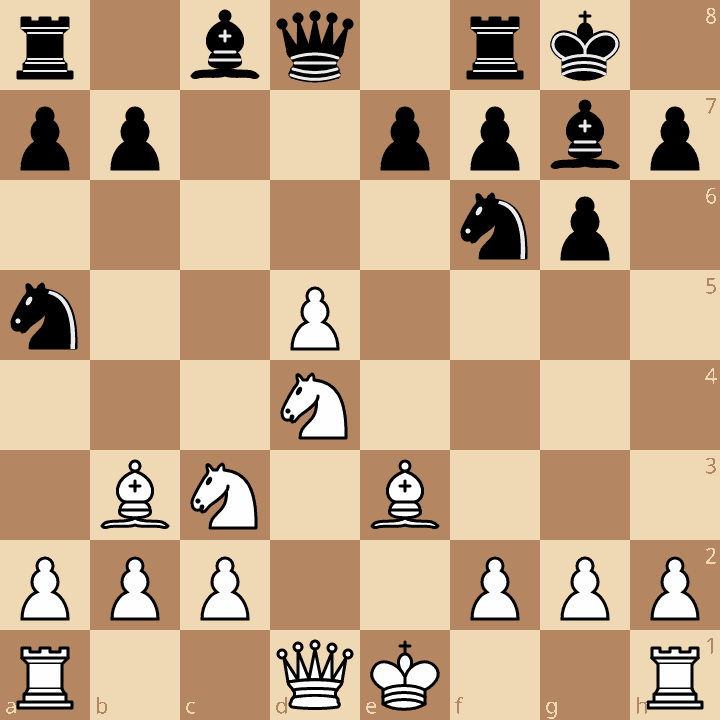
Der thematische zentrale Durchbruch — das Ziel des gesamten Beschleunigten Drachen! Schwarz schlägt im Zentrum zu mit ..d5 in einem einzigen Zug — etwas, das im normalen Drachen unmöglich ist, wo ..d6 bereits gespielt wurde. Dieser Durchbruch fordert Weiß' Zentrum direkt heraus und öffnet Linien für Schwarz' Figuren, besonders den Bg7 auf der langen Diagonale. Die Stellung wird scharf und dynamisch.
Alternative Züge
Weiß schlägt und öffnet die Stellung. Dies ist die natürlichste Antwort — das Ablehnen mit e5 würde das Zentrum blockieren, aber den e5-Bauern verwundbar lassen. Nach exd5 hat Schwarz eine wichtige Entscheidung, wie zurückgenommen und Gegenspiel erzeugt werden soll.
Schwarz greift den Bb3 mit dem Springer an und gewinnt Tempo, während der d5-Bauer noch hängt. Weiß muss sich um die Bedrohung des Läufers kümmern, bevor konsolidiert werden kann. Nach dem unvermeidlichen Abtausch auf b3 wird Schwarz den d5-Bauern mit dem Nf6 zurückerobern und eine komfortable Stellung mit aktiven Figuren und ohne Schwächen erreichen. Der Bg7 wird die lange Diagonale beherrschen, sobald das Zentrum sich öffnet.
Alternative Züge
Wichtigste Erkenntnisse
- Spielen Sie ...g6 vor ...d6, um die Option des Durchbruchs ...d5 offen zu halten
- Der Bg7 ist die Schlüsselfigur — er beherrscht die lange Diagonale
- ...d5 in einem Zug ist das Ziel der beschleunigten Zugfolge
- Vorsicht vor dem Maroczy-Bind (c4) — Weiß' Hauptwaffe gegen ...d5
- Rochieren Sie vor dem Durchbruch im Zentrum — Königssicherheit zuerst
Jetzt selbst durchspielen
Geh jeden Zug am echten Brett durch, probier die falschen aus – und frag Knighty, warum sie scheitern.
Zusammenfassung
Bereit zum Üben?
Lektion mitnehmen
Kostenloses Konto erforderlichMit allen Varianten — öffnet in Lichess & ChessBase