
Sicilian Rossolimo Attack
A positional anti-Sicilian where White trades the bishop for structural advantage and long-term pressure.
Try Interactive LessonIntroduction
Lesson Content
Start by controlling the center with your king pawn.
e4 — The King's Pawn opening — White claims the center and opens diagonals for the queen and kingside bishop. The most popular first move in chess. Black's main responses: - 1. ..e5 — Open Game, matching White's center - 1. ..c5 — Sicilian Defense, fighting for d4 asymmetrically - 1. ..e6 — French Defense, preparing ..d5 - 1. ..c6 — Caro-Kann, also preparing ..d5
The Sicilian Defense — Black's most popular and ambitious reply to 1. e4. Rather than matching White in the center with ..e5, Black fights for the d4 square asymmetrically. The Sicilian leads to unbalanced positions where both sides have chances. White typically gets a kingside attack; Black gets queenside counterplay and the c-file.
Develop the knight and prepare to open the center with d4.
♘︎f3 — The Open Sicilian begins. White develops naturally and prepares d4, which will open the position. This is the most principled approach against the Sicilian. Black's main responses determine the specific variation: - 2. ..d6 — Najdorf, Dragon, Classical - 2. ..♘︎c6 — Sveshnikov, Kalashnikov, Rossolimo - 2. ..e6 — Kan, Taimanov, Scheveningen
Black develops the knight to its natural square, controlling d4 and e5. This is the move that invites the Rossolimo — with the knight on c6, White can target it with ♗︎b5. After 2. ..♘︎c6, White's third move defines the system: - 3. d4 — Open Sicilian, the main line - 3. ♗︎b5 — Rossolimo Attack, a positional alternative - 3. ♘︎c3 — Closed Sicilian
Target the knight on c6 with your bishop.
♗︎b5 — The Rossolimo Attack! Instead of entering the heavily theoretical Open Sicilian with 3. d4, White targets the knight and prepares to trade it. The idea is to damage Black's pawn structure — after ♗︎xc6, Black gets doubled c-pawns. This system has been a favorite of top players like Magnus Carlsen and Fabiano Caruana, who prefer the strategic clarity it offers over the tactical jungle of the Open Sicilian.
Alternative Moves
Black prepares to fianchetto the dark-squared bishop on g7, the most popular response to the Rossolimo. The bishop on g7 will be a powerful piece, controlling the long diagonal. Black's main alternatives: - 3. ..e6 — solid, preparing ..♘︎ge7 and ..d5 - 3. ..d6 — keeping the pawn structure flexible - 3. ..♘︎f6 — inviting 4. ♗︎xc6 immediately
Alternative Moves
Execute the key trade to damage Black's pawn structure.
♗︎xc6 — White executes the Rossolimo trade! By capturing the knight, White damages Black's pawn structure — after ..dxc6, Black has doubled c-pawns and a semi-open d-file. White gives up the bishop pair but gains a lasting structural advantage. The timing is important — White trades before Black can play ..a6 to challenge the bishop, or before the bishop gets chased away for nothing.
Alternative Moves
Black recaptures away from the center with the d-pawn. This keeps the pawn structure less damaged than ..bxc6 (which would also leave the a-pawn isolated) and half-opens the d-file for the queen. After ..dxc6, Black's structure is unbalanced but playable. The bishop pair and semi-open d-file provide compensation for the doubled c-pawns.
Alternative Moves
Support your center pawn with a solid structure.
White establishes a solid pawn structure with d3, supporting the e4 pawn and preparing piece development. This modest move reflects the Rossolimo's positional character — White is in no rush to push d4. The d3/e4 setup gives White a stable center while keeping the position closed enough that Black's bishop pair has less scope.
Alternative Moves
Black completes the fianchetto. The bishop on g7 is a powerful piece — it controls the long a1-h8 diagonal and supports the e5 square. This bishop is Black's main strategic asset in the Rossolimo. However, White will soon target this bishop with ♗︎h6, aiming to trade it off and weaken Black's dark squares.
Prevent the bishop pin on g4 before developing further.
h3 — A useful prophylactic move — White prevents ..♗︎g4 pinning the ♘︎f3, and creates a safe retreat square on h2 for the king if needed. This also prepares a potential g4 pawn advance for a kingside attack later. Prophylaxis is a key concept in the Rossolimo — White plays useful waiting moves while Black struggles to find an active plan.
Alternative Moves
Black develops the knight to its most natural square, attacking the e4 pawn and preparing to castle. The knight on f6 is well-placed for both defense and counterattack. Black needs to complete development quickly — the doubled c-pawns mean Black must rely on piece activity rather than pawn play.
Develop your knight to support e4 and control d5.
♘︎c3 — White develops the knight to c3, reinforcing the e4 pawn and controlling d5. The knight on c3 also supports a future ♘︎d5 outpost — one of White's key strategic ideas in the Rossolimo. With both knights developed and h3 played, White is ready to decide on a plan: ♗︎e3 + ♕︎d2 prepares queenside castling and a kingside pawn storm.
Alternative Moves
Black castles kingside, getting the king to safety. This is the natural choice — Black's king is safer on the kingside, and the rook can later use the semi-open d-file. However, castling kingside may be risky if White launches a pawn storm with g4-g5. Black must be ready to create counterplay in the center.
Develop the bishop to prepare queenside castling.
White develops the bishop to e3, aiming at the c5 pawn and preparing ♕︎d2 with queenside castling. The bishop on e3 is well-placed — it supports d4 if needed and eyes the weakened queenside pawns. The ♗︎e3 + ♕︎d2 + O-O-O setup is White's most aggressive plan, preparing a kingside attack with g4-g5 while the king sits safely on the queenside.
Alternative Moves
Black prepares to fianchetto the light-squared bishop on b7 or a6, activating the last undeveloped piece. The move ..b6 also supports the c5 pawn and prepares ..♗︎a6 targeting White's d3 pawn. Black's plan is clear: develop the bishop, control the center with ..e5, and use the bishop pair to generate long-term counterplay.
Prepare queenside castling.
♕︎d2 — White prepares to castle queenside. The queen on d2 supports the ♗︎e3 and enables the thematic ♗︎h6 trade. With O-O-O, White will launch a kingside pawn storm. This is the heart of White's strategy in the Rossolimo: opposite-side castling creates mutual attacks, but White's superior structure gives the initiative.
Alternative Moves
Black stakes a claim in the center with ..e5, restricting White's knight from reaching d4. This is a key thematic move — Black needs central space to compensate for the structural weaknesses.
Target the fianchettoed bishop to weaken Black's dark squares.
♗︎h6 — The thematic exchange! White targets Black's fianchettoed bishop — the most important defender of the dark squares around Black's king. Trading it off will leave Black with weakened dark squares on the kingside. This is a signature Rossolimo idea: White already traded the light-squared bishop for a knight, and now trades the dark-squared bishop for Black's strongest piece.
Alternative Moves
Black centralizes the queen, defending the kingside and keeping an eye on the d-file. Black accepts that the bishop trade is coming — the priority is to keep the position active and find counterplay before White's kingside attack materializes.
Complete the trade to weaken Black's dark squares permanently.
♗︎xg7 — White completes the strategic exchange, eliminating Black's powerful fianchettoed bishop. The dark squares around Black's king (f6, g7, h6) are now permanently weakened. White will target these squares in the middlegame. This trade is the culmination of the Rossolimo strategy: first trade ♗︎b5 for the knight (structural advantage), then ♗︎h6 for the bishop (dark-square control).
Black recaptures with the king — the natural recapture. The king on g7 is slightly exposed with the dark-squared bishop gone, but Black's position remains playable thanks to the central grip with ..e5. The resulting position is the typical Rossolimo middlegame: White has better structure and dark-square control; Black has a solid center and must generate counterplay actively.
Key Takeaways
- 3.♗︎b5 avoids the Open Sicilian's vast theory while posing real problems
- ♗︎xc6 dxc6 gives White better pawn structure in exchange for the bishop pair
- The d3/e4 setup keeps the position stable and limits Black's bishops
- ♗︎h6 trading the fianchettoed bishop weakens Black's dark squares permanently
- ♗︎e3 + ♕︎d2 + O-O-O enables a dangerous kingside pawn storm
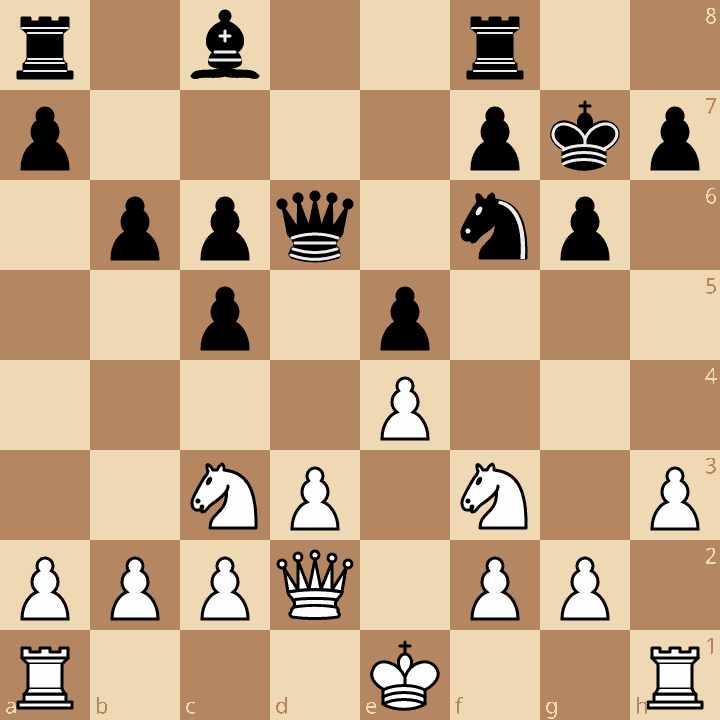
Now play it through
Step through every move on a real board, try the wrong ones, and ask Knighty why they fail.
Related Lessons
Summary
Ready to Practice?
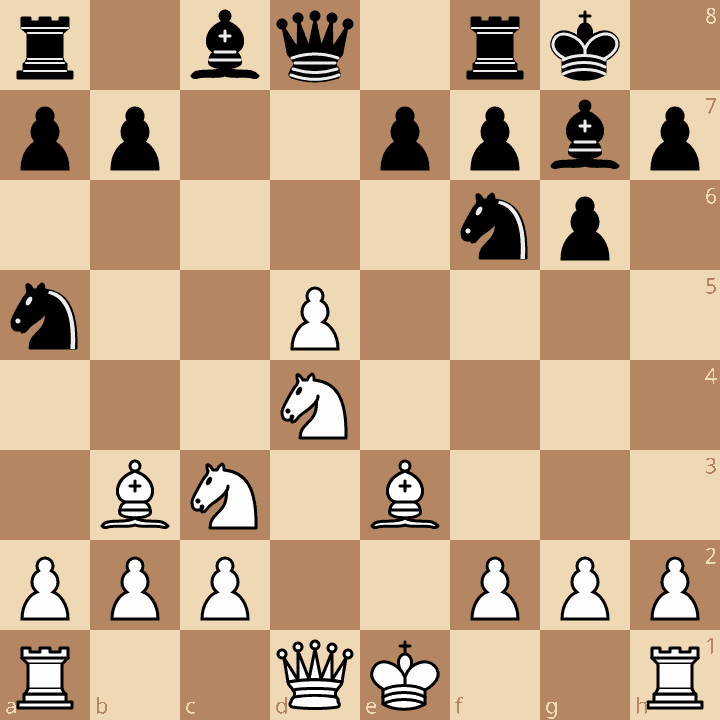
Next in this opening family
Sicilian Accelerated Dragon
Take this lesson with you
Free account requiredWith every variation — opens in Lichess & ChessBase