
Defensa Báltica
Una respuesta poco convencional al Gambito de Dama donde las negras desarrollan el alfil a f5 antes de jugar e6, evitando el problema del "alfil malo".
Probar lección interactivaIntroducción
Contenido de la lección
Apertura de Peón de Dama — las blancas reclaman el centro con el peón d, que queda inmediatamente defendido por la dama. Esto tiende a posiciones más estratégicas y cerradas comparado con 1. e4. Respuestas principales de las negras: - 1. ..d5 — Gambito de Dama y esquemas Eslava - 1. ..Nf6 — Defensas Indias (India de Rey, Nimzoindia, etc.) - 1. ..f5 — Defensa Holandesa
Las negras igualan en el centro, llegando a la Apertura de Peón de Dama. El centro simétrico suele resultar en maniobras estratégicas en lugar de batallas tácticas inmediatas. La continuación más popular de las blancas es 2. c4 — el Gambito de Dama.
El Gambito de Dama — las blancas ofrecen un peón para alejar el peón d5 del centro. No es un gambito real ya que las negras no pueden retener el peón a largo plazo. Opciones principales de las negras: - 2. ..e6 — Gambito de Dama Rehusado, sólido y clásico - 2. ..c6 — Defensa Eslava, apoya d5 manteniendo el alfil libre - 2. ..dxc4 — Gambito de Dama Aceptado - 2. ..Bf5 — Defensa Báltica, ¡desarrollando el alfil de inmediato!
¡La Defensa Báltica! Las negras desarrollan el alfil de casillas claras *antes* de jugar e6. Esta es la esencia de la apertura — en el GDR estándar (2. ..e6), este alfil suele pasar toda la partida atrapado detrás de la cadena e6-d5. Al sacarlo ahora, las negras aseguran juego activo de piezas. La desventaja es que el alfil puede quedar expuesto y las negras aún no han reforzado el centro.
Jugadas alternativas
Las blancas desarrollan el caballo naturalmente, reforzando el control de d5 y e4. Es la respuesta más flexible — las blancas retrasan comprometerse con un plan anti-Báltica específico. Alternativas de las blancas: - 3. cxd5 — la prueba crítica, ganando la pareja de alfiles tras 3. ..Bxb1 4. Rxb1 Qxd5 - 3. Qb3 — apuntando directamente a b7 y d5 - 3. Nf3 — similar a 3. Nc3, a menudo transpone
Ahora que el alfil está desarrollado con seguridad, las negras juegan e6 para reforzar d5. Este es el orden de jugadas ideal — el alfil ya está activo en f5, así que e6 no lo atrapa. La estructura de las negras con d5+e6 es sólida, y el alfil de casillas claras permanece fuera de la cadena de peones.
Jugadas alternativas
Las blancas continúan el desarrollo natural, llevando el caballo a su mejor casilla. El caballo controla e5 y d4 mientras prepara el enroque corto. Las blancas mantienen una ligera ventaja de espacio pero la posición de las negras es muy sólida.
Las negras desarrollan el caballo a su casilla más natural, contraatacando la casilla e4 y preparando el enroque. El caballo en f6 es la piedra angular del esquema negro en la Báltica. Ahora las negras buscan completar el desarrollo con ..c6, ..Nbd7 y ..Be7.
Las blancas clavan el Nf6 contra la dama, una idea temática en aperturas de d4. La clavada genera presión sutil — si las negras juegan ..Be7, las blancas mantienen la tensión; si las negras rompen la clavada con ..h6, debilitan el flanco de rey. Este es un enfoque más agresivo que 5. e3, que bloquearía el propio alfil de casillas oscuras.
Las negras refuerzan el peón d5 con el peón c, creando una estructura central a prueba de balas. El triángulo de peones d5-e6-c6 es extremadamente robusto — las blancas no pueden romper fácilmente. También prepara ..Nbd7, que evita bloquear el peón c y mantiene la diagonal de la dama abierta.
Jugadas alternativas
Las blancas solidifican el peón d4 y preparan el desarrollo del alfil a d3. El peón en e3 apoya el centro mientras abre la diagonal f1-a6 para el alfil. El plan de las blancas es Bd3, cambiando el buen alfil de las negras, seguido de enroque y construir iniciativa en el flanco de rey.
El caballo se desarrolla a d7 — la casilla estándar en el esquema Báltico. Desde d7 el caballo apoya e5 (un potencial puesto avanzado) y puede redirigirse a f8-g6 o b6 según la posición. Las negras evitan ..Nc6 porque bloquearía el peón c y el acceso de la dama al flanco de dama.
Jugadas alternativas
Las blancas desarrollan el alfil a d3, desafiando directamente al Bf5 negro. Las blancas quieren cambiar alfiles — eliminando la mejor pieza de las negras y ganando la pareja de alfiles o un tiempo. Este es el enfoque más lógico, atacando el alfil que las negras se esforzaron en desarrollar pronto.
Las negras cambian el alfil. Aunque pueda parecer contraproducente regalar la pieza que la apertura buscaba desarrollar, el cambio es bueno — el alfil ya cumplió su función evitando quedar atrapado, y la recaptura en d3 coloca la dama blanca en una casilla ligeramente expuesta. Las piezas restantes de las negras estarán bien coordinadas en la compacta estructura d5-e6-c6.
Jugadas alternativas
Las blancas recapturan con la dama, centralizándola en d3. La dama apunta al flanco de rey (h7) y puede apoyar un futuro avance e4. Sin embargo, queda algo expuesta en d3 y puede necesitar moverse más adelante. Las blancas conservan una pequeña ventaja gracias a la pareja de alfiles y el espacio.
Las negras desarrollan la última pieza menor, preparando el enroque. El alfil en e7 es modesto pero sólido — apoya el enroque corto y puede luego ir a f6 si se cambian los alfiles de casillas oscuras. Con ..Be7 y ...O-O, las negras completan el desarrollo y alcanzan una posición cómoda, ligeramente pasiva pero muy sólida.
Jugadas alternativas
Las blancas enrocan corto, asegurando el rey y conectando las torres. Las blancas han completado el desarrollo con una posición agradable — ligera ventaja de espacio, la pareja de alfiles y potencial para expandirse en el centro con e4. Las negras deben enrocar de inmediato para neutralizar cualquier idea en el flanco de rey.
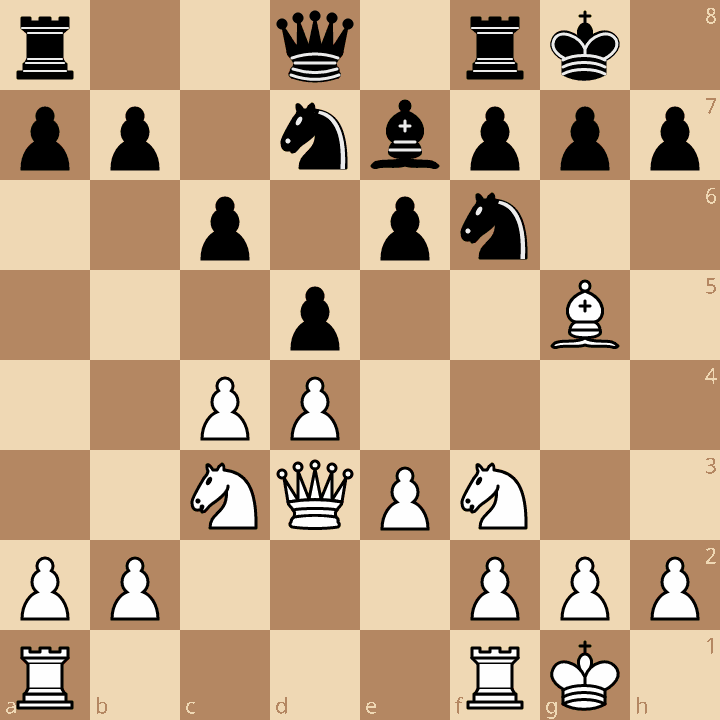
Las negras enrocan, completando el desarrollo mutuo. La posición es aproximadamente igual — las blancas tienen una pequeña ventaja de espacio, pero la posición de las negras es sólida como una roca sin debilidades. Los planes típicos del mediojuego para las negras incluyen ..dxc4 seguido de ..c5 para liberar la posición, o ..Re8 y ..Nf8 para reagrupar el caballo.
Puntos clave
- 2...Bf5 desarrolla el alfil antes de que e6 lo encierre — la idea clave de la Báltica
- El triángulo de peones d5-e6-c6 crea un centro a prueba de balas
- Nbd7 (no Nc6) mantiene flexible el peón c y abierto el flanco de dama
- Cambiar en d3 es correcto — el alfil ya cumplió su misión de evitar quedar enterrado
- Las negras alcanzan una posición sólida, ligeramente pasiva pero cómoda con planes claros
Ahora juégalo tú
Recorre cada jugada en un tablero real, prueba las malas y pregúntale a Knighty por qué fallan.
Resumen
¿Listo para practicar?
Llévate esta lección
Requiere una cuenta gratuitaCon todas las variantes: se abre en Lichess y ChessBase