
Caro-Kann - Variante Fantasia
Un audaz sacrificio de peon donde las blancas juegan f3 para construir un centro masivo tras dxe4 fxe4.
Probar lección interactivaIntroducción
Contenido de la lección
La apertura del Peon de Rey — las blancas reclaman el centro y abren diagonales para la dama y el alfil de rey. La primera jugada mas popular del ajedrez. Respuestas principales de las negras: - 1. ..e5 — Juego Abierto, igualando el centro de las blancas - 1. ..c5 — Defensa Siciliana, luchando por d4 asimetricamente - 1. ..e6 — Defensa Francesa, preparando ..d5 - 1. ..c6 — Caro-Kann, tambien preparando ..d5
Jugadas alternativas
La Defensa Caro-Kann — como la Francesa, las negras preparan ..d5, pero via c6 en lugar de e6. La ventaja clave: el alfil de casillas claras no queda bloqueado. La Caro-Kann es considerada una de las defensas mas solidas contra 1. e4, favorecida por jugadores que quieren una estructura fiable y de bajo riesgo.
Las blancas construyen el centro completo de peones. Tras 2. ..d5, las blancas deben decidir como manejar la tension: - 3. Nc3 o 3. Nd2 — mantener la tension - 3. e5 — Variante del Avance, ganando espacio - 3. exd5 cxd5 — Cambio, llevando a una estructura simetrica - 3. f3 — la Variante Fantasia!
Jugadas alternativas
Las negras desafian al peon e4 segun lo previsto. A diferencia de la Francesa (1. ..e6 2. ..d5), el peon c6 apoya d5 dejando al alfil de casillas claras libre para desarrollarse activamente.
La Variante Fantasia! Las blancas apoyan audazmente e4 con el peon f en lugar de un caballo. La idea es ambiciosa: si las negras capturan con 3. ..dxe4 4. fxe4, las blancas obtienen un centro e4+d4 dominante y abren la columna f para la torre. Es mas arriesgado que 3. Nc3 o 3. e5 ya que debilita ligeramente el flanco de rey y retrasa el desarrollo, pero crea problemas practicos inmediatos para las negras.
Jugadas alternativas
Las negras aceptan el desafio y capturan el peon e4. Es la respuesta mas logica — tomar el peon obliga a las blancas a recapturar con el peon f, que es justamente el objetivo de la Variante Fantasia. La alternativa 3. ..e6 es mas cauta, manteniendo la tension, pero permite a las blancas lograr el gran centro sin sacrificar la proteccion del peon f sobre g3.
Las blancas recapturan, logrando el centro ideal: peones en e4 y d4 controlando las cuatro casillas centrales. La columna f esta ahora semiabierta, lo que se convertira en un poderoso recurso de ataque una vez las blancas enroquen corto. El compromiso clave: las blancas tienen ventaja de espacio y posibilidades de ataque, pero el rey queda ligeramente expuesto sin el peon f como escudo.
Jugadas alternativas
Las negras desafian inmediatamente el centro de las blancas antes de que sea demasiado fuerte. Este contragolpe es critico — sin el, los peones e4+d4 de las blancas dominarian el tablero. El peon en e5 tambien abre la diagonal para el alfil de casillas oscuras y crea tension central que las negras pueden aprovechar.
Las blancas desarrollan el caballo a su casilla mas natural, defendiendo d4 y preparando el enroque. El caballo tambien apunta a e5 si las negras cambian peones mas adelante. Desarrollar rapidamente es esencial — las blancas cedieron una debilidad estructural (sin peon f) a cambio de un gran centro, asi que la actividad de las piezas debe compensar.
Jugadas alternativas
Las negras desarrollan el alfil de casillas claras a una casilla activa, clavando el Nf3 contra la dama. Este es el principal beneficio de la estructura Caro-Kann — a diferencia de la Francesa, este alfil tiene libertad para ser activo. La clavada sobre el caballo presiona indirectamente el peon d4 y dificulta a las blancas mantener el centro.
Las blancas desarrollan el alfil a su diagonal mas activa, apuntando a la casilla f7 y preparando el enroque. El alfil en c4 tambien apoya tacticas potenciales a lo largo de la diagonal a2-g8. Con ambos alfiles desarrollados agresivamente, las blancas buscan un rapido enroque corto para conectar las torres y activar la columna f.
Jugadas alternativas
Las negras desarrollan el caballo a d7, manteniendo opciones flexibles. Desde d7, el caballo puede ir a f6 (atacando e4), e5 (desafiando el centro) o b6 (presionando c4). Es mas flexible que el inmediato ..Nf6, que podria encontrarse con e5 empujando al caballo.
Las blancas refuerzan el peon d4 — el ancla del centro. Con c3, el peon d4 queda solidamente apoyado y las blancas pueden concentrarse en completar el desarrollo y enrocar. Tambien prepara Nbd2 sin bloquear el peon c, manteniendo una estructura de peones flexible.
Jugadas alternativas
Las negras colocan el alfil en su mejor diagonal, apuntando al flanco de rey. El alfil en d6 apoya e5, defiende al rey y puede convertirse en una pieza de ataque poderosa si se abren lineas hacia h2. Con ..Bd6 y ..Bg4, ambos alfiles de las negras estan activamente ubicados — un tema clasico de la Caro-Kann.
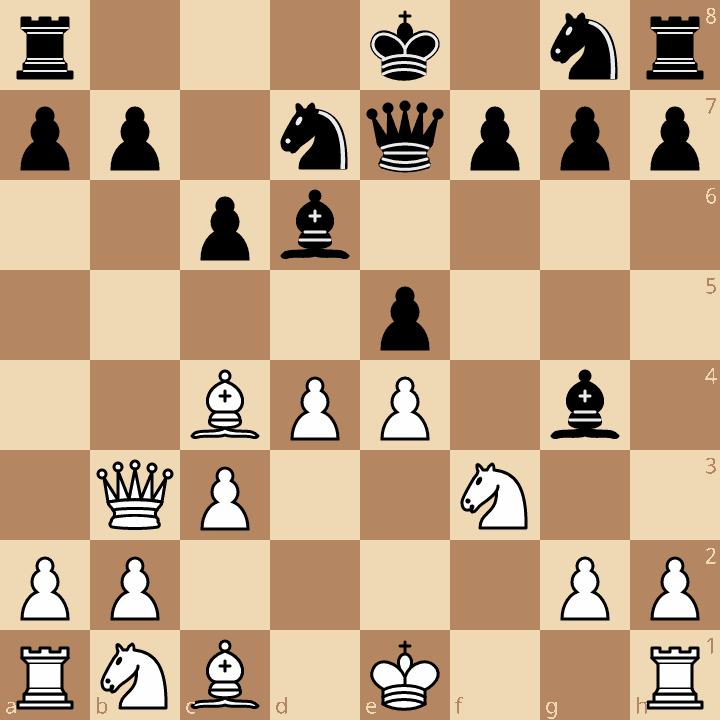
Una jugada de dama multiproposito que presiona el peon b7 y anade presion a lo largo de la diagonal a2-g8 en combinacion con el Bc4. Las negras deben responder a la amenaza sobre b7, lo que restringe sus opciones defensivas. La dama en b3 tambien apunta a f7 en algunas lineas tacticas, creando una bateria poderosa con el alfil en c4.
Jugadas alternativas
Las negras defienden el peon b7 manteniendo la opcion de enrocar a cualquier lado. La dama en e7 conecta la defensa y apoya el desarrollo ..Ngf6. La posicion esta dinamicamente equilibrada: las blancas tienen el centro y la columna f, mientras las negras cuentan con alfiles activos y solida coordinacion.
Puntos clave
- La Variante Fantasia (3.f3) busca un centro e4+d4 dominante a costa de debilitar el flanco de rey
- Tras 4.fxe4, las blancas obtienen la columna f abierta como recurso adicional de ataque
- El contragolpe clave de las negras es 4...e5, desafiando el centro antes de que se vuelva aplastante
- El desarrollo rapido es critico — las blancas deben activar piezas rapidamente para justificar la concesion estructural
- Los alfiles de la Caro-Kann (Bg4 y Bd6) son naturalmente activos, a diferencia de la Defensa Francesa
Ahora juégalo tú
Recorre cada jugada en un tablero real, prueba las malas y pregúntale a Knighty por qué fallan.
Resumen
¿Listo para practicar?
Llévate esta lección
Requiere una cuenta gratuitaCon todas las variantes: se abre en Lichess y ChessBase