
Sistema Botvinnik de la Inglesa
Una poderosa configuración de la Apertura Inglesa donde las blancas construyen un triángulo de peones en c4-d3-e4 con fiancheto en el flanco de rey, creando un marco posicional flexible.
Probar lección interactivaIntroducción
Contenido de la lección
La Apertura Inglesa — las blancas controlan d5 desde el flanco sin comprometer el peón d. Una apertura flexible y posicional que puede transponerse a muchas líneas de 1. d4 o llevar a sistemas ingleses únicos. Opciones principales de las negras: - 1. ..e5 — Siciliana Invertida - 1. ..Nf6 — puede transponerse a esquemas indios - 1. ..c5 — Inglesa Simétrica
Jugadas alternativas
Las negras reclaman espacio central y abren la diagonal para el alfil de casillas oscuras. Esta es la respuesta más ambiciosa — las posiciones resultantes reflejan una Siciliana Invertida donde las blancas tienen un tiempo extra. El peón e5 controla d4 y f4, estableciendo una estructura central clásica.
Las blancas desarrollan el caballo a su casilla más natural, reforzando el control de d5 y e4. El caballo en c3 es una piedra angular del Sistema Botvinnik — más adelante apoyará el avance e4 y potencialmente saltará a d5. Esta es la jugada principal, entrando en el complejo de la Inglesa del Rey.
Jugadas alternativas
Las negras desarrollan el caballo, defendiendo e5 y controlando d4. Esto lleva a la Inglesa Cerrada — un campo de batalla estratégico donde ambos bandos construyen lentamente antes de comprometerse. Las negras reflejan la filosofía de desarrollo de las blancas, manteniendo la posición simétrica por ahora.
Preparando el fiancheto en el flanco de rey — un componente clave del Sistema Botvinnik. El alfil en g2 controlará la gran diagonal (a8-h1), ejerciendo presión sobre el centro y el flanco de dama desde una distancia segura. El fiancheto también prepara el enroque y combina bien con el próximo avance e4.
Jugadas alternativas
Las negras reflejan el plan de fiancheto de las blancas. El alfil en g7 será una pieza poderosa en la gran diagonal (a1-h8), ejerciendo presión sobre el centro y apoyando rupturas con ..f5. Esta configuración simétrica de fianchetos lleva a una batalla estratégica donde ambos alfiles apuntan al centro desde los flancos.
El alfil ocupa su lugar en la gran diagonal, completando el fiancheto. Desde g2, controla d5 y presiona toda la diagonal a8-h1 — especialmente poderoso una vez que el centro se abre. El Bg2 es una de las piezas más importantes de las blancas en el Sistema Botvinnik, apoyando tanto el avance e4 como los saltos a d5.
Las negras completan el fiancheto simétrico. El Bg7 es una pieza poderosa tanto defensiva como ofensiva — protege las casillas oscuras alrededor del rey y puede volverse demoledor si el centro se abre. Con ambos alfiles en fiancheto, la posición se asemeja a una Defensa India de Rey con colores invertidos.
La jugada definitoria del Sistema Botvinnik — las blancas toman el centro con peones en c4 y e4. Esto crea el dúo de peones distintivo que controla d5, restringe las piezas negras y prepara el triángulo ideal con d3. La estructura c4+e4 es extremadamente flexible: las blancas pueden jugar d3 para solidez o d4 para una ruptura central más adelante.
Jugadas alternativas
Las negras apoyan el peón e5 y preparan ..Nge7 seguido de ..f5 — el contraataque temático contra el centro blanco. El peón d6 también impide que las blancas empujen e5. Esta configuración sólida da a las negras una posición flexible con planes en ambos flancos.
El caballo va a e2 — ¡no a f3! Este es un sello distintivo del Sistema Botvinnik. En e2, el caballo mantiene libre el peón f para un posible empuje f4, evita bloquear la diagonal del Bg2 y puede redirigirse a c3-d5 o f4. El Nge2 también apoya un futuro d3 sin bloquear ninguna pieza — una configuración perfectamente coordinada.
Jugadas alternativas
Las negras reflejan la misma lógica — el caballo va a e7 en lugar de f6 para mantener libre el peón f para la ruptura crítica ..f5. Desde e7, el caballo también puede redirigirse a c6-d4 o apoyar ..f5. Ambos bandos están ahora totalmente comprometidos con la estructura de doble fiancheto + caballo en e2.
Completando el triángulo de peones Botvinnik — c4, d3, e4. Esta es una de las estructuras centrales más sólidas del ajedrez. El peón d3 defiende e4 desde abajo mientras mantiene la posición cerrada y estratégica. El plan de las blancas es claro: enrocar, luego usar el puesto avanzado en d5 y preparar rupturas con f4 o b4.
Jugadas alternativas
Las negras enrocan poniéndose a salvo, conectando las torres y preparando el contraataque ..f5. Con el rey seguro, las negras pueden concentrarse en la batalla central y del flanco de rey. La torre en f8 apoyará el próximo empuje ..f5 — el plan principal de las negras en esta estructura.
Las blancas también enrocan, completando el desarrollo. Ambos bandos están ahora totalmente desarrollados con estructuras de fiancheto simétricas — la verdadera batalla estratégica comienza. Los planes típicos de las blancas incluyen Nd5 (ocupar el puesto avanzado), Be3+Qd2 (preparando juego en el flanco de dama), o f4 (si las negras retrasan ..f5).
¡El contraataque temático! Las negras golpean el peón e4 de las blancas, la base del triángulo Botvinnik. Este es el plan principal de las negras — abrir la columna f para la torre y crear juego en el flanco de rey. La tensión sobre e4 obliga a las blancas a tomar una decisión: capturar (abriendo líneas), defender (manteniendo la estructura) o contraatacar con Nd5.
Las blancas ocupan el poderoso puesto avanzado d5 antes de lidiar con la tensión de f5. El caballo en d5 es una pieza dominante — no puede ser desalojado fácilmente por peones y controla casillas clave (b4, c3, e3, f4, b6, c7, e7, f6). Esta es una idea clásica Botvinnik: usar la casilla d5 creada por la estructura c4+e4 para plantar una pieza que domine el tablero.
Jugadas alternativas
Las negras cambian el caballo para eliminar la pieza dominante de las blancas en d5. Aunque esto elimina el caballo del puesto avanzado, permite a las blancas recapturar con el peón c, transformando fundamentalmente la estructura de peones. Este cambio es una decisión estratégica clave — las negras eliminan el caballo fuerte pero dan a las blancas un potencial peón pasado en d.
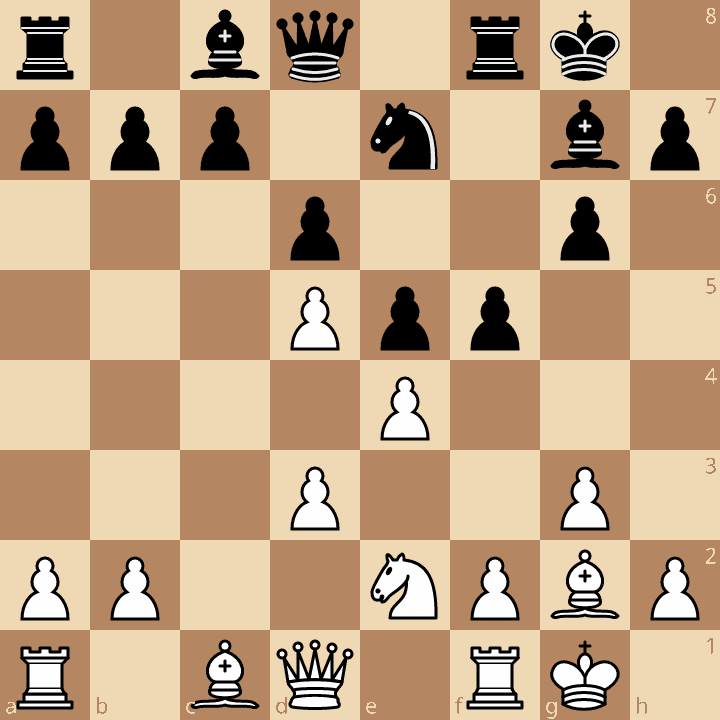
Recapturar con el peón c crea una poderosa cuña central de peones en d5. Este peón restringe el Nc6 negro y clava el centro. Las blancas ahora tienen ventaja de espacio y planes claros: empujar el peón d, jugar en el flanco de dama con a4-a5, o usar la columna c abierta. El peón en d5 es un activo permanente — controla c6 y e6, limitando la actividad de las piezas negras.
Jugadas alternativas
El caballo retrocede a e7, apoyando una futura ruptura ..c6 para desafiar el peón d5. Desde e7, el caballo también apunta a d5 y f5 — casillas clave para el contrajuego negro. La posición es estratégicamente compleja: las blancas tienen ventaja de espacio y la cuña en d5, mientras las negras tienen la pareja de alfiles y potencial juego en el flanco de rey con ..f4.
Puntos clave
- El triángulo Botvinnik (c4-d3-e4) crea un centro sólido y flexible como una roca
- Nge2 (no Nf3) mantiene libres el peón f y la diagonal del Bg2
- La casilla d5 es un poderoso puesto avanzado para el caballo
- El principal contraataque de las negras es ...f5, atacando la base e4 del triángulo
- Tras Nd5 y cxd5, la cuña central de peones otorga a las blancas presión duradera
Ahora juégalo tú
Recorre cada jugada en un tablero real, prueba las malas y pregúntale a Knighty por qué fallan.
Resumen
¿Listo para practicar?
Llévate esta lección
Requiere una cuenta gratuitaCon todas las variantes: se abre en Lichess y ChessBase