
Giuoco Pianissimo
El 'Juego Muy Tranquilo' — las blancas construyen una estructura posicional lenta con d3, c3 y maniobras de piezas en lugar del agresivo centro c3-d4.
Probar lección interactivaIntroducción
Contenido de la lección
La apertura del Peón de Rey — las blancas reclaman el centro y abren diagonales para la dama y el alfil de rey. La primera jugada más popular del ajedrez. Respuestas principales de las negras: - 1. ..e5 — Juego Abierto, igualando el centro de las blancas - 1. ..c5 — Defensa Siciliana, luchando por d4 asimétricamente - 1. ..e6 — Defensa Francesa, preparando ..d5 - 1. ..c6 — Caro-Kann, también preparando ..d5
Las negras reflejan la reclamación central de las blancas, estableciendo un centro de peones simétrico. Esto lleva a los Juegos Abiertos — la familia de aperturas más antigua y clásica. El peón e5 controla d4 y f4, limitando las opciones de expansión de las blancas.
Las blancas desarrollan el caballo a su casilla más natural, atacando el peón e5 inmediatamente. El caballo también controla d4 y prepara el enroque corto. Es la segunda jugada más común, llevando a un vasto árbol de aperturas incluyendo la Italiana, Ruy López y Escocesa.
Las negras defienden el peón e5 con la jugada de desarrollo más natural. El caballo en c6 también controla las importantes casillas d4 y e5. Desde aquí la tercera jugada de las blancas define la apertura: - 3. Bc4 — Apertura Italiana - 3. Bb5 — Ruy López - 3. d4 — Apertura Escocesa - 3. Nc3 — Cuatro Caballos / híbrido Viena
El alfil se desarrolla a c4, apuntando a la vulnerable casilla f7 de las negras — el punto más débil en la posición inicial ya que solo el rey la defiende. Esta es la jugada definitoria de la Apertura Italiana. Las alternativas de las blancas aquí llevan a aperturas completamente diferentes: - 3. Bb5 — la Ruy López, presionando al defensor Nc6 - 3. d4 — la Escocesa, desafiando el centro inmediatamente - 3. Nc3 — los Tres/Cuatro Caballos, retrasando la decisión
Las negras desarrollan el alfil a su diagonal más activa, reflejando la presión de las blancas sobre el centro. El Giuoco Piano ('Juego Tranquilo') comienza — aunque el nombre es engañoso, ya que el juego agudo a menudo sigue. El alfil en c5 apunta a la casilla f2 y apoya una futura ruptura ..d5.
¡El Giuoco Pianissimo! En lugar del agresivo 4. c3 (preparando d4 inmediato), las blancas juegan d3 — un enfoque más paciente y posicional. El peón apoya el centro en e4 y abre el camino para el alfil de c1. Las alternativas de las blancas marcan ritmos distintos: - 4. c3 — la línea principal del Giuoco Piano, preparando un centro d4 inmediato - 4. O-O — flexible, aplazando la estructura central - 4. b4 — el Gambito Evans, sacrificando un peón por desarrollo rápido
Jugadas alternativas
Las negras desarrollan el caballo a f6, contraatacando el peón e4. Es la respuesta más natural — desarrolla una pieza, prepara el enroque y genera presión sobre el centro de las blancas. Las negras también pueden jugar 4. ..d6 primero, pero Nf6 es más flexible y mantiene abiertas más opciones de estructura de peones.
Jugadas alternativas
Enrocar temprano es una seña de identidad del Pianissimo — las blancas ponen el rey a salvo y conectan las torres antes de comprometerse con un plan central. La torre en f1 pronto se trasladará a e1 para apoyar el peón e4. No hay prisa por expandirse — la idea del Pianissimo es precisamente la mejora paciente.
Jugadas alternativas
Las negras consolidan el centro apoyando el peón e5 con el peón d. Esto también abre la diagonal para que el alfil de c8 pueda desarrollarse. El orden de jugadas es flexible — las negras podrían jugar ...O-O o ..a6 antes, pero d6 es lo más lógico, reforzando el centro de inmediato.
Una jugada posicional clave — el peón c3 apoya un futuro avance d4, que es el plan a largo plazo de las blancas. A diferencia de la línea principal del Giuoco Piano donde c3+d4 ocurre rápidamente, aquí las blancas se toman tiempo para prepararlo a fondo. El peón también controla la casilla d4 y ofrece una casilla de retirada para el Bc4 por b3-c2 si fuera necesario.
Jugadas alternativas
Las negras enrocan corto, completando el desarrollo básico. Ahora ambos reyes están seguros y comienza la verdadera batalla estratégica. La posición está equilibrada pero llena de ideas — las blancas maniobrarán piezas hacia el flanco de rey mientras preparan d4, y las negras buscarán contrajuego con ..a6, ..Ba7 y potencialmente ..d5.
La torre se traslada a la columna e semiabierta, añadiendo apoyo al peón e4. Esta jugada es estándar en casi cualquier estructura de la Apertura Italiana — la torre defiende e4 y apunta a la columna e que puede abrirse. Con la torre en e1, el avance d4 queda mejor respaldado ya que e4 no colgará tras los cambios centrales.
Jugadas alternativas
Una jugada profiláctica — las negras evitan ideas de Bb5 o b4-b5 y se preparan para retirar el alfil a a7 si fuera necesario. El peón en a6 también apoya una futura expansión ..b5 en el flanco de dama. Es una jugada de espera típica del Pianissimo, que mejora la posición antes de comprometerse con un plan concreto.
El alfil se retira a b3, manteniendo la diagonal a2-g8 activa y evitando un futuro ..Na5 que lo atacaría en c4. Desde b3, el alfil puede luego reencaminarse a c2 apuntando al flanco de rey. Esta es la maniobra estándar del Pianissimo — Bc4-b3-c2 mantiene el alfil activo y despeja espacio para las maniobras de caballo.
Jugadas alternativas
Las negras refugian el alfil en a7, donde está a salvo de las descubiertas d4-d5 y sigue apuntando a f2 por la diagonal. El alfil es algo pasivo aquí pero muy seguro. Desde a7 el alfil mantiene presión duradera en la diagonal a7-g1, que puede volverse relevante si las blancas juegan d4 y el centro se abre.
El caballo se desarrolla a d2 — no es su destino final sino una casilla de tránsito clave. Desde d2, el caballo se reencaminará a f1 y luego a g3, apuntando al flanco de rey. Esta maniobra Nbd2-f1-g3 es el plan característico del Pianissimo. El caballo en d2 también apoya e4 y mantiene libre la columna c para la dama.
Jugadas alternativas
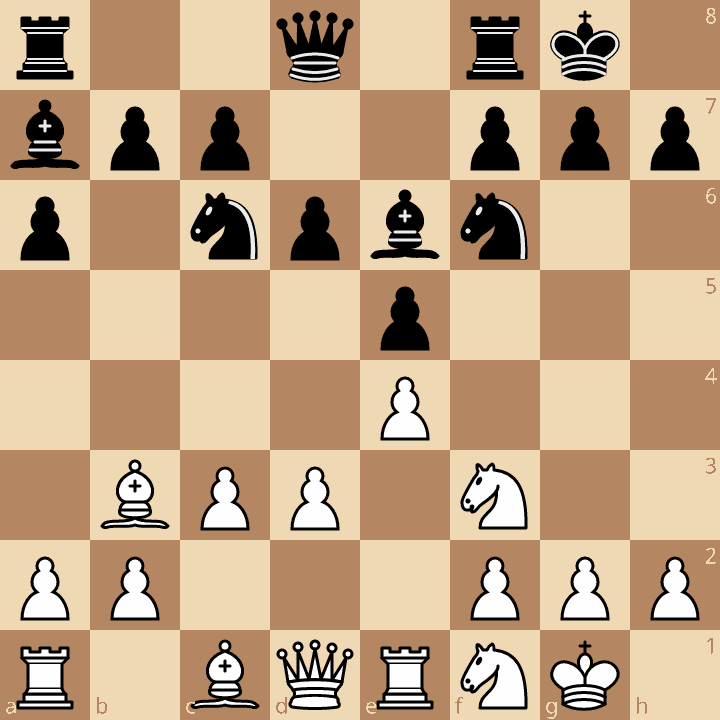
Las negras desarrollan la última pieza menor, conectando las torres. El alfil en e6 apunta al alfil de b3 y controla casillas centrales clave como d5. Si las blancas alguna vez cambian alfiles con Bxe6, las negras recapturan con ..fxe6, abriendo la columna f para la torre — un cambio de doble filo.
¡El caballo comienza su viaje hacia g3 — la maniobra característica del Pianissimo! Desde g3 el caballo controla f5 y h5, apoya un ataque en el flanco de rey y puede saltar a f5 en el momento oportuno. Esta mejora paciente de piezas es lo que hace único al Pianissimo. Las blancas construyen poco a poco, optimizando cada pieza antes de lanzar cualquier acción.
Jugadas alternativas
Puntos clave
- 4.d3 es la alternativa tranquila a 4.c3 — paciencia antes que agresividad
- La maniobra de caballo Nbd2-f1-g3 es el plan característico
- Bc4-b3 (luego c2) mantiene el alfil activo evitando ...Na5
- Re1 apoya e4 y prepara la eventual ruptura d4
- Las blancas construyen poco a poco — no hay que precipitar d4 antes de que las piezas estén en su sitio
Ahora juégalo tú
Recorre cada jugada en un tablero real, prueba las malas y pregúntale a Knighty por qué fallan.
Resumen
¿Listo para practicar?
Llévate esta lección
Requiere una cuenta gratuitaCon todas las variantes: se abre en Lichess y ChessBase