
DRI Ataque de los Cuatro Peones
Las blancas construyen un imponente centro de cuatro peones con d4+c4+e4+f4, pero las negras contraatacan con ...c5 y ...e6 para socavarlo antes de que avance.
Probar lección interactivaIntroducción
Contenido de la lección
La apertura del Peón de Dama — las blancas reclaman el centro con el peón d, que queda inmediatamente defendido por la dama. Esto tiende a llevar a posiciones más estratégicas y cerradas comparado con 1. e4. Respuestas principales de las negras: - 1. ..d5 — Gambito de Dama y variantes Eslavas - 1. ..Nf6 — Defensas Indias (India de Rey, Nimzoindia, etc.) - 1. ..f5 — Defensa Holandesa
Las negras desarrollan el caballo y controlan e4, impidiendo que las blancas construyan fácilmente el centro ideal e4+d4. Esta es la puerta a todos los sistemas de Defensa India. Las negras retrasan comprometer la estructura de peones, manteniendo flexibilidad para elegir entre India de Rey, Nimzoindia, India de Dama y más.
Jugadas alternativas
Las blancas refuerzan el control de d5 y ganan más espacio. Combinado con d4, los dos peones dominan el centro. La respuesta de las negras determina el sistema de apertura: - 2. ..e6 — Nimzoindia (tras 3. Nc3 Bb4) o India de Dama - 2. ..g6 — India de Rey o Grünfeld - 2. ..c5 — Estructuras Benoni - 2. ..e5 — Gambito Budapest
Las negras preparan el fianchetto del alfil en g7, llevando a la Defensa India de Rey (..d6, ..Bg7) o la Defensa Grünfeld (..d5, ..Bg7). Ambas son hipermodernas — las negras permiten un gran centro blanco y luego lo atacan. La elección entre India de Rey y Grünfeld típicamente llega en la jugada 3 o 4.
Jugadas alternativas
Las blancas desarrollan el caballo a su casilla natural, apoyando los avances d5 y e4. Esta es la línea principal de la India de Rey, permitiendo a las blancas elegir entre muchos sistemas en las próximas jugadas. Alternativas de las blancas: - 3. Nf3 — flexible, puede llevar al sistema Fianchetto - 3. f3 — montaje Sämisch directamente - 3. g3 — compromiso inmediato con el fianchetto
El alfil toma su poderosa diagonal, controlando la gran diagonal a1-h8. Esta es la pieza distintiva de la India de Rey — el Bg7 es un dragón dormido que se vuelve poderoso cuando el centro se abre. El alfil apoya las rupturas ..e5 y ..d5 mientras proporciona presión latente sobre el flanco de dama blanco.
Jugadas alternativas
Las blancas ganan más espacio central, construyendo el dúo de peones d4+e4. Esta es la formación estándar de la India de Rey — las blancas tienen un centro dominante y elegirán cómo desarrollarse según el sistema deseado. La quinta jugada de las blancas definirá la variante: - 5. f4 — Ataque de los Cuatro Peones, el más agresivo - 5. Nf3 — Clásica o Fianchetto - 5. f3 — Sämisch, preparando Be3 sin ..Ng4
Las negras se comprometen con la estructura de la India de Rey apoyando un futuro ..e5. El peón d6 controla e5 y c5, formando la columna vertebral de la posición negra. Esta jugada distingue la India de Rey de la Grünfeld (donde las negras juegan ..d5). El plan de las negras es permitir un gran centro blanco y luego golpearlo con ..c5 o ..e5.
Jugadas alternativas
¡El Ataque de los Cuatro Peones! Las blancas construyen el centro más imponente posible — cuatro peones en línea en c4, d4, e4 y f4. Este es el sistema más agresivo contra la India de Rey, buscando aplastar a las negras con una apisonadora central. El riesgo: el avance f4 debilita el flanco de rey (especialmente las casillas e3 y g3) y el centro puede convertirse en objetivo si las negras reaccionan correctamente. Como dice el dicho: un amplio centro de peones es una fortaleza o una debilidad.
Las negras enrocan a salvo antes de lanzar el contraataque. El rey está resguardado, la torre se conecta, y las negras están listas para desafiar el centro blanco. Enrocar primero es importante — las negras necesitan un rey seguro antes de abrir la posición con ..c5 y ..e6.
Jugadas alternativas
Las blancas desarrollan la última pieza menor, preparando el enroque. El caballo apoya las casillas d4 y e5 y conecta el flanco de rey. Alternativas de las blancas: - 6. Be2 — desarrollar el alfil primero, también estándar - 6. Bd3 — más agresivo pero ligeramente menos flexible
¡El contraataque clave! Las negras golpean el peón d4, la base de la cadena de peones blanca. Esta es la reacción temática al Ataque de los Cuatro Peones — desafiar el centro antes de que las blancas puedan consolidar. Tras 7. d5, la posición adquiere carácter Benoni con una estructura de peones asimétrica y juego agudo para ambos bandos.
Jugadas alternativas
Las blancas avanzan el peón d en lugar de cambiar, creando un centro cerrado. Esto gana espacio pero también crea un objetivo fijo — el peón d5 necesitará protección constante. La posición ahora se asemeja a una estructura Benoni Moderna con el peón f4 extra dando a las blancas más opciones en el flanco de rey pero también más debilidades.
¡Las negras desafían inmediatamente el peón d5! Esta es la ruptura temática crítica — abriendo la columna e y la gran diagonal para el Bg7. Tras los cambios en d5, las negras tendrán juego activo de piezas contra el centro blanco. Retrasar esta ruptura permitiría a las blancas consolidar con Be2, O-O, y entonces el centro se convierte en una fortaleza genuina en lugar de una debilidad.
Jugadas alternativas
Las blancas desarrollan el alfil a una casilla sólida, preparando el enroque. Be2 apoya el centro y mantiene la posición flexible. Este es el Ataque Normal de los Cuatro Peones — la continuación más lógica. Las blancas planean enrocar y luego empujar e5 para romper.
¡Las negras abren el centro! Capturar en d5 crea la columna e semiabierta — una autopista para las torres negras. El peón d5 mantenía unido el centro blanco; ahora la estructura se vuelve más dinámica. Este cambio está perfectamente cronometrado — las blancas aún no han enrocado, así que las negras pueden tomar la iniciativa en las columnas abiertas.
Jugadas alternativas
Las blancas recapturan con el peón c, manteniendo la masa central de peones. El peón d5 es ahora un peón pasado apoyado por e4 — un activo potencial a largo plazo. El plan de las blancas es claro: empujar e5 para abrir líneas y usar los peones centrales como ariete. Pero la columna c abierta y la columna e dan contrajuego a las negras.
La torre ocupa la columna e semiabierta, apuntando al peón e4 — la base del centro blanco. Esta es una jugada de desarrollo clave que prepara la próxima batalla táctica. La torre en e8 anticipa el avance e5 de las blancas — tras los cambios de peones, la torre estará perfectamente colocada en la columna abierta.
Jugadas alternativas
¡La ruptura central temática! Las blancas empujan e5, abriendo líneas e intentando usar la masa central de peones como arma de ataque. Este es todo el sentido del Ataque de los Cuatro Peones — el centro avanza. Pero este avance también abre la posición para las piezas negras, especialmente el Bg7 y la Re8. La táctica que sigue determina el carácter del medio juego.
Las negras capturan, eliminando el peón e5 de las blancas y abriendo la columna d. Esto es forzado en la práctica — permitir que e5 se quede ahogaría completamente la posición negra. Tras la recaptura fxe5 de las blancas, la columna f se abre para la torre negra y el peón e5 se convierte en objetivo.
Jugadas alternativas
Las blancas recapturan con el peón f, manteniendo el avanzado peón e5. Esto abre la columna f pero también deja el peón e5 potencialmente vulnerable. La posición es ahora crítica — las blancas tienen un peón pasado en d5 y el avanzado e5, pero las piezas negras están preparadas para el contrajuego.
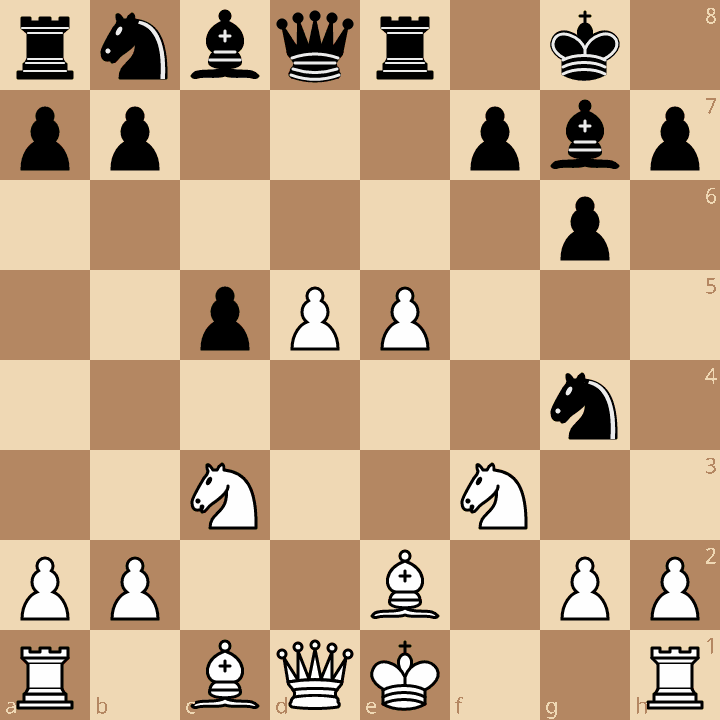
¡Las negras atacan el peón e5 con el caballo! El Ng4 también amenaza ..Ne3, bifurcando la dama en d1 y la torre en f1 si las blancas enrocan. Este es un motivo táctico clave en el Ataque de los Cuatro Peones. El caballo en g4 está idealmente situado — presiona e5, amenaza Ne3 y no puede ser expulsado fácilmente. Las negras han desafiado con éxito el imponente centro blanco y generado contrajuego activo.
Jugadas alternativas
Puntos clave
- El Ataque de los Cuatro Peones (f4) construye el mayor centro posible pero debilita el flanco de rey
- Las negras deben contraatacar con ...c5 y ...e6 antes de que las blancas consoliden
- Tras d5 y exd5 cxd5, la posición adopta una estructura tipo Benoni
- Re8 anticipa el temático avance e5, colocando la torre en la columna abierta
- Ng4 ataca e5 y amenaza Ne3, bifurcando dama y torre — el motivo táctico clave para las negras
Ahora juégalo tú
Recorre cada jugada en un tablero real, prueba las malas y pregúntale a Knighty por qué fallan.
Resumen
¿Listo para practicar?
Llévate esta lección
Requiere una cuenta gratuitaCon todas las variantes: se abre en Lichess y ChessBase