
Defensa Siciliana - Variante Cerrada
Un sistema posicional donde las blancas evitan la Siciliana Abierta y construyen un ataque lento en el flanco de rey con g3, Bg2 y el plan de cambio Bh6.
Probar lección interactivaIntroducción
Contenido de la lección
La Apertura de Peón de Rey — las blancas reclaman el centro y abren diagonales para la dama y el alfil de rey. La primera jugada más popular del ajedrez. Respuestas principales de las negras: - 1. ..e5 — Juego Abierto, igualando el centro blanco - 1. ..c5 — Defensa Siciliana, luchando por d4 asimétricamente - 1. ..e6 — Defensa Francesa, preparando ..d5 - 1. ..c6 — Caro-Kann, también preparando ..d5
La Defensa Siciliana — la respuesta más popular y ambiciosa de las negras a 1. e4. En lugar de igualar a las blancas en el centro con ..e5, las negras luchan por la casilla d4 de forma asimétrica. La Siciliana conduce a posiciones desequilibradas donde ambos bandos tienen oportunidades. Las blancas obtienen típicamente un ataque en el flanco de rey; las negras contrajuego en el flanco de dama y la columna c.
¡La Siciliana Cerrada! En lugar de 2. Nf3 (que lleva a la Siciliana Abierta tras d4), las blancas desarrollan el caballo a c3 y evitan abrir el centro. Esto indica un enfoque más tranquilo y posicional. El plan de las blancas es fianchettar con g3/Bg2, jugar d3 y construir un ataque lento en el flanco de rey — una estrategia fundamentalmente distinta de la táctica Siciliana Abierta.
Jugadas alternativas
Las negras desarrollan el caballo a su casilla más natural, defendiendo el peón c5 y controlando d4. Es la respuesta más común, que lleva a la Siciliana Cerrada Tradicional. Las alternativas de las negras incluyen 2. ..e6 (flexible) y 2. ..d6 (preparando ..Nf6), pero 2. ..Nc6 es lo más sólido.
¡El fianchetto! Las blancas preparan colocar el alfil en g2, donde controla la gran diagonal (a8-h1) y apoya un futuro avance e4-e5 o d3-d4. Este es el sello distintivo del esquema de la Siciliana Cerrada. La estructura g3/Bg2 da a las blancas una posición flexible — el alfil en g2 es poderoso tanto en ataque como en defensa.
Jugadas alternativas
Las negras reflejan el plan de fianchetto de las blancas. Con ..g6 y ..Bg7, las negras colocan el alfil en la gran diagonal donde defiende el flanco de rey y presiona el centro. Esto crea una estructura simétrica de doble fianchetto. El Bg7 será una pieza defensiva clave — razón por la cual las blancas más adelante buscan cambiarlo con Bh6.
El alfil ocupa su puesto en la gran diagonal. Desde g2, ejerce presión a través del centro hacia a8, apoya el peón e4 y será útil tanto en el medio juego como en el final. Esto completa el fianchetto — parte esencial de la estructura de la Siciliana Cerrada.
Las negras completan el fianchetto espejo. El alfil en g7 es una poderosa pieza defensiva, controlando las casillas oscuras alrededor del rey y la gran diagonal de a1 a h8. Este alfil es tan importante para la defensa de las negras que el principal objetivo estratégico de las blancas será cambiarlo — abriendo las casillas oscuras alrededor del rey negro.
Una jugada modesta pero esencial. Las blancas apoyan sólidamente el peón e4 y abren la diagonal c1-h6 para el alfil de casillas oscuras. En la Siciliana Cerrada, d3 (no d4) es la elección estándar — mantener el centro cerrado encaja con la estrategia de construcción lenta. Las blancas completarán el desarrollo antes de buscar rupturas de peones.
Jugadas alternativas
Las negras reflejan con ..d6, apoyando el peón c5 y controlando la casilla e5. Esto previene cualquier avance inmediato e4-e5 de las blancas. El peón en d6 también prepara ..e5 o ..e6, según el esquema de las negras. La estructura de peones simétrica (d3 vs d6, e4 vs e5/e6) es típica de la Siciliana Cerrada.
El alfil se desarrolla a e3, vigilando el peón c5 y preparando el plan clave: Qd2 seguido de Bh6. El orden de jugadas es importante — el alfil va a e3 *antes* de jugar Nge2, para no bloquear el camino de la dama a d2. Alternativas de las blancas: - 6. Nge2 — flexible, preparando f4 más adelante - 6. f4 — Ataque Gran Prix, más agresivo pero arriesgado
Jugadas alternativas
Las negras juegan ..e6 para reforzar d5 y mantener una estructura sólida y compacta. Esto es más contenido que ..e5 (que gana espacio pero debilita d5). El esquema con e6 funciona bien con el plan de desarrollo ..Nge7. Las negras mantienen opciones abiertas: el caballo puede ir a d4 vía e7-c6 o f5, y el alfil de casillas claras podría desarrollarse a d7 o b7.
La dama se mueve a d2, conectando con el Be3 para preparar el temático cambio Bh6. Con Qd2, cuando el alfil va a h6 y es capturado (..Bxh6), la dama recaptura en h6 — colocándola agresivamente cerca del rey negro. Esta batería Qd2 + Bh6 es el plan de ataque distintivo de la Siciliana Cerrada.
Jugadas alternativas
Las negras desarrollan el caballo a e7 en lugar de f6, manteniendo libre el peón f para avanzar con ..f5 más adelante. El caballo en e7 también puede redirigirse a d4 (un poderoso puesto avanzado) o apoyar ..d5. La alternativa de las negras era 7. ..Rb8 preparando la expansión ..b5 en el flanco de dama, el otro plan principal contra la Siciliana Cerrada.
¡La jugada temática! Las blancas ofrecen cambiar los alfiles de casillas oscuras. Eliminar el Bg7 de las negras es estratégicamente crucial — debilita las casillas oscuras alrededor del rey negro (f6, g7, h6) y abre la puerta a un ataque en el flanco de rey. Tras el cambio, las blancas pueden continuar con f4, Nge2-f4, o incluso h4-h5 para romper el flanco de rey negro.
Jugadas alternativas
¡Las negras enrocan hacia el ataque! Esta es en realidad la mejor jugada del motor — las negras necesitan el rey seguro y la torre activa. Retrasar el enroque dejaría al rey atascado en el centro, lo cual es peor. Tras 9. Bxg7 Kxg7, la posición del rey negro queda ligeramente debilitada pero sigue razonablemente seguro detrás de los peones g6 y h7.
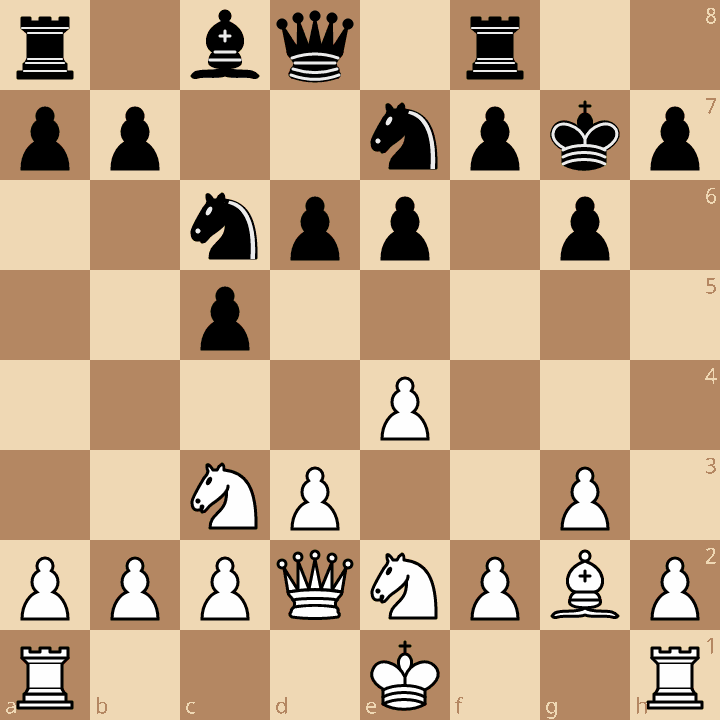
Las blancas capturan el alfil, completando el cambio estratégico. Las negras deben recapturar con el rey ya que la torre está en f8. Esto deja al rey negro en g7 — ligeramente expuesto en las casillas oscuras. El cambio es la culminación del plan Be3-Qd2-Bh6. Las blancas tienen ahora una clara ventaja estratégica en las casillas oscuras.
Recaptura forzada. El rey en g7 es funcional pero está ligeramente expuesto — la ausencia del alfil de casillas oscuras significa que casillas como f6 y h6 quedan permanentemente debilitadas. Las negras deben tener cuidado con cualquier ruptura f4-f5 o avance h4-h5. A pesar de las debilidades, la posición de las negras es sólida. El plan es contraatacar en el flanco de dama con ..Rb8, ..b5 y ..a5.
Las blancas completan el desarrollo, preparando el enroque y luego el lanzamiento del ataque. El caballo en e2 tiene excelentes perspectivas — puede ir a f4 (apuntando a g6 y h5) o a d4 (un dominante puesto avanzado central). Tras O-O, las blancas jugarán f4 para abrir líneas contra el rey negro. La posición es ligeramente favorable para las blancas gracias a las debilidades de casillas oscuras.
Jugadas alternativas
Puntos clave
- 2.Nc3 evita la Siciliana Abierta y señala un enfoque posicional
- El esquema g3/Bg2/d3 es la base de la Siciliana Cerrada
- Be3-Qd2-Bh6 es el plan distintivo — el cambio de alfiles de casillas oscuras debilita el flanco de rey negro
- Tras el cambio Bh6, f4 abre líneas para el ataque
- Las negras contraatacan en el flanco de dama con ...Rb8, ...b5 y ...a5
Ahora juégalo tú
Recorre cada jugada en un tablero real, prueba las malas y pregúntale a Knighty por qué fallan.
Resumen
¿Listo para practicar?
Llévate esta lección
Requiere una cuenta gratuitaCon todas las variantes: se abre en Lichess y ChessBase