
Grand Prix Attack
An aggressive anti-Sicilian system where White plays f4 early, aiming for a kingside attack
Try Interactive LessonIntroduction
Lesson Content
Start by controlling the center with your king pawn.
e4 — The King's Pawn opening — White claims the center and opens diagonals for the queen and kingside bishop. The most popular first move in chess. Black's main responses: - 1. ..e5 — Open Game, matching White's center - 1. ..c5 — Sicilian Defense, fighting for d4 asymmetrically - 1. ..e6 — French Defense, preparing ..d5 - 1. ..c6 — Caro-Kann, also preparing ..d5
The Sicilian Defense — Black's most popular and ambitious reply to 1. e4. Rather than matching White in the center with ..e5, Black fights for the d4 square asymmetrically. The Sicilian leads to unbalanced positions where both sides have chances. White typically gets a kingside attack; Black gets queenside counterplay and the c-file.
Develop the knight to support e4 and prepare f4.
White develops the knight to c3, supporting the e4 pawn and preparing f4. By choosing 2. ♘︎c3 instead of 2. ♘︎f3, White avoids the vast theory of the Open Sicilian (2. ♘︎f3 d6 3. d4) and steers toward the Closed Sicilian or Grand Prix Attack. This move order keeps White's options flexible — depending on Black's response, White can choose between f4 (Grand Prix) or g3 (Closed Sicilian).
Alternative Moves
Black develops naturally, controlling d4 and e5. This is the most common response, preparing a flexible setup. Black's alternatives: - 2. ..d6 — allows the Grand Prix but with a different structure - 2. ..e6 — French-like setup, preparing ..d5
Establish the Grand Prix Attack pawn center with its signature pawn push.
The Grand Prix Attack! White pushes f4, creating a powerful e4-f4 pawn duo aimed at controlling the center and supporting a future f5 push toward Black's kingside. This is more aggressive than the Closed Sicilian's 3. g3, trading structural solidity for attacking potential. The f4 pawn also supports e5, which can cramp Black's position.
Alternative Moves
Black prepares the fianchetto with ..♗︎g7, the most popular and reliable response to the Grand Prix Attack. The bishop on g7 will be a powerful piece, controlling the long diagonal and defending the kingside. This setup neutralizes White's central pressure while keeping the position flexible for queenside counterplay.
Develop the knight toward the center.
White develops the second knight to its natural square, controlling d4 and e5 while preparing to castle. The knight on f3 works well with the f4 pawn — together they support a future e5 push. White's setup is coming together: e4, f4, ♘︎c3, ♘︎f3, with castling and ♗︎c4 or ♗︎b5 to follow.
Alternative Moves
Black completes the fianchetto. The bishop on g7 is a powerhouse — it controls the long a1-h8 diagonal, defends the kingside, and pressures White's center, especially the d4 square. This bishop often becomes Black's best piece in the Grand Prix Attack.
Develop the bishop to pressure the knight on c6.
♗︎b5 — White develops the bishop actively, pressuring the ♘︎c6. The bishop on b5 serves multiple purposes: it adds pressure to Black's queenside, prepares to trade for the knight (simplifying White's attacking task), and clears the way for castling. This is the main Grand Prix Attack line, characteristic of the aggressive spirit of the opening.
Alternative Moves
Black's strongest response — the knight jumps to d4, the most active central square. From d4, the knight attacks the ♗︎b5 and threatens to disrupt White's coordination. This is a thematic Sicilian idea: using the d4 square as an outpost for the knight, exploiting the fact that White's c-pawn hasn't moved.
Castle to secure your king before the position opens.
O-O — White castles, securing the king and activating the rook. Rather than retreating the bishop immediately, White calmly castles — the bishop on b5 can be traded or retreated later. Castling first is strongest because it ensures king safety before the position opens up.
Alternative Moves
Black captures the bishop, winning the bishop pair. This is the most principled continuation — Black eliminates White's active bishop. The trade opens the position slightly, which will benefit both Black's bishop on g7 and White's attacking chances.
Recapture with the knight to land on an aggressive square.
♘︎xb5 — White recaptures with the knight, landing on the aggressive b5 square. The knight on b5 eyes both d6 and c7, creating immediate pressure on Black's position. Black must spend a tempo dealing with this knight, which gives White time to consolidate.
Black kicks the knight from b5. This is the most natural move — it chases the active knight and prepares ..b5 for queenside expansion, which is Black's main counterplay in the Grand Prix Attack.
Retreat the knight to its best central square.
♘︎c3 — The knight retreats to c3, its best square. From c3, the knight supports e4 and d5, maintaining central influence. White has completed a useful maneuver: the bishop trade simplified the position while the knight returns to guard the center. White's plan now is to build up with d3, ♗︎e3 or ♕︎e1, and prepare the thematic f5 push.
Black begins queenside expansion — the main counterplay in the Grand Prix Attack. The b5 push gains space, prepares ..♗︎b7 to develop the light-squared bishop, and may support a future ..b4 to kick the ♘︎c3. This queenside vs kingside battle is the defining tension of the Grand Prix Attack.
Support the center and open a diagonal for the bishop.
White solidifies the center with d3, supporting the e4 pawn and opening a diagonal for the dark-squared bishop. This is more restrained than d4 but fits the Grand Prix structure — White keeps the pawn chain intact for a future f5 attack. From here White's plan is clear: develop the bishop (♗︎e3 or ♗︎d2), play ♕︎e1 to support f5, and launch the kingside attack.
Alternative Moves
Black solidifies with ..d6, controlling e5 and giving the position a stable structure. The pawn on d6 supports ..e5 or ..e6, keeping Black's options open. Both sides have completed their development framework — the middlegame battle between White's kingside attack and Black's queenside counterplay begins.
Key Takeaways
- f4 creates a powerful pawn duo with e4, aimed at a kingside attack
- ♗︎b5 develops actively and provokes the ♘︎d4 trade sequence
- After the simplification, White regroups with ♘︎c3 and d3
- Black's main counterplay is queenside expansion with ...a6, ...b5, and ...♗︎b7
- The Grand Prix Attack avoids Open Sicilian theory while keeping attacking chances
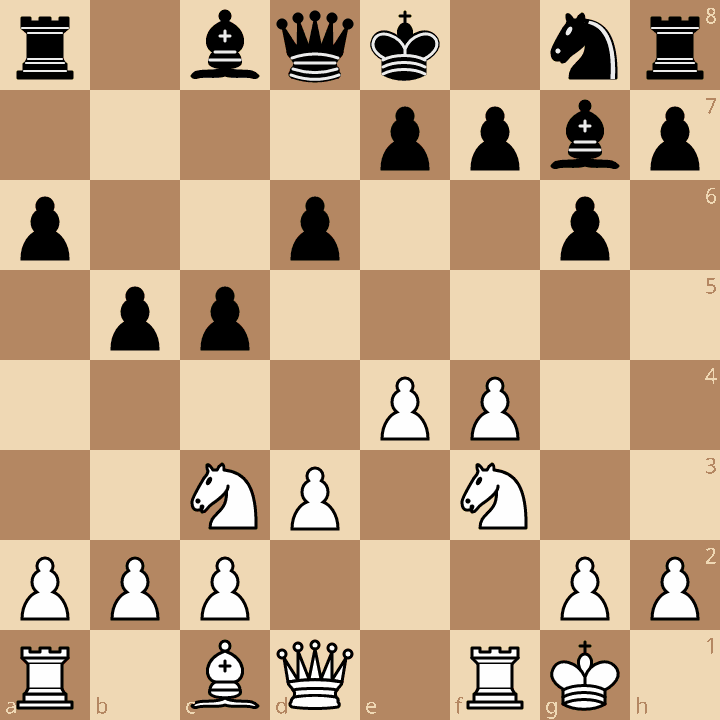
Now play it through
Step through every move on a real board, try the wrong ones, and ask Knighty why they fail.
Related Lessons
Summary
Ready to Practice?
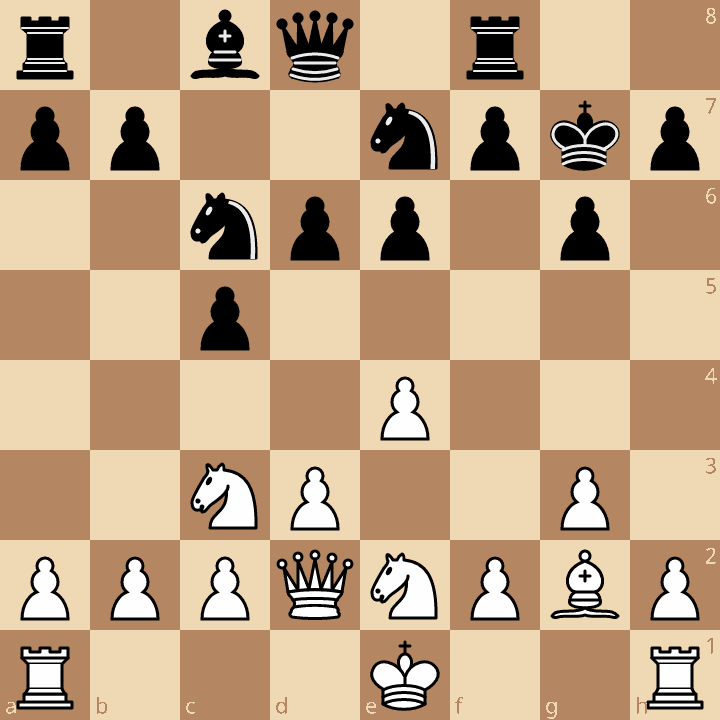
Next in this opening family
Sicilian Defense - Closed Variation
Take this lesson with you
Free account requiredWith every variation — opens in Lichess & ChessBase