
Siciliana - Scheveningen
Un esquema Siciliano flexible donde las negras construyen un pequeño centro de peones con ...d6 y ...e6, preparando contrajuego dinámico.
Probar lección interactivaIntroducción
Contenido de la lección
La Apertura de Peón de Rey — las blancas reclaman el centro y abren diagonales para la dama y el alfil de rey. La primera jugada más popular del ajedrez. Respuestas principales de las negras: - 1. ..e5 — Juego Abierto, igualando el centro blanco - 1. ..c5 — Defensa Siciliana, luchando por d4 asimétricamente - 1. ..e6 — Defensa Francesa, preparando ..d5 - 1. ..c6 — Caro-Kann, también preparando ..d5
La Defensa Siciliana — la respuesta más popular y ambiciosa de las negras a 1. e4. En lugar de igualar a las blancas en el centro con ..e5, las negras luchan por la casilla d4 de forma asimétrica. La Siciliana conduce a posiciones desequilibradas donde ambos bandos tienen oportunidades. Las blancas obtienen típicamente un ataque en el flanco de rey; las negras contrajuego en el flanco de dama y la columna c.
Comienza la Siciliana Abierta. Las blancas desarrollan naturalmente y preparan d4, que abrirá la posición. Es el enfoque más sólido contra la Siciliana. Las respuestas principales de las negras determinan la variante: - 2. ..d6 — Najdorf, Dragón, Clásica - 2. ..Nc6 — Sveshnikov, Kalashnikov, Clásica - 2. ..e6 — Kan, Taimanov, Scheveningen
Las negras juegan 2. ..d6, controlando la casilla e5 y preparando el desarrollo del caballo a f6. Este orden de jugadas es más flexible que 2. ..e6 porque evita el Ataque Keres (6. g4) que las blancas pueden emplear contra un ..e6 temprano. Desde aquí, las negras apuntarán al esquema Scheveningen con un posterior ..e6, creando el característico "pequeño centro".
Las blancas golpean el centro — la jugada definitoria de la Siciliana Abierta. Al empujar d4, las blancas buscan abrir la posición y aprovechar su ventaja de desarrollo. Las negras deben capturar, cediendo el centro temporalmente pero ganando la columna c semiabierta.
Las negras capturan el peón d4, abriendo la columna c para futura actividad de torre. Este es el cambio fundamental de la Siciliana — las negras intercambian un peón de flanco (c5) por el peón central de las blancas (d4), creando una estructura asimétrica. La columna c abierta se convertirá en un activo clave para el contrajuego de las negras en el flanco de dama.
Las blancas recapturan con el caballo, centralizándolo con fuerza en d4. El caballo controla casillas clave (b5, c6, e6, f5) y puede retirarse a b3 o f3 según la variante. Esta posición es el punto de partida de la Siciliana Abierta — la familia de aperturas más rica teóricamente.
Las negras desarrollan el caballo a su casilla más natural, contraatacando el peón e4. El caballo en f6 es la piedra angular de la posición negra en prácticamente todas las variantes de la Siciliana Abierta. Esta jugada también prepara el enroque corto y controla la casilla d5 — un potencial puesto avanzado para las negras.
Las blancas defienden e4 y desarrollan el caballo a su casilla natural. Ahora la siguiente jugada de las negras determina la variante Siciliana: - 5. ..e6 — Scheveningen o Kan/Taimanov - 5. ..g6 — Dragón - 5. ..a6 — Najdorf - 5. ..Nc6 — Siciliana Clásica
¡La jugada Scheveningen! Las negras construyen el característico "pequeño centro" con peones en d6 y e6. Esta estructura es increíblemente flexible — el peón e6 sostiene una futura ruptura ..d5, mientras el peón d6 mantiene ..e5 como opción. La desventaja: el alfil de casillas claras queda algo restringido tras la cadena de peones, y las blancas tienen más espacio. Pero el centro sólido y la actividad de piezas de las negras compensan.
Jugadas alternativas
La Variante Clásica — las blancas desarrollan el alfil modestamente a e2, preparando el enroque corto. Es un enfoque sólido y posicional comparado con las alternativas agresivas. Otras opciones de las blancas en la sexta jugada conducen a partidas muy diferentes: - 6. g4 — el Ataque Keres, una agresiva avalancha de peones - 6. Be3 — el Ataque Inglés, preparando Qd2 y O-O-O - 6. f4 — expansión directa en el flanco de rey
Jugadas alternativas
Una jugada profiláctica con múltiples propósitos — las negras impiden Nb5 (que apuntaría a d6) y preparan la expansión ..b5 en el flanco de dama. Es una jugada emblemática de la Siciliana presente en muchas variantes. El avance ..b5 desafiará el control de las blancas sobre d5 y activará la mayoría del flanco de dama.
Jugadas alternativas
Las blancas enrocan corto, asegurando al rey y conectando las torres. En el Scheveningen Clásico, el rey blanco está seguro en el flanco de rey mientras el peón f avanza para apoyar un ataque central o en el flanco de rey. El plan de las blancas ahora gira en torno a f4 seguido de ideas como f5 o e5.
Las negras desarrollan el alfil a una casilla sólida y flexible. En e7, el alfil defiende el flanco de rey, apoya ...O-O, y puede reubicarse a f6 o d8 según la posición. Esta es la ubicación clásica del alfil en el Scheveningen — menos agresiva que ..Bc5 o un fianchetto, pero muy fiable.
Jugadas alternativas
Las blancas avanzan el peón f, ganando más espacio y preparando un ataque en el flanco de rey o central. El peón en f4 apoya un futuro avance e5 y controla las casillas e5 y g5. Este es el sello del Scheveningen Clásico — las blancas construyen un frente de peones fuerte (e4 + f4) mientras las negras deben cronometrar su contrajuego cuidadosamente.
Las negras enrocan a seguridad — esencial antes de que la avalancha de peones de las blancas en el flanco de rey se vuelva demasiado peligrosa. El rey en g8 está bien defendido por el Be7 y el Nf6, y la torre se activa en f8. Con ambos bandos enrocados, las líneas de batalla del mediojuego están trazadas: las blancas atacan en el flanco de rey, las negras contraatacan en el flanco de dama.
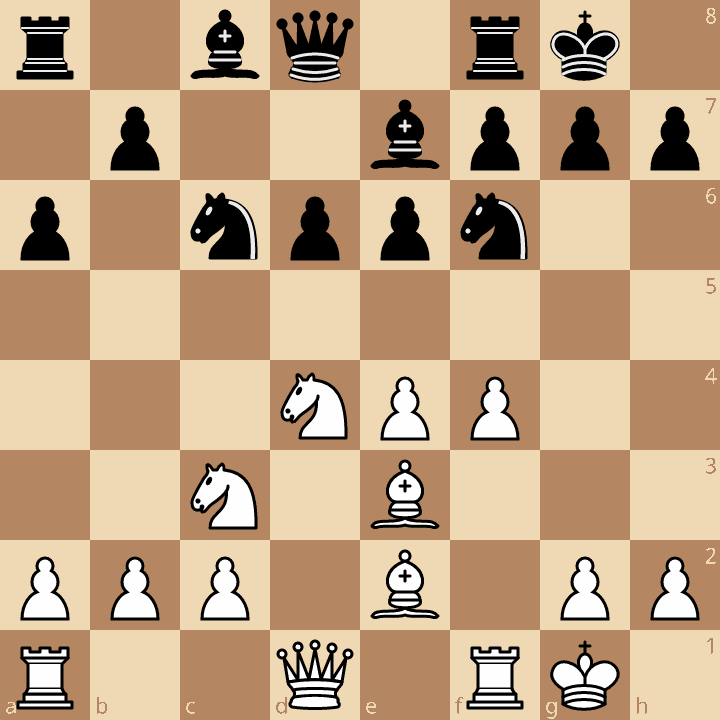
Las blancas desarrollan la última pieza menor, apuntando el alfil a la diagonal a7-g1. El alfil en e3 apoya al caballo d4, controla casillas oscuras clave y prepara Qd2 para conectar las torres. Esta es la línea principal del Scheveningen Clásico (ECO B85). El esquema de las blancas está completo — la cuestión es cómo romper.
Las negras desarrollan la última pieza menor, desafiando al caballo centralizado de las blancas en d4. El caballo en c6 presiona d4 y e5, y puede redirigirse a b4 o a5 para apoyar el juego en el flanco de dama. La posición de las negras es sólida y flexible. Los planes clave incluyen: - ..Qc7 + ...b5 — expansión en el flanco de dama - ..e5 — contragolpe central - ..Nxd4 + ...b5 — cambio para debilitar el centro blanco
Jugadas alternativas
Puntos clave
- El centro de peones ...d6 + ...e6 es flexible — sostiene tanto la ruptura ...d5 como ...e5
- 2...d6 antes de ...e6 evita el agresivo Ataque Keres (6.g4)
- ...a6 tiene múltiples funciones: impide Nb5 y prepara la expansión ...b5 en el flanco de dama
- Las blancas atacan en el flanco de rey con f4-f5; las negras contraatacan en el flanco de dama con ...b5
- El esquema Clásico con Be2 es sólido y estratégico — menos agudo que el Ataque Inglés o el Keres
Ahora juégalo tú
Recorre cada jugada en un tablero real, prueba las malas y pregúntale a Knighty por qué fallan.
Resumen
¿Listo para practicar?
Llévate esta lección
Requiere una cuenta gratuitaCon todas las variantes: se abre en Lichess y ChessBase