
Gambito de Ala Siciliano
Las blancas sacrifican un peón de flanco para lograr un desarrollo rápido y un centro poderoso contra la Defensa Siciliana.
Probar lección interactivaIntroducción
Contenido de la lección
La apertura del peón de rey — las blancas reclaman el centro y abren diagonales para la dama y el alfil de rey. La primera jugada más popular del ajedrez. Respuestas principales de las negras: - 1. ..e5 — Juego Abierto, igualando el centro - 1. ..c5 — Defensa Siciliana, luchando por d4 asimétricamente - 1. ..e6 — Defensa Francesa, preparando ..d5 - 1. ..c6 — Caro-Kann, también preparando ..d5
La Defensa Siciliana — la respuesta más popular y ambiciosa de las negras a 1. e4. En lugar de igualar el centro con ..e5, las negras luchan por la casilla d4 de forma asimétrica. La Siciliana conduce a posiciones desequilibradas donde ambos bandos tienen oportunidades. Las blancas suelen obtener un ataque en el flanco de rey; las negras contrajuego en el flanco de dama y la columna c.
¡El Gambito de Ala! Las blancas ofrecen de inmediato el peón b para desbaratar el esquema siciliano de las negras. La idea es radical — sacrificar un peón de flanco para dominar el centro con d4 sin la habitual preparación con 2. Nf3. Alternativas de las blancas que llevan a partidas muy diferentes: - 2. Nf3 — la Siciliana Abierta, la línea principal - 2. c3 — la Alapin, preparando d4 sin sacrificar material - 2. Nc3 — la Siciliana Cerrada, un enfoque posicional
Jugadas alternativas
Las negras aceptan el gambito, la respuesta más lógica. Capturar el peón gana material pero abre la posición — exactamente lo que las blancas desean. Alternativas de las negras: - 2. ..b5 — declina manteniendo el flanco de dama, pero es pasivo - 2. ..e6 — declina, pero las blancas pueden jugar 3. bxc5 con posición agradable
Jugadas alternativas
La Variante Marshall — las blancas ofrecen un segundo peón para abrir el flanco de dama por completo. La idea es que tras ..bxa3, las blancas recapturan con el caballo, desarrollando una pieza mientras abren las columnas a y b. Esto es más ambicioso que simplemente desarrollar: - 3. Nf3 — desarrolla primero, pero las negras conservan el peón extra con más facilidad - 3. d4 — golpe central inmediato, pero menos forzante
Jugadas alternativas
La Variante Carlsbad — las negras capturan el segundo peón, quedando dos peones arriba. Es codicioso pero lógico. Las negras apuestan a que la ventaja material superará la ventaja de desarrollo de las blancas. La alternativa más fuerte de las negras es 3. ..d5! — un contragambito que golpea el centro de inmediato, considerado la prueba teórica crítica del Gambito de Ala.
Jugadas alternativas
¡El objetivo de todo el gambito! Las blancas establecen el centro ideal e4+d4 que la Siciliana de las negras estaba diseñada para impedir. Con peones en e4 y d4, las blancas controlan las casillas centrales clave y tienen una enorme ventaja de espacio. Las blancas están dos peones abajo pero tienen líneas abiertas, un centro fuerte y se desarrollarán rápidamente. Este es el intercambio clásico de un gambito.
Jugadas alternativas
Las negras consolidan la posición con una jugada de desarrollo modesta. El peón en e6 apoya un futuro ..d5 y abre la diagonal para el alfil de casillas oscuras. Otras opciones: - 4. ..d6 — al estilo siciliano, pero el centro de las blancas ya está establecido - 4. ..g6 — fianchetto, pero más lento para desafiar el centro
Jugadas alternativas
¡Las blancas recuperan uno de los peones sacrificados mientras desarrollan el caballo! El Na3 está bien situado — puede redirigirse a c2 o saltar a b5 para presionar el flanco de dama de las negras. Esta es la belleza del concepto del Gambito de Ala: el sacrificio de peón en a3 fue temporal, y las blancas recapturan con una jugada de desarrollo.
Las negras impiden Nb5, que amenazaría la casilla d6 y podría instalarse en c7 con un tenedor de torre y rey. Esta jugada profiláctica es prácticamente forzada. Sin ..a6, el Na3 saltaría a b5 con amenazas peligrosas contra la posición poco desarrollada de las negras.
Las blancas desarrollan el segundo caballo a su casilla ideal, controlando e5 y d4 mientras preparan el enroque corto. Las blancas ahora tienen dos piezas desarrolladas mientras las negras no tienen ninguna. La ventaja de desarrollo es la principal compensación de las blancas por el peón sacrificado — cada tempo cuenta en posiciones abiertas.
Jugadas alternativas
Las negras finalmente desarrollan una pieza, y a la mejor casilla — el caballo defiende d4 y e5 y prepara ..Bb4+ o ..Be7. Las negras siguen atrasadas en desarrollo (una pieza contra dos), y el peón extra ofrece poco consuelo en esta posición abierta.
El alfil se fianchetta a la poderosa gran diagonal, apuntando directamente al flanco de rey de las negras por la diagonal a1-h8. Esta es una casilla natural en el Gambito de Ala — el peón b fue sacrificado, así que la diagonal está completamente despejada. El alfil en b2 defiende el peón d4 y se convertirá en un monstruo cuando el centro se abra aún más.
Jugadas alternativas
Las negras desarrollan el caballo a f6, atacando el peón e4 y preparando el enroque. Es natural pero permite a las blancas ganar espacio con tempo en la siguiente jugada. La más fuerte 7. ..d5 desafía el centro de inmediato, pero tras 8. e5 las blancas mantienen la ventaja de espacio.
Jugadas alternativas
¡Las blancas avanzan, ganando espacio y atacando el Nf6 con tempo! El peón e5 restringe todo el flanco de rey de las negras y les quita casillas clave (especialmente f6 y d6). Este avance es la recompensa del gambito — un poderoso centro de peones apoyado por piezas activas en las diagonales abiertas.
El caballo retrocede a g4, la única casilla razonable. Desde g4 puede saltar a e5 o h6, pero por ahora está colocado de forma incómoda. Otras retiradas son peores: - 8. ..Nd5 bloquea la columna d y será expulsado por c4 - 8. ..Ng8 es una retirada total, perdiendo demasiado tiempo
Jugadas alternativas
Las blancas desarrollan el alfil a d3, apuntando al flanco de rey y controlando la diagonal h7-b1. El alfil está perfectamente ubicado aquí — apoya la cadena de peones con e5, prepara el enroque y vigila posibles ataques al flanco de rey. Las blancas tienen tres piezas desarrolladas y están listas para enrocar, mientras las negras aún luchan por coordinarse.
Jugadas alternativas
Las negras preparan el fianchetto del alfil en g7, que es la mejor manera de desarrollarlo dada la posición restringida. El alfil en g7 presionará el peón d4 y ayudará a defender el flanco de rey. Las negras intentan consolidar y enrocar, pero las blancas mantienen una ventaja significativa de espacio y desarrollo.
Las blancas refuerzan el centro y reclaman aún más espacio. El peón c4 apoya un futuro d5 y restringe aún más las piezas negras. La cadena de peones de las blancas (c4-d4-e5) domina todo el tablero. Las blancas solo están un peón abajo pero tienen una ventaja de espacio aplastante y ventaja de desarrollo — el gambito ha dado sus frutos con creces.
Jugadas alternativas
Las negras completan el fianchetto. El alfil en g7 está bien ubicado, presionando el peón d4 a través del peón e5. Sin embargo, el peón e5 bloquea gran parte del potencial del alfil. La posición de las negras es sólida pero pasiva — el precio de haber aceptado ambos peones del gambito.
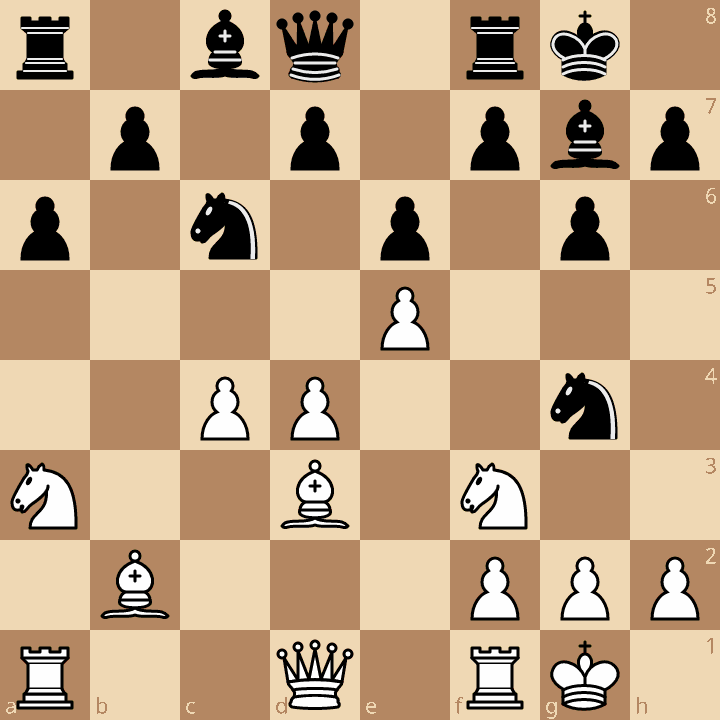
Las blancas enrocan, completando el desarrollo. El rey está seguro en g1 y la torre se conecta con las demás piezas. Las blancas tienen una posición soñada — un centro de peones masivo (c4-d4-e5), piezas activas en diagonales abiertas y ventaja de desarrollo. Desde aquí, los planes típicos de las blancas incluyen Nc2-d4 (redirigiendo el caballo), Qe2 (conectando torres) y eventualmente d5 o f4 para romper.
Las negras enrocan poniéndose a salvo. Ambos bandos han enrocado, pero las posiciones son muy diferentes — las blancas tienen un centro de peones poderoso y piezas activas, mientras las negras están restringidas con un peón extra que aporta poco beneficio. La ventaja de espacio y la actividad de piezas de las blancas compensan plenamente el peón sacrificado.
Puntos clave
- El Gambito de Ala sacrifica un peón de flanco para dominar el centro con d4
- Tras 3.a3 bxa3, Nxa3 recupera un peón mientras desarrolla una pieza
- El Bb2 en la gran diagonal abierta es una pieza atacante clave
- e5 gana espacio con tempo, restringiendo toda la posición de las negras
- La cadena de peones c4-d4-e5 otorga una ventaja de espacio aplastante
Ahora juégalo tú
Recorre cada jugada en un tablero real, prueba las malas y pregúntale a Knighty por qué fallan.
Resumen
¿Listo para practicar?
Llévate esta lección
Requiere una cuenta gratuitaCon todas las variantes: se abre en Lichess y ChessBase