
Giuoco Pianissimo
Le « Jeu très tranquille » — les Blancs construisent patiemment une structure positionnelle avec d3, c3 et des manœuvres de pièces, au lieu du centre tranchant c3-d4.
Essayer la leçon interactiveIntroduction
Contenu de la leçon
L'ouverture du pion Roi — les Blancs occupent le centre et ouvrent des diagonales pour la Dame et le Fou du flanc Roi. Le premier coup le plus populaire aux échecs. Réponses principales des Noirs : - 1. ..e5 — Partie ouverte, répliquant au centre des Blancs - 1. ..c5 — Défense sicilienne, luttant pour d4 de manière asymétrique - 1. ..e6 — Défense française, préparant ..d5 - 1. ..c6 — Caro-Kann, préparant aussi ..d5
Les Noirs répliquent au centre des Blancs, établissant un centre de pions symétrique. Cela mène aux parties ouvertes — la plus ancienne et la plus classique famille d'ouvertures. Le pion e5 contrôle d4 et f4, limitant les options d'expansion des Blancs.
Les Blancs développent le Cavalier sur sa case la plus naturelle, attaquant immédiatement le pion e5. Le Cavalier contrôle aussi d4 et prépare le petit roque. C'est le deuxième coup le plus courant, menant à un vaste arbre d'ouvertures incluant l'italienne, l'espagnole et l'écossaise.
Les Noirs défendent le pion e5 avec le coup de développement le plus naturel. Le Cavalier en c6 contrôle aussi les importantes cases d4 et e5. À partir d'ici, le troisième coup des Blancs définit l'ouverture : - 3. Bc4 — Partie italienne - 3. Bb5 — Partie espagnole - 3. d4 — Partie écossaise - 3. Nc3 — Quatre Cavaliers / hybride viennoise
Le Fou se développe en c4, visant la vulnérable case f7 des Noirs — le point le plus faible de la position initiale puisque seul le Roi la défend. C'est le coup fondamental de la Partie italienne. Les alternatives des Blancs mènent à des ouvertures entièrement différentes : - 3. Bb5 — la Partie espagnole, mettant la pression sur le défenseur Nc6 - 3. d4 — la Partie écossaise, défiant immédiatement le centre - 3. Nc3 — les Trois/Quatre Cavaliers, retardant la décision
Les Noirs développent le Fou sur sa diagonale la plus active, faisant écho à la pression des Blancs sur le centre. Le Giuoco Piano (« Jeu tranquille ») commence — bien que le nom soit trompeur, un jeu tranchant suit souvent. Le Fou en c5 vise la case f2 et soutient une future rupture ..d5.
Le Giuoco Pianissimo ! Au lieu du coup agressif 4. c3 (préparant d4 immédiatement), les Blancs jouent d3 — une approche plus patiente et positionnelle. Le pion soutient le centre e4 et ouvre un chemin pour le Fou en c1. Les alternatives des Blancs créent des rythmes différents : - 4. c3 — la ligne principale du Giuoco Piano, préparant d4 au prochain coup - 4. O-O — flexible, retardant la structure centrale - 4. b4 — le Gambit Evans, sacrifiant un pion pour un développement rapide
Coups alternatifs
Les Noirs développent le Cavalier en f6, contre-attaquant le pion e4. C'est la réponse la plus naturelle — développer une pièce, préparer le roque et exercer une pression sur le centre des Blancs. Les Noirs peuvent aussi jouer 4. ..d6 en premier, mais Nf6 est plus flexible car il garde les options ouvertes pour différentes structures de pions.
Coups alternatifs
Roquer tôt est une caractéristique du Pianissimo — les Blancs mettent le Roi en sécurité et connectent les Tours avant de s'engager dans un plan central. La Tour en f1 ira bientôt en e1 pour soutenir le pion e4. Il n'y a aucune urgence à se déployer — tout l'intérêt du Pianissimo est l'amélioration patiente des pièces.
Coups alternatifs
Les Noirs consolident le centre en soutenant le pion e5 avec le pion d. Ce coup ouvre aussi la diagonale pour que le Fou en c8 puisse se développer. L'ordre des coups est flexible — les Noirs pourraient aussi jouer ...O-O ou ..a6 d'abord, mais d6 est le plus logique, renforçant immédiatement le centre.
Un coup positionnel clé — le pion c3 soutient une future poussée d4, qui est le plan à long terme des Blancs. Contrairement à la ligne principale du Giuoco Piano où c3+d4 arrive rapidement, ici les Blancs prennent le temps de bien préparer cette rupture. Le pion contrôle aussi la case d4 et offre une case de retraite au Bc4 via b3-c2 si nécessaire.
Coups alternatifs
Les Noirs roquent au flanc Roi, complétant le développement de base. Les deux Rois sont maintenant en sécurité et la véritable bataille stratégique commence. La position est équilibrée mais riche en idées — les Blancs vont manœuvrer leurs pièces vers le flanc Roi tout en préparant d4, et les Noirs chercheront du contre-jeu avec ..a6, ..Ba7 et éventuellement ..d5.
La Tour s'installe sur la demi-colonne e ouverte, renforçant le pion e4. C'est un coup standard dans presque toutes les configurations de la Partie italienne — la Tour défend e4 et surveille la colonne e potentiellement ouverte. Avec la Tour en e1, la poussée d4 devient mieux soutenue car e4 ne sera pas suspendu après les échanges centraux.
Coups alternatifs
Un coup prophylactique — les Noirs empêchent Bb5 ou les idées b4-b5 et préparent de retirer le Fou en a7 si nécessaire. Le pion en a6 soutient aussi une future expansion ..b5 à l'aile Dame. C'est un coup d'attente typique dans le Pianissimo, améliorant la position avant de s'engager dans un plan.
Le Fou recule en b3, maintenant la diagonale a2-g8 tout en évitant un futur ..Na5 qui frapperait le Fou en c4. Depuis b3, le Fou peut ensuite se réorienter vers c2, pointant vers le flanc Roi. C'est la manœuvre standard dans le Pianissimo — Bc4-b3-c2 maintient le Fou actif tout en dégageant de l'espace pour les manœuvres de Cavalier.
Coups alternatifs
Les Noirs replient le Fou en a7, où il est à l'abri des découvertes d4-d5 et surveille toujours la case f2 le long de la diagonale. Le Fou est légèrement passif mais très bien protégé. Depuis a7, le Fou maintient une pression à long terme sur la diagonale a7-g1, ce qui peut devenir pertinent si les Blancs jouent d4 et que le centre s'ouvre.
Le Cavalier se développe en d2 — pas sa destination finale, mais une case de transit essentielle. Depuis d2, le Cavalier se réorientera vers f1 puis g3, ciblant le flanc Roi. Cette manœuvre Nbd2-f1-g3 est le plan signature du Pianissimo. Le Cavalier en d2 soutient aussi e4 et libère la colonne c pour la Dame.
Coups alternatifs
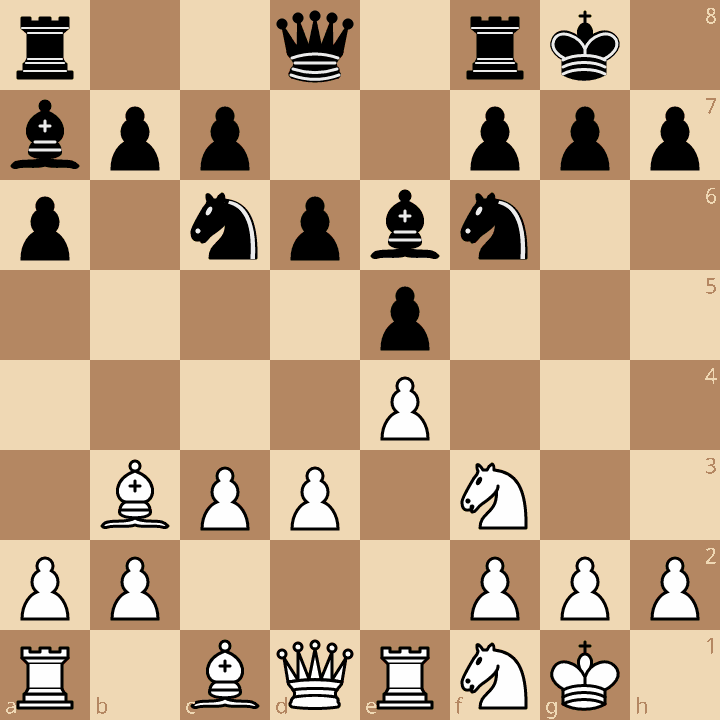
Les Noirs développent leur dernière pièce mineure, connectant les Tours. Le Fou en e6 vise le Fou en b3 et contrôle des cases centrales clés comme d5. Si les Blancs échangent les Fous avec Bxe6, les Noirs reprennent avec ..fxe6, ouvrant la colonne f pour la Tour — un échange à double tranchant.
Le Cavalier poursuit son voyage vers g3 — la manœuvre signature du Pianissimo ! Depuis g3, le Cavalier contrôle f5 et h5, soutient une attaque au flanc Roi et peut bondir en f5 au bon moment. Cette amélioration patiente des pièces est ce qui rend le Pianissimo unique. Les Blancs construisent méthodiquement, optimisant chaque pièce avant de déclencher l'action.
Coups alternatifs
Points clés
- 4.d3 est l'alternative tranquille à 4.c3 — patience plutôt qu'agressivité
- La manœuvre Nbd2-f1-g3 est le plan signature du Pianissimo
- Bc4-b3 (puis c2) maintient le fou actif tout en évitant ...Na5
- Re1 soutient e4 et prépare la future rupture d4
- Les Blancs construisent lentement — ne pas précipiter d4 avant que les pièces soient idéalement placées
À toi de la jouer
Parcours chaque coup sur un vrai échiquier, tente les mauvais, et demande à Knighty pourquoi ils échouent.
Résumé
Prêt à pratiquer ?
Emporter cette leçon
Compte gratuit requisAvec toutes les variantes — s'ouvre dans Lichess et ChessBase