
DIR Attaque des Quatre Pions
Les blancs construisent un imposant centre de quatre pions avec d4+c4+e4+f4, mais les noirs contre-attaquent avec ...c5 et ...e6 pour le saper avant qu'il n'avance.
Essayer la leçon interactiveIntroduction
Contenu de la leçon
L'ouverture du Pion Dame — les blancs revendiquent le centre avec le pion d, immédiatement défendu par la dame. Cela mène généralement à des positions plus stratégiques et fermées par rapport à 1. e4. Réponses principales des noirs : - 1. ..d5 — Gambit Dame et variantes Slaves - 1. ..Nf6 — Défenses Indiennes (Est-Indienne, Nimzo-Indienne, etc.) - 1. ..f5 — Défense Hollandaise
Les noirs développent le cavalier et contrôlent e4, empêchant les blancs de construire facilement le centre idéal e4+d4. C'est la porte d'entrée vers tous les systèmes de Défense Indienne. Les noirs retardent l'engagement de la structure de pions, gardant la flexibilité pour choisir entre Est-Indienne, Nimzo-Indienne, Ouest-Indienne et plus.
Coups alternatifs
Les blancs renforcent le contrôle de d5 et gagnent plus d'espace. Combiné avec d4, les deux pions dominent le centre. La réponse des noirs détermine le système d'ouverture : - 2. ..e6 — Nimzo-Indienne (après 3. Nc3 Bb4) ou Ouest-Indienne - 2. ..g6 — Est-Indienne ou Grünfeld - 2. ..c5 — Structures Benoni - 2. ..e5 — Gambit Budapest
Les noirs préparent le fianchetto du fou en g7, menant à la Défense Est-Indienne (..d6, ..Bg7) ou la Défense Grünfeld (..d5, ..Bg7). Les deux sont hypermodernes — les noirs permettent un grand centre blanc, puis l'attaquent. Le choix entre Est-Indienne et Grünfeld se fait typiquement au 3e ou 4e coup.
Coups alternatifs
Les blancs développent le cavalier sur sa case naturelle, soutenant les avances d5 et e4. C'est la ligne principale de l'Est-Indienne, permettant aux blancs de choisir entre de nombreux systèmes aux prochains coups. Alternatives des blancs : - 3. Nf3 — flexible, peut mener au système Fianchetto - 3. f3 — montage Sämisch directement - 3. g3 — engagement immédiat dans le fianchetto
Le fou prend sa puissante diagonale, contrôlant la grande diagonale a1-h8. C'est la pièce emblématique de l'Est-Indienne — le Bg7 est un dragon endormi qui devient puissant quand le centre s'ouvre. Le fou soutient les ruptures ..e5 et ..d5 tout en exerçant une pression latente sur l'aile dame blanche.
Coups alternatifs
Les blancs gagnent plus d'espace central, construisant le duo de pions d4+e4. C'est la formation standard de l'Est-Indienne — les blancs ont un centre dominant et choisiront comment se développer selon le système désiré. Le cinquième coup des blancs définira la variante : - 5. f4 — Attaque des Quatre Pions, la plus agressive - 5. Nf3 — Classique ou Fianchetto - 5. f3 — Sämisch, préparant Be3 sans ..Ng4
Les noirs s'engagent dans la structure Est-Indienne en soutenant un futur ..e5. Le pion d6 contrôle e5 et c5, formant l'ossature de la position noire. Ce coup distingue l'Est-Indienne de la Grünfeld (où les noirs jouent ..d5). Le plan des noirs est de permettre un grand centre blanc, puis de le frapper avec ..c5 ou ..e5.
Coups alternatifs
L'Attaque des Quatre Pions ! Les blancs construisent le centre le plus imposant possible — quatre pions alignés sur c4, d4, e4 et f4. C'est le système le plus agressif contre l'Est-Indienne, visant à écraser les noirs avec un rouleau compresseur central. Le risque : la poussée f4 affaiblit l'aile roi (surtout les cases e3 et g3) et le centre peut devenir une cible si les noirs réagissent correctement. Comme dit l'adage : un large centre de pions est soit une force, soit une faiblesse.
Les noirs roquent en sécurité avant de lancer la contre-attaque. Le roi est à l'abri, la tour se connecte, et les noirs sont prêts à défier le centre blanc. Roquer d'abord est important — les noirs ont besoin d'un roi en sécurité avant d'ouvrir la position avec ..c5 et ..e6.
Coups alternatifs
Les blancs développent la dernière pièce mineure, préparant le roque. Le cavalier soutient les cases d4 et e5 et connecte l'aile roi. Alternatives des blancs : - 6. Be2 — développer le fou d'abord, également standard - 6. Bd3 — plus agressif mais légèrement moins flexible
La contre-attaque clé ! Les noirs frappent le pion d4, la base de la chaîne de pions blanche. C'est la réaction thématique à l'Attaque des Quatre Pions — défier le centre avant que les blancs ne puissent consolider. Après 7. d5, la position prend un caractère Benoni avec une structure de pions asymétrique et un jeu tranchant pour les deux camps.
Coups alternatifs
Les blancs avancent le pion d plutôt que d'échanger, créant un centre fermé. Cela gagne de l'espace mais crée aussi une cible fixe — le pion d5 aura besoin d'une protection constante. La position ressemble maintenant à une structure Benoni Moderne avec le pion f4 supplémentaire donnant aux blancs plus d'options sur l'aile roi mais aussi plus de faiblesses.
Les noirs défient immédiatement le pion d5 ! C'est la rupture thématique critique — ouvrant la colonne e et la grande diagonale pour le Bg7. Après les échanges sur d5, les noirs auront un jeu de pièces actif contre le centre blanc. Retarder cette rupture permettrait aux blancs de consolider avec Be2, O-O, et le centre deviendrait alors une véritable force plutôt qu'une faiblesse.
Coups alternatifs
Les blancs développent le fou sur une case solide, préparant le roque. Be2 soutient le centre et garde la position flexible. C'est l'Attaque Normale des Quatre Pions — la continuation la plus logique. Les blancs planifient de roquer, puis de pousser e5 pour percer.
Les noirs ouvrent le centre ! La prise sur d5 crée la colonne e semi-ouverte — une autoroute pour les tours noires. Le pion d5 maintenait le centre blanc ensemble ; maintenant la structure devient plus dynamique. Cet échange est parfaitement chronométré — les blancs n'ont pas encore roqué, les noirs peuvent saisir l'initiative sur les colonnes ouvertes.
Coups alternatifs
Les blancs reprennent avec le pion c, maintenant la masse centrale de pions. Le pion d5 est maintenant un pion passé soutenu par e4 — un atout potentiel à long terme. Le plan des blancs est clair : pousser e5 pour ouvrir des lignes et utiliser les pions centraux comme bélier. Mais la colonne c ouverte et la colonne e donnent du contre-jeu aux noirs.
La tour occupe la colonne e semi-ouverte, visant le pion e4 — la fondation du centre blanc. C'est un coup de développement clé qui prépare la bataille tactique à venir. La tour en e8 anticipe la poussée e5 des blancs — après les échanges de pions, la tour sera parfaitement placée sur la colonne ouverte.
Coups alternatifs
La rupture centrale thématique ! Les blancs poussent e5, ouvrant des lignes et essayant d'utiliser la masse centrale de pions comme arme d'attaque. C'est tout l'intérêt de l'Attaque des Quatre Pions — le centre charge en avant. Mais cette poussée ouvre aussi la position pour les pièces noires, surtout le Bg7 et la Re8. La tactique qui suit détermine le caractère du milieu de partie.
Les noirs prennent, éliminant le pion e5 des blancs et ouvrant la colonne d. C'est forcé en pratique — laisser e5 rester étoufferait complètement la position noire. Après la reprise fxe5 des blancs, la colonne f s'ouvre pour la tour noire et le pion e5 devient une cible.
Coups alternatifs
Les blancs reprennent avec le pion f, maintenant le pion e5 avancé. Cela ouvre la colonne f mais laisse aussi le pion e5 potentiellement vulnérable. La position est maintenant critique — les blancs ont un pion passé d5 et l'avancé e5, mais les pièces noires sont prêtes pour le contre-jeu.
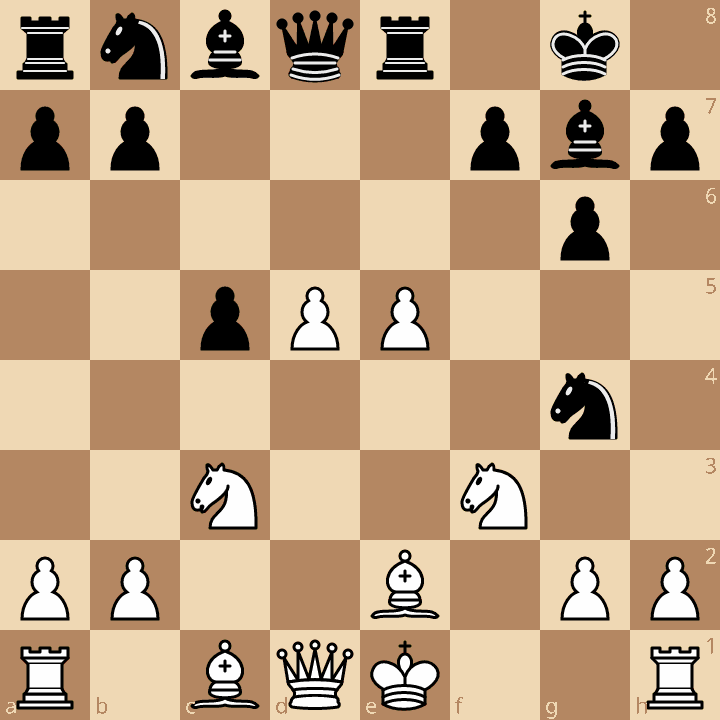
Les noirs attaquent le pion e5 avec le cavalier ! Le Ng4 menace aussi ..Ne3, fourchant la dame en d1 et la tour en f1 si les blancs roquent. C'est un motif tactique clé dans l'Attaque des Quatre Pions. Le cavalier en g4 est idéalement placé — il met la pression sur e5, menace Ne3 et ne peut pas être facilement chassé. Les noirs ont défié avec succès l'imposant centre blanc et généré un contre-jeu actif.
Coups alternatifs
Points clés
- L'Attaque des Quatre Pions (f4) construit le plus grand centre possible mais affaiblit l'aile roi
- Les noirs doivent contre-attaquer avec ...c5 et ...e6 avant que les blancs ne consolident
- Après d5 et exd5 cxd5, la position prend une structure de type Benoni
- Re8 anticipe la poussée thématique e5, plaçant la tour sur la colonne ouverte
- Ng4 attaque e5 et menace Ne3, fourchant dame et tour — le motif tactique clé pour les noirs
À toi de la jouer
Parcours chaque coup sur un vrai échiquier, tente les mauvais, et demande à Knighty pourquoi ils échouent.
Leçons connexes
Résumé
Prêt à pratiquer ?
Suivant dans cette famille d'ouvertures
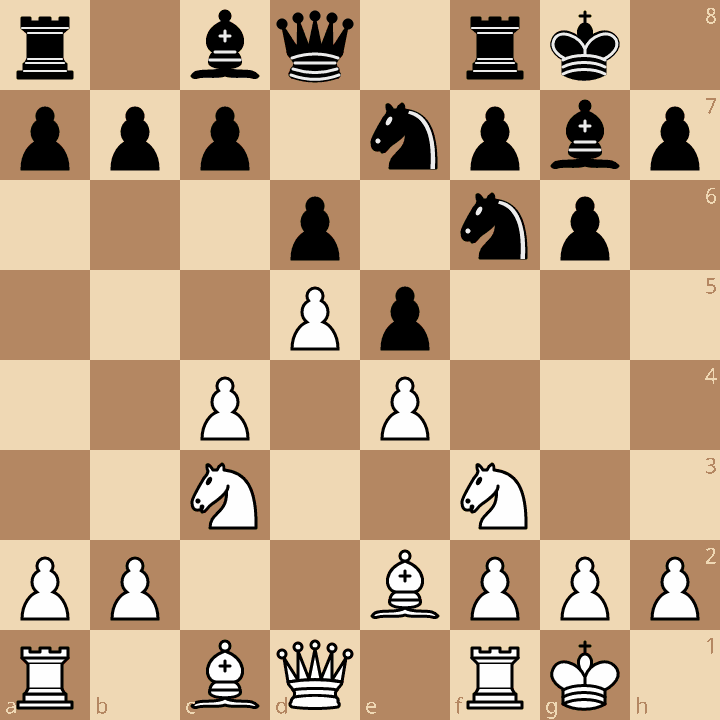
Défense Est-Indienne - Ligne principale classique
Emporter cette leçon
Compte gratuit requisAvec toutes les variantes — s'ouvre dans Lichess et ChessBase