
Sicilienne - Attaque Rossolimo
Un anti-Sicilienne positionnel où les blancs échangent le fou contre un avantage structurel et une pression durable.
Essayer la leçon interactiveIntroduction
Contenu de la leçon
L'Ouverture du Pion Roi — les blancs revendiquent le centre et ouvrent les diagonales pour la dame et le fou roi. Le premier coup le plus populaire aux échecs. Réponses principales des noirs : - 1. ..e5 — Jeu Ouvert, égalisant le centre blanc - 1. ..c5 — Défense Sicilienne, luttant pour d4 de manière asymétrique - 1. ..e6 — Défense Française, préparant ..d5 - 1. ..c6 — Caro-Kann, préparant aussi ..d5
La Défense Sicilienne — la réponse la plus populaire et ambitieuse des noirs à 1. e4. Au lieu d'égaliser au centre avec ..e5, les noirs luttent pour la case d4 de manière asymétrique. La Sicilienne mène à des positions déséquilibrées où les deux camps ont leurs chances. Les blancs obtiennent typiquement une attaque sur l'aile roi ; les noirs un contre-jeu sur l'aile dame et la colonne c.
La Sicilienne Ouverte commence. Les blancs développent naturellement et préparent d4 pour ouvrir la position. C'est l'approche la plus solide contre la Sicilienne. Les réponses des noirs déterminent la variante : - 2. ..d6 — Najdorf, Dragon, Classique - 2. ..Nc6 — Sveshnikov, Kalashnikov, Rossolimo - 2. ..e6 — Kan, Taïmanov, Scheveningen
Les noirs développent le cavalier sur sa case naturelle, défendant d4 et contrôlant e5. C'est le coup qui invite le Rossolimo — avec le cavalier en c6, les blancs peuvent le viser avec Bb5. Après 2. ..Nc6, le troisième coup des blancs définit le système : - 3. d4 — Sicilienne Ouverte, la ligne principale - 3. Bb5 — Attaque Rossolimo, alternative positionnelle - 3. Nc3 — Sicilienne Fermée
L'Attaque Rossolimo ! Au lieu d'entrer dans l'immense théorie de la Sicilienne Ouverte avec 3. d4, les blancs visent le cavalier et préparent l'échange. L'idée est d'abîmer la structure de pions noire — après Bxc6, les noirs auront des pions c doublés. Ce système est un favori de joueurs d'élite comme Magnus Carlsen et Fabiano Caruana, qui préfèrent sa clarté stratégique à la jungle tactique de la Sicilienne Ouverte.
Coups alternatifs
Les noirs préparent le fianchetto du fou de cases noires en g7, la réponse la plus populaire au Rossolimo. Le fou en g7 sera une pièce puissante, contrôlant la grande diagonale. Alternatives principales des noirs : - 3. ..e6 — solide, préparant ..Nge7 et ..d5 - 3. ..d6 — gardant la structure flexible - 3. ..Nf6 — invitant 4. Bxc6 immédiatement
Coups alternatifs
Les blancs exécutent l'échange Rossolimo ! En capturant le cavalier, les blancs abîment la structure de pions noire — après ..dxc6, les noirs ont des pions c doublés et une colonne d semi-ouverte. Les blancs cèdent la paire de fous mais obtiennent un avantage structurel durable. Le timing est important — les blancs échangent avant que les noirs ne puissent jouer ..a6 pour contester le fou, ou avant qu'il ne soit chassé sans contrepartie.
Coups alternatifs
Les noirs reprennent vers le centre avec le pion d — le premier choix du moteur. Cela maintient la structure moins endommagée que ..bxc6 (qui créerait des pions c doublés isolés) et ouvre la colonne d pour la dame. Après ..dxc6, la structure noire est déséquilibrée mais jouable. La paire de fous et la colonne d semi-ouverte compensent les pions c doublés.
Coups alternatifs
Les blancs établissent une structure de pions solide avec d3, soutenant le pion e4 et préparant le développement des pièces. Ce coup modeste reflète le caractère positionnel du Rossolimo — les blancs ne sont pas pressés de pousser d4. La structure d3/e4 donne aux blancs un centre stable tout en gardant la position suffisamment fermée pour que la paire de fous adverse ait moins de portée.
Coups alternatifs
Les noirs complètent le fianchetto. Le fou en g7 est une pièce puissante — il contrôle la grande diagonale a1-h8 et soutient la case e5. Ce fou est le principal atout stratégique des noirs dans le Rossolimo. Cependant, les blancs viseront bientôt ce fou avec Bh6, cherchant à l'échanger pour affaiblir les cases noires adverses.
Un coup prophylactique utile — les blancs empêchent ..Bg4 clouant le Nf3, et créent une case de fuite en h2 pour le roi si nécessaire. Cela prépare aussi une éventuelle poussée g4 pour une attaque sur l'aile roi. La prophylaxie est un concept clé du Rossolimo — les blancs jouent des coups d'attente utiles tandis que les noirs peinent à trouver un plan actif.
Coups alternatifs
Les noirs développent le cavalier sur sa case la plus naturelle, attaquant le pion e4 et préparant le roque. Le cavalier en f6 est bien placé pour la défense comme pour la contre-attaque. Les noirs doivent compléter le développement rapidement — les pions c doublés obligent à compter sur l'activité des pièces plutôt que sur le jeu de pions.
Les blancs développent le cavalier en c3, renforçant le pion e4 et contrôlant d5. Le cavalier en c3 soutient aussi un futur avant-poste en d5 — une des idées stratégiques clés des blancs dans le Rossolimo. Avec les deux cavaliers développés et h3 joué, les blancs sont prêts à choisir un plan : Be3 + Qd2 prépare le grand roque et une tempête de pions sur l'aile roi.
Coups alternatifs
Les noirs roquent du côté roi, mettant le roi en sécurité. C'est le choix naturel — le roi est plus en sécurité sur l'aile roi, et la tour se connecte avec la colonne d semi-ouverte. Cependant, roquer du côté roi peut être risqué si les blancs lancent une tempête de pions avec g4-g5. Les noirs doivent être prêts à créer du contre-jeu au centre.
Les blancs développent le fou en e3, visant le pion c5 et préparant Qd2 avec le grand roque. Le fou en e3 est bien placé — il soutient d4 si nécessaire et surveille les pions affaiblis de l'aile dame. Le dispositif Be3 + Qd2 + O-O-O est le plan le plus agressif des blancs, préparant une attaque sur l'aile roi avec g4-g5 tandis que le roi est en sécurité sur l'aile dame.
Coups alternatifs
Les noirs préparent le fianchetto du fou de cases blanches en b7 ou a6, activant la dernière pièce non développée. Le coup ..b6 soutient aussi le pion c5 et prépare ..Ba6 visant le pion d3 des blancs. Le plan des noirs est clair : développer le fou, contrôler le centre avec ..e5 et utiliser la paire de fous pour générer un contre-jeu à long terme.
Les blancs connectent les tours et préparent le grand roque. La dame en d2 soutient le Be3 et rend possible l'échange thématique Bh6. Avec O-O-O, les blancs lanceront une tempête de pions sur l'aile roi. C'est le cœur de la stratégie blanche dans le Rossolimo : le roque de côtés opposés crée des attaques mutuelles, mais la structure supérieure des blancs leur donne l'initiative.
Coups alternatifs
Les noirs revendiquent de l'espace au centre avec ..e5, empêchant le cavalier blanc d'atteindre d4. C'est un coup thématique clé — les noirs ont besoin d'espace central pour compenser les faiblesses structurelles. Le pion e5 active aussi le Bg7 le long de la diagonale et offre au cavalier le circuit de redéploiement Ne7-g6 si nécessaire.
L'échange thématique ! Les blancs visent le fou fianchetté des noirs — le défenseur le plus important des cases noires autour du roi adverse. L'échanger laissera les noirs avec des cases noires affaiblies sur l'aile roi. C'est une idée emblématique du Rossolimo : les blancs ont déjà échangé le fou de cases blanches contre un cavalier, et maintenant échangent le fou de cases noires contre la pièce la plus forte des noirs.
Coups alternatifs
Les noirs centralisent la dame, défendant l'aile roi et surveillant la colonne d. La dame en d6 prépare aussi à soutenir ..c4, pouvant saper le centre des blancs. Les noirs acceptent que l'échange de fous est inévitable — la priorité est de garder la position active et de trouver du contre-jeu avant que l'attaque sur l'aile roi ne se matérialise.
Les blancs complètent l'échange stratégique, éliminant le puissant fou fianchetté des noirs. Les cases noires autour du roi adverse (f6, g7, h6) sont désormais durablement affaiblies. Les blancs viseront ces cases dans le milieu de jeu. Cet échange est l'aboutissement de la stratégie Rossolimo : d'abord échanger Bb5 contre le cavalier (avantage structurel), puis Bh6 contre le fou (contrôle des cases noires).
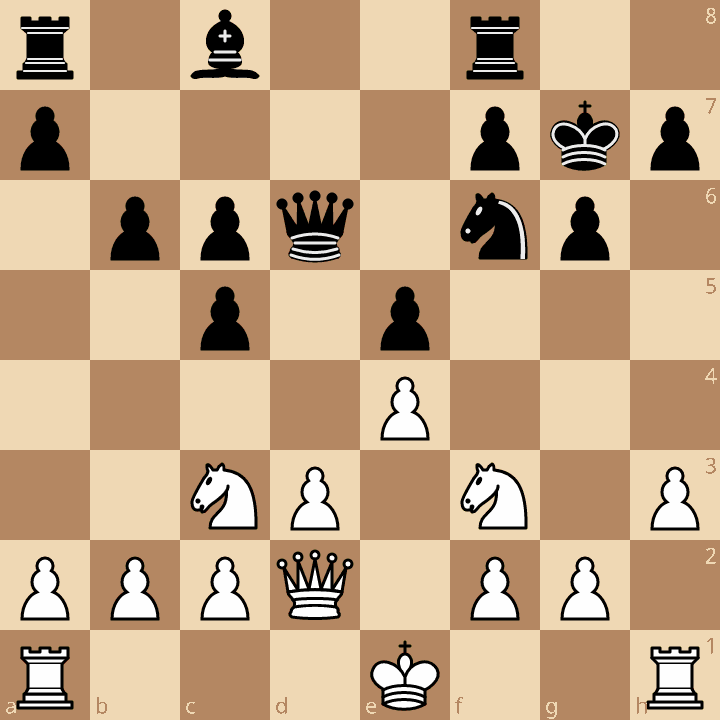
Les noirs reprennent avec le roi — le seul coup légal. Le roi en g7 est légèrement exposé sans le fou de cases noires, mais la position des noirs reste jouable grâce au contrôle central avec ..e5 et la paire de fous (réduite à un seul fou). La position résultante est le milieu de jeu typique du Rossolimo : les blancs ont une meilleure structure et le contrôle des cases noires ; les noirs ont un centre solide et doivent générer activement du contre-jeu.
Points clés
- 3.Bb5 évite l'immense théorie de la Sicilienne Ouverte tout en posant de vrais problèmes
- Bxc6 dxc6 donne aux blancs une meilleure structure de pions en échange de la paire de fous
- La structure d3/e4 maintient la position stable et limite les fous adverses
- Bh6, échangeant le fou fianchetté, affaiblit durablement les cases noires adverses
- Be3 + Qd2 + O-O-O permet une dangereuse attaque de pions sur l'aile roi
À toi de la jouer
Parcours chaque coup sur un vrai échiquier, tente les mauvais, et demande à Knighty pourquoi ils échouent.
Résumé
Prêt à pratiquer ?
Emporter cette leçon
Compte gratuit requisAvec toutes les variantes — s'ouvre dans Lichess et ChessBase