
Attaque Stonewall
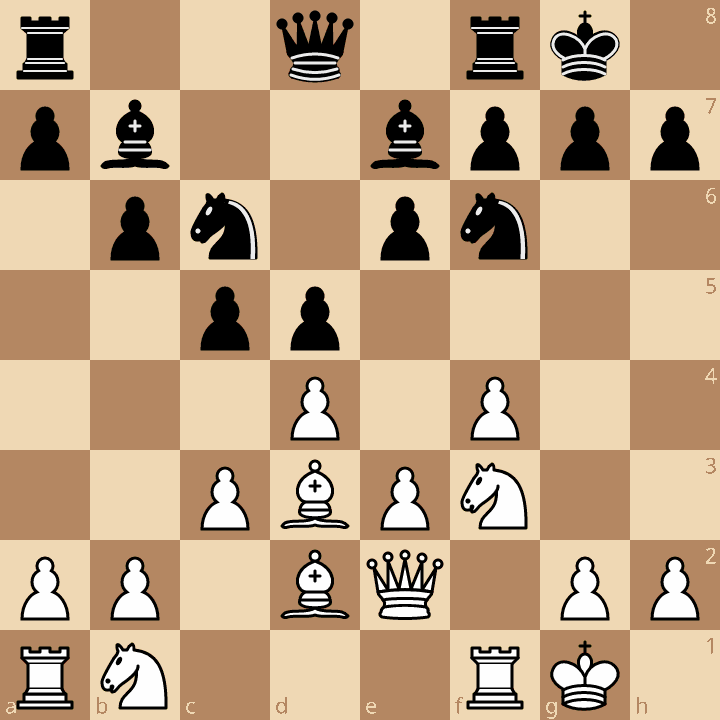
Un système rigide mais puissant pour les Blancs avec des pions en d4-e3-f4-c3 et le Fou en d3, visant une attaque au flanc Roi.
Essayer la leçon interactiveIntroduction
Contenu de la leçon
L'ouverture du pion Dame — les Blancs occupent le centre avec le pion d, immédiatement défendu par la Dame. Cela mène généralement à des positions plus stratégiques et fermées par rapport à 1. e4. Réponses principales des Noirs : - 1. ..d5 — Gambit Dame et configurations Slave - 1. ..Nf6 — Défenses indiennes (Est-indienne, Nimzo-indienne, etc.) - 1. ..f5 — Défense hollandaise
Les Noirs répondent symétriquement au centre, menant à la Partie du pion Dame. Le centre symétrique aboutit généralement à des manœuvres stratégiques plutôt qu'à des batailles tactiques immédiates. La suite la plus populaire des Blancs est 2. c4 — le Gambit Dame.
Les Blancs soutiennent d4 et ouvrent la diagonale pour le Fou de cases blanches. Le pion e3 est la base du Système Colle comme de l'Attaque Stonewall — la différence clé est que les Blancs jouent ensuite e4 (Colle) ou f4 (Stonewall). L'inconvénient : le Fou de cases noires est enfermé derrière la chaîne de pions. Dans la Stonewall, ce Fou reste passif pendant la majeure partie de la partie.
Coups alternatifs
Les Noirs se développent naturellement, contrôlant e4 et préparant le petit roque. C'est la réponse la plus courante et flexible.
Le Fou rejoint sa case idéale, visant le flanc Roi — en particulier le pion h7. C'est le coup caractéristique de l'Attaque Stonewall (ECO D00). Depuis d3, le Fou soutient la future avancée f4 et crée des menaces latentes contre le Roi roqué des Noirs. Dans le Système Colle, Bd3 prépare e4. Ici, Bd3 prépare f4 — un plan stratégique complètement différent.
Coups alternatifs
Les Noirs contestent immédiatement le pion d4 — la réponse la plus principielle. En frappant le centre des Blancs avant que la Stonewall ne soit complètement construite, les Noirs tentent d'ouvrir la position et d'exploiter le Fou de cases noires enfermé.
Renforcement de d4 et complétion du squelette de pions Stonewall côté Dame. La chaîne c3-d4 est solide comme le roc — les Noirs ne peuvent pas la percer avec ..c5 seul. Le centre des Blancs est sécurisé, permettant de se concentrer sur le flanc Roi avec f4. Le pion c3 prépare aussi Nd2, gardant la colonne f libre pour la poussée f4.
Coups alternatifs
Les Noirs renforcent d5 et ouvrent la diagonale pour le Fou de cases noires. Le pion e6 crée une chaîne solide avec d5, mais il enferme aussi le Fou de cases blanches — un miroir du problème des Blancs de l'autre côté.
La Stonewall est complète ! Les pions en c3-d4-e3-f4 forment un mur impénétrable à travers le centre. Les Blancs contrôlent désormais la case e5 — un avant-poste parfait pour un Cavalier — et disposent d'un plan clair : attaquer au flanc Roi. Le pion f4 soutient aussi un futur Cavalier en e5 et peut parfois avancer en f5 pour fissurer la position du Roi noir.
Coups alternatifs
Les Noirs développent modestement le Fou en e7, préparant le roque. Le Fou reste flexible — il peut plus tard se déplacer en d6 pour contester le pion f4 ou en f6 pour contrôler e5.
Maintenant que f4 est joué, le Cavalier se développe en f3 — sa case naturelle. Le Cavalier contrôle e5, la case la plus importante dans la Stonewall, et prépare le petit roque. Le plan des Blancs à partir d'ici : roquer, puis manœuvrer le Cavalier en e5 (via Nf3-e5 ou Nd2-f3-e5) pour un puissant avant-poste.
Les Noirs roquent pour se mettre en sécurité. Le Roi est maintenant au flanc Roi — exactement là où l'attaque des Blancs est dirigée. C'est un coup naturel, mais les Noirs doivent rester vigilants face à la montée en puissance des Blancs au flanc Roi.
Les Blancs roquent, sécurisant le Roi et connectant les Tours. La Tour f1 soutiendra plus tard la colonne f, qui peut devenir un puissant axe d'attaque si le pion f4 avance en f5 ou si la position s'ouvre. Avec les deux camps roqués, le plan des Blancs est clair : monter en puissance au flanc Roi avec Qe2, Bd2 et viser Ne5.
Les Noirs préparent le fianchetto du Fou de cases blanches en b7, où il exercera une pression sur la grande diagonale (a8-h1). C'est la meilleure pièce des Noirs contre la Stonewall — le Fou en b7 vise e4 et g2, créant du contre-jeu.
La Dame se déplace en e2, soutenant le pion e3 et surveillant le flanc Roi. Depuis e2, la Dame peut pivoter vers le flanc Roi (Qf2 ou même Qh5 dans certaines positions) et appuie une potentielle avancée f5. La Dame libère aussi d1 pour une Tour, qui pourra rejoindre l'attaque plus tard.
Coups alternatifs
Le Fou se place en fianchetto en b7, devenant la pièce la plus active des Noirs. Il contrôle la grande diagonale et met la pression sur e4 et g2. Ce Fou devient souvent la pierre angulaire du contre-jeu des Noirs contre la Stonewall.
Les Blancs développent leur dernière pièce mineure. Le Fou de cases noires est la pièce la plus faible de la Stonewall — bloqué par le pion e3, il a une portée limitée. En d2, il connecte les Tours et peut être redirigé vers e1-h4 ou soutenir le flanc Dame. Malgré sa passivité, le Fou en d2 remplit un rôle défensif important et maintient la solidité de la position des Blancs.
Coups alternatifs
Les Noirs développent le Cavalier en c6, ajoutant de la pression sur d4 et contrôlant e5. Le Cavalier peut plus tard sauter en a5 pour attaquer c4 ou en e7-f5 pour contester le flanc Roi des Blancs.
Points clés
- Les pions Stonewall (c3-d4-e3-f4) créent un centre indestructible
- Bd3 doit précéder Nf3 — le Cavalier bloquerait la poussée f4
- e5 est l'avant-poste clé — visez à y installer un Cavalier
- Le Fou de cases noires est la faiblesse principale — acceptez-la et compensez
- La Stonewall fonctionne contre presque toutes les configurations noires — une arme de système fiable
À toi de la jouer
Parcours chaque coup sur un vrai échiquier, tente les mauvais, et demande à Knighty pourquoi ils échouent.
Résumé
Prêt à pratiquer ?
Emporter cette leçon
Compte gratuit requisAvec toutes les variantes — s'ouvre dans Lichess et ChessBase