
Baltic Defense
An offbeat Queen's Gambit response where Black develops the bishop to f5 before playing e6, avoiding the "bad bishop" problem.
Try Interactive LessonIntroduction
Lesson Content
The Queen's Pawn opening — White claims the center with the d-pawn, which is immediately defended by the queen. This tends to lead to more strategic, closed positions compared to 1. e4. Black's main responses: - 1. ..d5 — Queen's Gambit and Slav setups - 1. ..♘︎f6 — Indian Defenses (King's Indian, Nimzo-Indian, etc.) - 1. ..f5 — Dutch Defense
Mirror White and claim your share of the center.
d5 — Black matches White in the center, leading to the Queen's Pawn Game. The symmetrical center typically results in strategic maneuvering rather than immediate tactical battles. White's most popular continuation is 2. c4 — the Queen's Gambit.
The Queen's Gambit — White offers a pawn to lure Black's d5 pawn away from the center. It's not a true gambit since Black can't hold the pawn long-term. Black's main choices: - 2. ..e6 — Queen's Gambit Declined, solid and classical - 2. ..c6 — Slav Defense, supporting d5 while keeping the bishop free - 2. ..dxc4 — Queen's Gambit Accepted - 2. ..♗︎f5 — Baltic Defense, developing the bishop immediately!
Develop the bishop before it gets locked behind the e6 pawn.
♗︎f5 — The Baltic Defense! Black develops the light-squared bishop *before* playing e6. This is the whole point of the opening — in the standard QGD (2. ..e6), this bishop often spends the entire game trapped behind the e6-d5 chain. By getting it out now, Black ensures active piece play. The drawback is that the bishop may be exposed, and Black hasn't reinforced the center yet.
Alternative Moves
White develops the knight naturally, reinforcing control of d5 and e4. This is the most flexible response — White delays committing to a specific anti-Baltic plan. White's main alternatives: - 3. cxd5 — the critical test, winning the bishop pair after 3. ..♗︎xb1 4. ♖︎xb1 ♕︎xd5 - 3. ♕︎b3 — immediately targeting b7 and d5 - 3. ♘︎f3 — similar to 3. ♘︎c3, often transposing
Reinforce your center now that the bishop is already developed.
Now that the bishop is safely developed, Black plays e6 to reinforce d5. This is the ideal move order — the bishop is already active on f5, so e6 doesn't trap it. Black's structure with d5+e6 is solid, and the light-squared bishop remains outside the pawn chain.
Alternative Moves
White continues natural development, bringing the knight to its best square. The knight controls e5 and d4 while preparing kingside castling. White maintains a slight space advantage but Black's position is very solid.
Develop your knight toward the center.
♘︎f6 — Black develops the knight to its most natural square, counterattacking the e4 square and preparing to castle. The knight on f6 is a cornerstone of Black's setup in the Baltic. Black now aims to complete development with ..c6, ..♘︎bd7, and ..♗︎e7.
White pins the ♘︎f6 against the queen, a thematic idea in d4 openings. The pin creates subtle pressure — if Black plays ..♗︎e7, White maintains the tension; if Black breaks the pin with ..h6, it weakens the kingside. This is a more aggressive approach than 5. e3, which would block in White's own dark-squared bishop.
Reinforce d5 and create a solid pawn triangle.
Black reinforces the d5 pawn with the c-pawn, creating a rock-solid central structure. The d5-e6-c6 pawn triangle is extremely sturdy — White cannot easily break through. This also prepares ..♘︎bd7, which avoids blocking the c-pawn and keeps the queen's diagonal open.
Alternative Moves
White solidifies the d4 pawn and prepares to develop the bishop to d3. The pawn on e3 supports the center while opening the f1-a6 diagonal for the bishop. White's plan is ♗︎d3, exchanging Black's good bishop, followed by castling and building a kingside initiative.
Develop the knight without blocking your c-pawn.
♘︎bd7 — The knight develops to d7 — the standard square in the Baltic setup. From d7 the knight supports e5 (a potential outpost) and can reroute to f8-g6 or b6 depending on the position. Black avoids ..♘︎c6 because it would block the c-pawn and the queen's access to the queenside.
Alternative Moves
White develops the bishop to d3, directly challenging Black's ♗︎f5. White wants to trade bishops — removing Black's best piece or gaining a tempo. This is the most principled approach, targeting the very bishop Black worked to develop early.
Trade bishops — your bishop has already served its purpose.
♗︎xd3 — Black trades the bishop. While it may seem counterproductive to give up the piece the opening was designed to develop, the trade is actually good — the bishop has done its job by avoiding being trapped, and the recapture on d3 puts White's queen on a slightly exposed square. Black's remaining pieces will be well-coordinated in the compact d5-e6-c6 structure.
Alternative Moves
White recaptures with the queen, centralizing it on d3. The queen eyes the kingside (h7) and can support a future e4 push. However, it's somewhat exposed on d3 and may need to move again later. White retains a small advantage thanks to extra space.
Complete your development and prepare to castle.
Black develops the last minor piece, preparing to castle. The bishop on e7 is modest but solid — it supports kingside castling and can later recapture on f6 if White plays ♗︎xf6. With ..♗︎e7 and ...O-O, Black completes development and reaches a comfortable, slightly passive but very solid position.
Alternative Moves
White castles kingside, securing the king and connecting the rooks. White has completed development with a pleasant position — slight space advantage and potential to expand in the center with e4. Black should also castle immediately to neutralize any kingside ideas.
Castle to safety and complete development.
O-O — Black castles, completing mutual development. The position is roughly equal — White has a small space advantage, but Black's position is rock-solid with no weaknesses. Black's typical middlegame plans include ..dxc4 followed by ..c5 to free the position, or ..♖︎e8 and ..♘︎f8 to regroup the knight.
Key Takeaways
- 2...♗︎f5 develops the bishop before e6 locks it in — the key idea of the Baltic
- The d5-e6-c6 pawn triangle creates a rock-solid center
- ♘︎bd7 (not ♘︎c6) keeps the c-pawn flexible and the queenside open
- Trading on d3 is fine — the bishop has done its job of avoiding entombment
- Black reaches a solid, slightly passive but comfortable position with clear plans
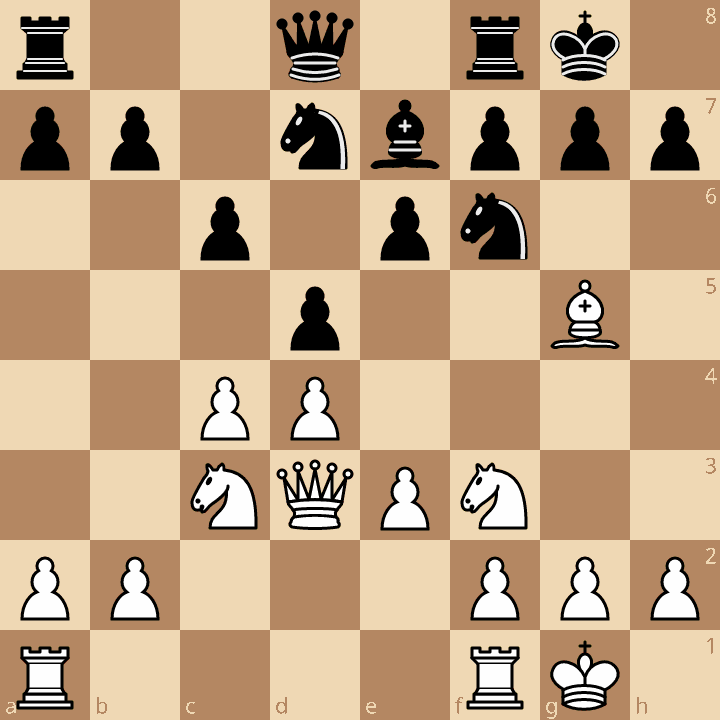
Now play it through
Step through every move on a real board, try the wrong ones, and ask Knighty why they fail.
Related Lessons
Summary
Ready to Practice?
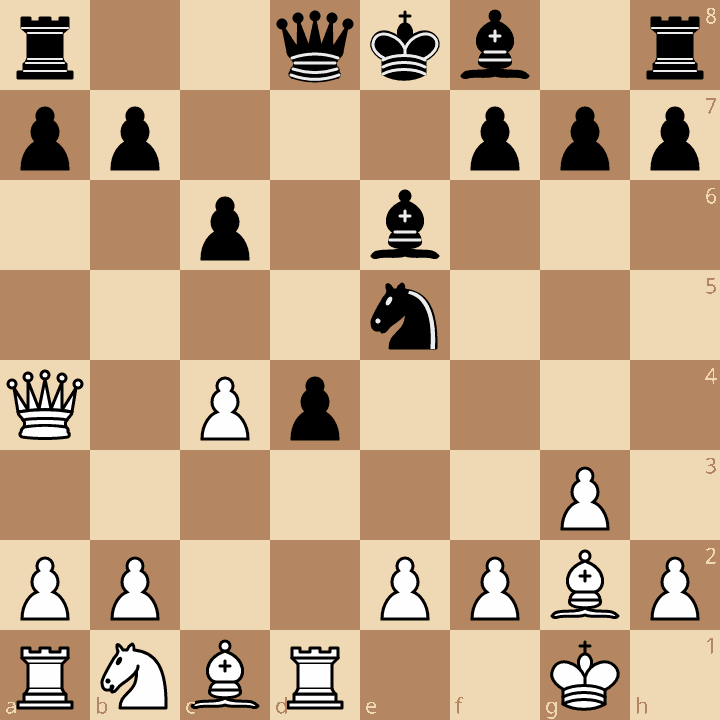
Next in this opening family
Albin Counter-Gambit - Fianchetto Line
Take this lesson with you
Free account requiredWith every variation — opens in Lichess & ChessBase