
Two Pawns vs One
Learn how to win with two pawns against one: use your outside passed pawn as a decoy to drag the enemy king away, win the last black pawn with your king, then escort your remaining pawn home.
Try Interactive LessonIntroduction
Lesson Content
Create a threat on the far side of the board that the black king cannot ignore — and make it as fast as possible.
Launch the decoy — at full speed. a4 threatens to run to a8 and queen, so the black king must drop everything and head for the queenside; that means abandoning the f-pawn and giving up any hope of attacking the c-pawn in peace. Speed is everything here. The pawn needs four more steps to queen and the king needs three to reach b7, so Black is just in time — but only just. Every other white move lets the black king win the c-pawn and catch the a-pawn afterwards, and the game is a draw.
Alternative Moves
Black has no choice: ♔︎e6 starts the run to the queenside, because the a-pawn would otherwise queen in four moves. Going after the f-pawn or staying put would let it through. The decoy is already working — the black king is turning its back on its own pawn.
The black king is on its way — keep your queenside threat one step ahead of it.
♔︎eep running. a5 keeps the pawn one step ahead of the king: Black still has to spend every move on reaching the queenside, and has no time to turn on the c-pawn. Stop the pawn now and the black king wins the c-pawn, catches the a-pawn afterwards, and the win is gone.
Alternative Moves
♔︎d7 — the king hurries on, heading for c7, the one square from which it can watch the a-pawn and block the c-pawn at the same time. Black is just in time to stop the pawn, but nothing more.
Chain the black king to the queenside for good before you turn to the f-pawn.
Tie the king down. a6 fixes the decoy on the sixth rank. From here it is a permanent threat: the moment the black king wanders away from b7, a7 follows and the pawn queens. Black's king is now chained to the queenside for the rest of the game — which leaves the f-pawn with no defender at all.
Alternative Moves
♔︎c7 is the ideal defensive post: the king guards b7, so a7 would simply be met by ♔︎b7 and the pawn falls, and it covers c6, so the c-pawn cannot advance. One king holds two pawns — but only because White's king is far away. That is the problem White's king will now solve.
The decoy has done its job — collect what the black king left behind.
Cash in. ♔︎f3 goes after the f-pawn: the black king is chained to the queenside and cannot defend it, so White's king wins it for free. After that the white king walks back to break the blockade — Black's king cannot hold two pawns against a king and two pawns.
Alternative Moves
♔︎c6 attacks the c-pawn — the only active idea Black has left. It looks dangerous, but the pawn is protected from a distance: taking it would let the a-pawn run through, as the next move shows.
Win Black's last pawn.
♗︎lack's last pawn falls. ♔︎xf4 leaves Black with a bare king against two pawns. Black's only hope is that the king on c6 can keep holding both pawns while White's king is far away — so the plan now is to bring that king back as fast as possible.
Alternative Moves
♔︎c7 — Black would love to take the c-pawn, but after ♔︎xc5 the reply a7 queens next move: from c5 the king cannot reach b7 in time. The decoy protects the c-pawn without ever moving. So the black king trudges back to its post.
Only your king can break the blockade — bring it toward the queenside by the most central route.
The long march. ♔︎e4 heads for the queenside through the centre. The black king alone holds both pawns from c7 — only White's king can break that blockade, and until it arrives the pawns must not move: either push would lose a pawn and the win with it.
Alternative Moves
♔︎c6 attacks the c-pawn once more. Black keeps asking the same question — can you protect the pawn without losing time? — and White has to keep answering it precisely.
Black attacks your c-pawn — defend it with a move that also brings your king closer.
Protect and advance in one move. ♔︎d4 defends the c-pawn and brings the king a step closer at the same time. The black king still cannot take on c5, and it still cannot leave the queenside because of a7 — it can only shuffle while White closes in.
Alternative Moves
♔︎c7 — back to the only square that watches both b7 and the c-pawn. Black has no plan beyond this shuffle, and shuffling cannot stop a king that keeps coming.
Keep the king marching — the pawn must not move until the king stands beside it.
The king arrives. ♔︎d5 stands next to its pawn and controls c6 — the square the pawn needs next. The blockade is about to break: Black cannot both guard c6 and stay near b7 for ever.
Alternative Moves
♔︎c8 — Black is out of good moves. Any king move lets the c-pawn advance with the white king behind it; stepping back to c8 at least keeps the king on the c-file, in front of the pawn.
Your king guards the next square on the pawn’s road — use it.
The pawn moves at last. c6 is safe because the king on d5 protects it. Black's king cannot take the pawn, and because of the a-pawn it still cannot leave the queenside — the two pawns and the king now work as one unit.
Alternative Moves
♔︎b8 keeps the king within reach of both pawns: it watches c7 and stays next to the a-pawn. It cannot stop the white king from covering the c-pawn’s next square, so this only delays the end.
Don't push yet — make sure the pawn's next square is covered before it goes there.
♔︎ing first, pawn second. ♔︎d6 covers c7 before the pawn steps there, so the pawn can never be taken. Order matters: push the pawn first and the king on b8 simply captures it.
Alternative Moves
♔︎a7 — Black finally turns on the decoy, because stopping the c-pawn is hopeless: the white king guards c7, and if the black king blocks on c8 instead, a7 follows and that pawn queens — the king can neither take it nor get in front of it.
Both squares in front of the pawn are covered by your king — the pawn is safe to go.
c7 — with the king guarding it, the pawn reaches the seventh rank. Black can take the a-pawn now, but the c-pawn queens next move whatever Black does.
Alternative Moves
♔︎xa6 — the decoy is finally eaten, and it has done its job completely: it dragged the black king to the edge of the board, let White's king win the f-pawn, and kept the king busy while the c-pawn walked home. The c-pawn now queens.
Finish it — promote to the piece that forces checkmate.
Promotion — with check! c8=♕︎+ puts a new queen on the board and hits the king on a6 along the diagonal. Queen against a lone king is an easy win. Remember the plan: push the outside passer as a decoy, let the enemy king chase it, win the pawns on the other side with your king, then bring the king back and escort the last pawn home.
Alternative Moves
Key Takeaways
- An outside passed pawn is a decoy: the enemy king must run to stop it
- Push the decoy at full speed — one tempo too slow and the enemy king wins the other pawn and the game is drawn
- A decoy on the sixth rank chains the enemy king to that side of the board for the rest of the game
- While the enemy king is chained down, your king wins the pawns on the other side
- Bring your king back to break the blockade — a king alone can hold two pawns only while your king is far away
- King first, pawn second: never push the last pawn to a square your king does not yet cover
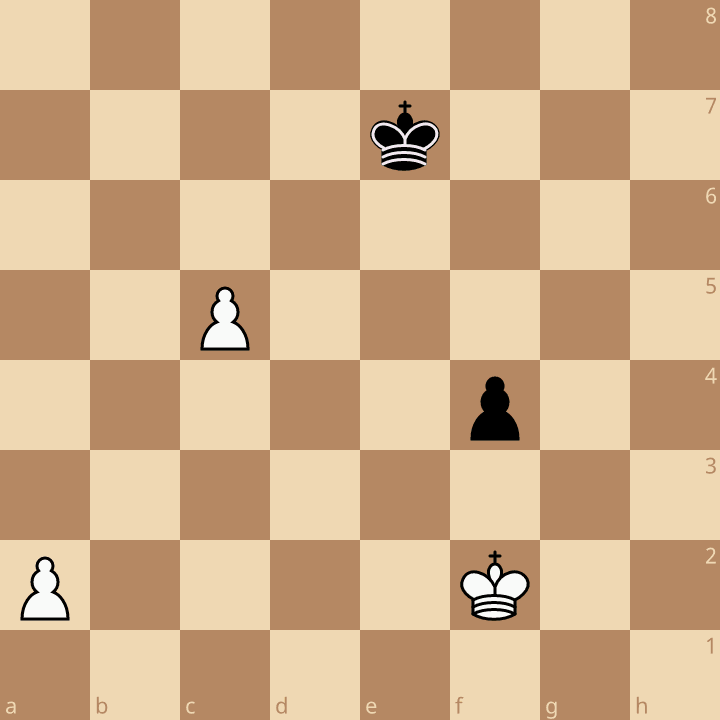
Now play it through
Step through every move on a real board, try the wrong ones, and ask Knighty why they fail.
Related Lessons
Summary
Ready to Practice?
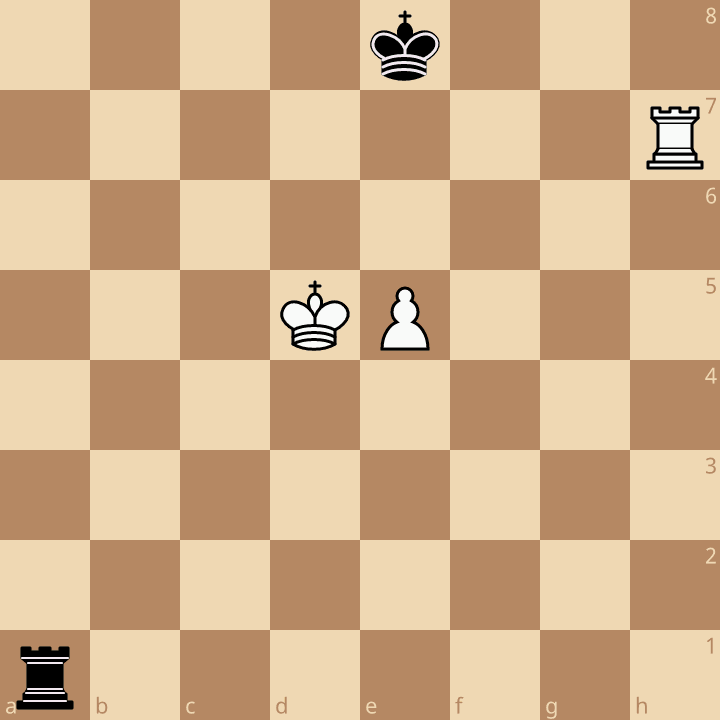
Next in this course
Short-Side Defense
Take this lesson with you
Free account requiredWith every variation — opens in Lichess & ChessBase