
QGD Exchange Variation
A positional system where White exchanges on d5 early, creating a symmetrical pawn structure and aiming for a minority attack.
Try Interactive LessonIntroduction
Lesson Content
Claim the center with your queen pawn.
d4 — The Queen's Pawn opening — White claims the center with the d-pawn, which is immediately defended by the queen. This tends to lead to more strategic, closed positions compared to 1. e4. Black's main responses: - 1. ..d5 — Queen's Gambit and Slav setups - 1. ..♘︎f6 — Indian Defenses (King's Indian, Nimzo-Indian, etc.) - 1. ..f5 — Dutch Defense
Alternative Moves
Black matches White in the center, leading to the Queen's Pawn Game. The symmetrical center typically results in strategic maneuvering rather than immediate tactical battles. White's most popular continuation is 2. c4 — the Queen's Gambit.
Challenge the d5 pawn to gain central control.
c4 — The Queen's Gambit — White offers a pawn to lure Black's d5 pawn away from the center. It's not a true gambit since Black can't hold the pawn long-term. Black's main choices: - 2. ..e6 — Queen's Gambit Declined, solid and classical - 2. ..c6 — Slav Defense, supporting d5 while keeping the bishop free - 2. ..dxc4 — Queen's Gambit Accepted, giving up the center temporarily
Alternative Moves
The Queen's Gambit Declined — Black reinforces d5 solidly. The downside is the same as in the French: the light-squared bishop is blocked behind the e6 pawn. This is one of the most classical and well-respected opening systems in chess.
Develop the knight to support e4 and pressure d5.
♘︎c3 — White develops the knight to its natural square, adding pressure to d5 and supporting a future e4 push. The knight on c3 is the backbone of White's central strategy. After 3. ..♘︎f6, White can choose between several major systems: - 4. cxd5 — Exchange Variation (our line) - 4. ♘︎f3 — Classical QGD - 4. ♗︎g5 — entering the main lines directly
Alternative Moves
Black's most natural developing move, defending d5 and controlling e4. The knight also prepares kingside castling. This is the standard QGD setup — Black has a solid but slightly passive position due to the blocked light-squared bishop.
Exchange pawns to create the symmetrical structure.
cxd5 — The Exchange Variation! White captures on d5, creating a symmetrical pawn structure. This might look like White is releasing tension, but the resulting position is deceptively rich. White's plan centers on the minority attack — pushing b4-b5 to create weak pawns in Black's queenside. The symmetric structure actually favors the side with the initiative.
Alternative Moves
Black recaptures, restoring material equality. The pawn structure is now symmetrical with pawns on d4 and d5 — but this symmetry is the starting point for a deep strategic battle. Black's light-squared bishop is now free (unlike in the standard QGD), which is a small compensation for White's spatial advantage.
Pin the knight to the queen while developing.
♗︎g5 — The Positional Variation — White pins the ♘︎f6 to the queen, creating immediate pressure. The bishop on g5 serves multiple purposes: it restricts Black's development and can be exchanged for the knight to weaken Black's kingside pawn cover. This is the most popular and strongest continuation in the Exchange Variation.
Alternative Moves
Black unpins the knight and prepares to castle. The bishop on e7 is modest but solid — it covers the dark squares and allows smooth development. Alternatives like 5. ..c6 or 5. ..♘︎bd7 are playable but ♗︎e7 is the most classical and reliable response.
Secure the center and prepare to develop the bishop.
White solidifies the d4 pawn and opens the diagonal for the light-squared bishop. The pawn on e3 may look passive, but it creates a rock-solid center. The bishop will develop to d3 on the next move, aiming at Black's kingside — a key attacking resource.
Alternative Moves
Black castles to safety. Castling early is essential in the QGD Exchange — Black needs the king safe before committing to a plan. With the king secured, Black can focus on developing the remaining pieces and preparing counterplay.
Aim the bishop at the kingside.
The bishop develops to its ideal diagonal, aiming at h7 — a critical square near Black's castled king. The ♗︎d3+♕︎c2 battery is a hallmark of the QGD Exchange, creating latent threats against the kingside. This bishop is White's most important attacking piece in this structure.
Alternative Moves
Black develops the knight and prepares the typical maneuver ..♘︎f8-e6 (or ..♘︎f8-g6). The knight on d7 also supports ..c5 and can reroute to better squares. This is the standard developing scheme in the QGD Exchange — the knight aims for the kingside via f8.
Create a battery aimed at the enemy king.
The queen completes the ♗︎d3+♕︎c2 battery, adding pressure along the b1-h7 diagonal. This creates a potential threat of ♗︎xh7+ (the Greek Gift sacrifice) if Black isn't careful. The queen on c2 also supports the minority attack — from c2 it can shift to the queenside when needed.
Alternative Moves
Black activates the rook on the semi-open e-file, adding pressure against White's e3 pawn. The rook move also vacates f8 for a later ..♘︎f8. Controlling the e-file is an important part of Black's counterplay in this structure.
Develop the knight without blocking your f-pawn.
The knight develops to e2 instead of f3, keeping the f-pawn free for a potential f3 advance. From e2, the knight can reroute to g3 or f4. This is a signature move of the QGD Exchange — ♘︎ge2 supports both the minority attack (after castling kingside) and kingside play (after castling queenside).
Alternative Moves
The classic QGD Exchange maneuver! Black reroutes the knight from d7 via f8 to e6 or g6, where it supports both kingside defense and central play. This looks slow but is the best strategic approach. The knight on e6 will control d4, f4, and c5 — all critical squares in this structure.
Castle to safety before launching your queenside plan.
O-O — White castles kingside, securing the king and connecting the rooks. From here, White can launch the minority attack with a4, b4, and b5 — the signature plan of the QGD Exchange. Alternatively, White can consider O-O-O for a direct kingside attack, but kingside castling is safer and more flexible.
Alternative Moves
Black shores up the d5 pawn with ..c6, creating the classic QGD Exchange pawn chain. This is essential — without c6, the d5 pawn can become a target. The position is now a typical QGD Exchange tabiya. White will push b4-b5 (minority attack), while Black seeks kingside counterplay with ..♘︎e6, ..♘︎g6, and potentially ..f5.
Key Takeaways
- The Exchange creates symmetry but White keeps the initiative
- ♗︎d3 + ♕︎c2 forms a dangerous battery aiming at h7
- The minority attack (b4-b5) is White's signature queenside plan
- Black's key maneuver is ...♘︎bd7-f8-e6 for flexible defense
- ...c6 is essential to shore up the d5 pawn
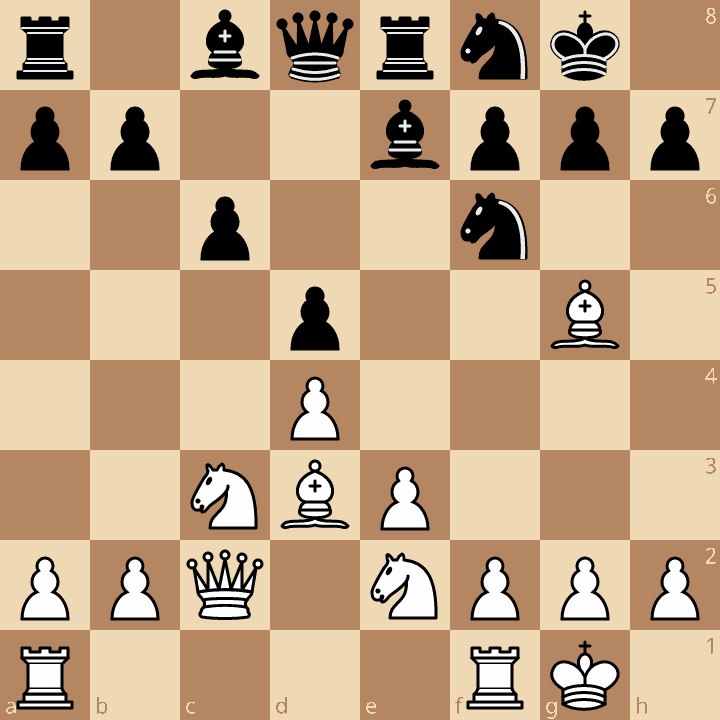
Now play it through
Step through every move on a real board, try the wrong ones, and ask Knighty why they fail.
Related Lessons
Summary
Ready to Practice?
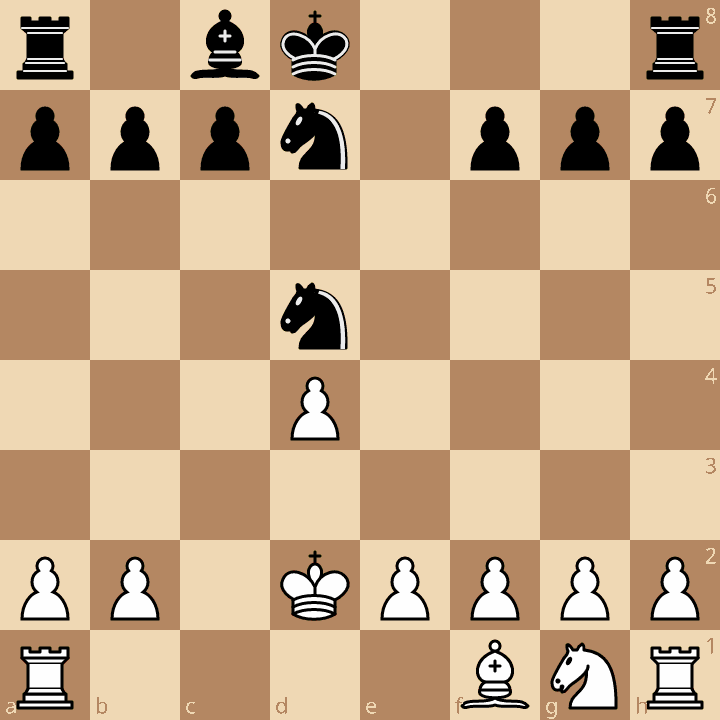
Next in this opening family
Elephant Trap
Take this lesson with you
Free account requiredWith every variation — opens in Lichess & ChessBase