
QGD Tartakower Defense
Solve the QGD bishop problem with the Tartakower system — fianchetto the light-squared bishop and aim for the freeing ...c5 break.
Try Interactive LessonIntroduction
Lesson Content
The Queen's Pawn opening — White claims the center with the d-pawn, which is immediately defended by the queen. This tends to lead to more strategic, closed positions compared to 1. e4. Black's main responses: - 1. ..d5 — Queen's Gambit and Slav setups - 1. ..♘︎f6 — Indian Defenses (King's Indian, Nimzo-Indian, etc.) - 1. ..f5 — Dutch Defense
Mirror White and claim your share of the center.
d5 — Black matches White in the center, leading to the Queen's Pawn Game. The symmetrical center typically results in strategic maneuvering rather than immediate tactical battles. White's most popular continuation is 2. c4 — the Queen's Gambit.
The Queen's Gambit — White offers a pawn to lure Black's d5 pawn away from the center. It's not a true gambit since Black can't hold the pawn long-term. Black's main choices: - 2. ..e6 — Queen's Gambit Declined, solid and classical - 2. ..c6 — Slav Defense, supporting d5 while keeping the bishop free - 2. ..dxc4 — Queen's Gambit Accepted, giving up the center temporarily
Reinforce your center pawn.
The Queen's Gambit Declined — Black reinforces d5 solidly. The downside is the same as in the French: the light-squared bishop is blocked behind the e6 pawn. This is one of the most classical and well-respected opening systems in chess.
White develops the knight to its natural square, adding pressure on d5 and supporting a future e4 advance. This is the most common continuation. Now Black should develop the kingside knight: - 3. ..♘︎f6 — the most popular and classical - 3. ..♗︎e7 — the Charousek Variation - 3. ..c6 — transposing toward Semi-Slav structures
Alternative Moves
Develop the knight to its natural square.
♘︎f6 — Black develops the knight to its best square, controlling e4 and d5. This is the most natural and popular response. White must now decide: 4. ♗︎g5 (the Orthodox), 4. ♘︎f3, or 4. cxd5 (Exchange Variation).
Alternative Moves
The Orthodox QGD begins. White pins the ♘︎f6 against the queen, creating indirect pressure on d5 — if the knight moves, d5 becomes weaker. White's main alternatives: - 4. cxd5 — Exchange Variation, simplifying the center - 4. ♘︎f3 — Three Knights, staying flexible - 4. ♗︎f4 — Harrwitz Attack, developing without the pin
Alternative Moves
Break the pin and prepare to castle.
♗︎e7 — Black breaks the pin with the most natural developing move. The bishop on e7 is modest but solid — it defends the king and prepares castling. This is the defining move of the Orthodox QGD. Black's alternatives: - 4. ..♘︎bd7 — Knight Defense - 4. ..dxc4 — Vienna Variation - 4. ..♗︎b4 — less standard but playable
Alternative Moves
White solidifies the d4 pawn and prepares to develop the bishop. The pawn on e3 supports d4 and opens the f1-a6 diagonal for the bishop. The dark-squared bishop is already out on g5, so blocking it with e3 is no problem.
Alternative Moves
Castle first — you need a safe king before expanding.
O-O — Black castles to safety before committing to a specific plan. From here, Black has a critical strategic choice that defines the entire variation: - 6. ..h6 — Tartakower System, challenging the bishop - 6. ..♘︎bd7 — Orthodox Defense, heading for the Capablanca maneuver
Alternative Moves
White completes kingside development. The knight controls e5 and d4, and White is ready to develop the bishop and castle.
Challenge the bishop — ask it where it wants to go.
h6 — The first step of the Tartakower System! Black asks the bishop a crucial question: stay, retreat, or exchange? This creates the setup for the b6/♗︎b7 fianchetto. After 7. ♗︎h4, the bishop is slightly offside and Black can proceed with ..b6 without fear of ♗︎xf6 disrupting the pawn structure at an inopportune moment.
Alternative Moves
White retreats the bishop, maintaining pressure on the h4-d8 diagonal. The bishop on h4 still hits the ♘︎f6, with the ♗︎e7 and the queen behind it, keeping latent tactical tension — if the ♗︎e7 moves, the pin on the ♘︎f6 against the queen is restored. White's main alternative is 7. ♗︎xf6 ♗︎xf6 — exchanging immediately. This avoids the Tartakower bishop fianchetto but gives Black the bishop pair.
Alternative Moves
Prepare to fianchetto your light-squared bishop — solve the QGD bishop problem!
b6 — The defining move of the Tartakower Defense! Black prepares ..♗︎b7, directly solving the QGD's main strategic problem — the blocked light-squared bishop. By fianchettoing to b7, the bishop gains a powerful long diagonal (a8-h1) and supports the d5 pawn from a distance. This is the key difference from the Orthodox Defense (6. ..♘︎bd7), where Black addresses the bishop problem with piece exchanges instead.
Alternative Moves
White places the rook on the c-file, anticipating the trade on d5 and potential pressure down the c-file. This is the most popular and classical continuation. Alternatives: - 8. ♗︎e2 — develops the bishop modestly - 8. ♗︎d3 — more aggressive bishop placement - 8. cxd5 — immediate trade
Alternative Moves
Complete the fianchetto — your bishop belongs on the long diagonal.
♗︎b7 — The bishop reaches its ideal diagonal! From b7 it exerts pressure along the long a8-h1 diagonal, supporting d5 and aiming at White's kingside. Black has solved the QGD's central strategic problem — the light-squared bishop is now active. The position now enters the critical middlegame phase where White typically exchanges on f6 followed by cxd5.
Alternative Moves
White exchanges the bishop for the knight. This is the most principled approach — White eliminates a key defender and prepares to open the center with cxd5. The trade concedes the bishop pair to Black, but White gains structural clarity and the ability to target the d5 pawn after cxd5 exd5.
Alternative Moves
Recapture with the bishop to keep the bishop pair.
♗︎xf6 — Black recaptures with the bishop, gaining the bishop pair. The ♗︎f6 is well-placed — it controls the dark squares, supports the center, and eyes the d4 pawn. This is exactly what Tartakower intended: Black emerges from the opening with active bishops and a solid structure.
White opens the center. After ..exd5, the e-file opens and Black's d5 pawn becomes a potential target — especially once Black plays the thematic ..c5 break, which can lead to hanging pawns on c5 and d5. This is the main theoretical battleground of the Tartakower.
Recapture — this gives you open lines and active play.
exd5 — Black recaptures, half-opening the e-file. The c7 pawn keeps the d5 pawn from being isolated, and after the upcoming ..c5 break and an exchange on c5 Black can get hanging pawns on c5 and d5. Black gains open lines for the bishops and rooks — the bishops on b7 and f6 are both actively placed. These pawns are not a weakness here — they're a dynamic asset, and Black's active piece play more than compensates.
White develops the bishop to its most active square, aiming at the kingside (particularly h7). White's plan is to castle, centralize, and put pressure on d5.
Strike at the center with the thematic pawn break!
The thematic Tartakower pawn break! Black challenges the d4 pawn, activating the bishops further and fighting for central control. After ..c5, the ♗︎b7 gains more scope on the diagonal and Black's position comes to life. This is the strategic payoff of the entire Tartakower system — Black has solved the bishop problem, gained the bishop pair, and now strikes at White's center.
Alternative Moves
White castles to safety. The position is dynamically balanced — White has a well-placed bishop on d3 and a solid pawn on d4, while Black has the bishop pair, active piece play, and the ..c5 break creating central tension. A typical continuation is ..♘︎d7 followed by ..♕︎e7 or ..♖︎e8, with a rich strategic middlegame ahead.
Key Takeaways
- 6...h6 followed by 7...b6 is the Tartakower's signature idea — fianchettoing the light-squared bishop to solve the QGD's main strategic problem
- The bishop on b7 controls the long diagonal and supports d5 — far more active than being stuck behind the e6 pawn
- After ♗︎xf6 ♗︎xf6, Black gains the bishop pair as compensation for any structural concessions
- The ...c5 pawn break is the key follow-up — it challenges the d4 pawn and activates both bishops
- The resulting positions (after cxd5 exd5 and ...c5) are dynamically balanced, with active piece play compensating for Black's central pawns
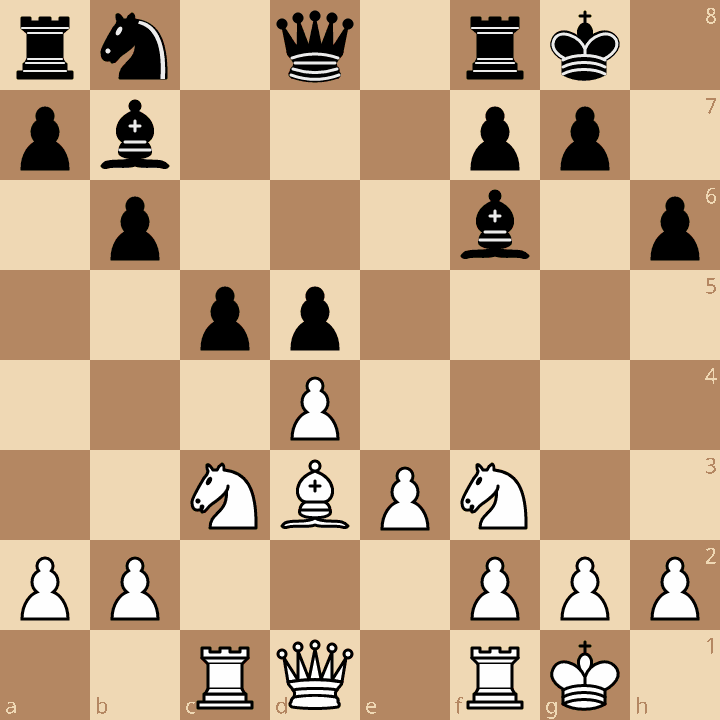
Now play it through
Step through every move on a real board, try the wrong ones, and ask Knighty why they fail.
Related Lessons
Summary
Ready to Practice?
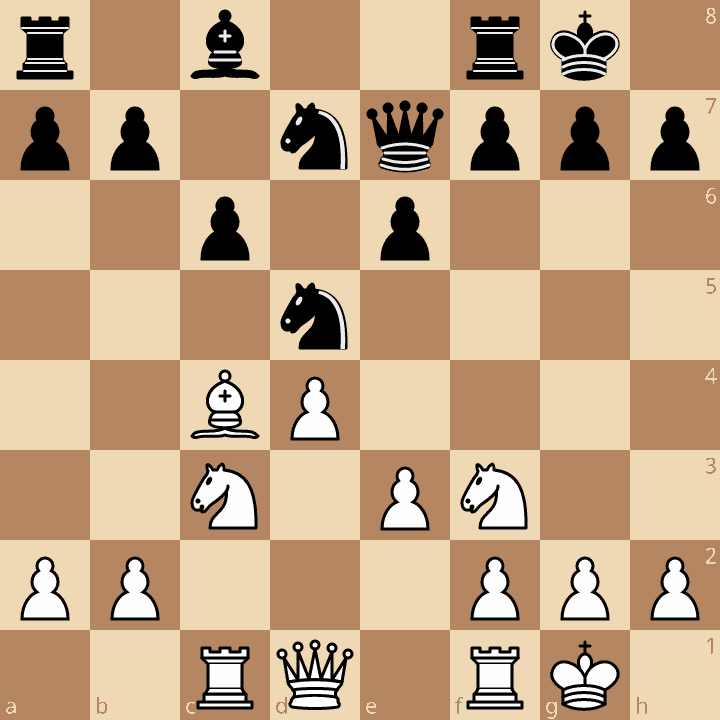
Next in this opening family
Queen's Gambit Declined - Main Line
Take this lesson with you
Free account requiredWith every variation — opens in Lichess & ChessBase