
Vienna Game - Stanley Variation
Learn the Vienna Game with ♗︎c4 and f4, gaining kingside space while keeping piece tension
Try Interactive LessonIntroduction
Lesson Content
Start by controlling the center with your king pawn.
e4 — The King's Pawn opening — White claims the center and opens diagonals for the queen and kingside bishop. The most popular first move in chess. Black's main responses: - 1. ..e5 — Open Game, matching White's center - 1. ..c5 — Sicilian Defense, fighting for d4 asymmetrically - 1. ..e6 — French Defense, preparing ..d5 - 1. ..c6 — Caro-Kann, also preparing ..d5
Black mirrors White's central claim, establishing a symmetrical pawn center. This leads to the Open Games — the oldest and most classical family of openings. The e5 pawn controls d4 and f4, limiting White's expansion options.
Develop the queenside knight first to keep f4 available.
♘︎c3 — The Vienna Game! Instead of the usual 2. ♘︎f3, White develops the queenside knight first. This keeps the f-pawn free to advance to f4, attacking Black's center — the Vienna's core idea. White's alternatives: - 2. ♘︎f3 — the standard move, leading to Italian, Ruy Lopez, or Scotch - 2. d4 — Center Game, immediately opening the position - 2. ♗︎c4 — Bishop's Opening, targeting f7 early
Alternative Moves
Black develops naturally, counterattacking the e4 pawn. This is the Falkbeer Variation (ECO C26) — the most popular response to the Vienna Game. Alternatives like 2. ..♘︎c6 or 2. ..♗︎c5 are also playable but less challenging.
Develop your bishop to target the f7 square.
♗︎c4 — The Stanley Variation — combining the Vienna with Italian Game ideas. The bishop targets f7, Black's weakest square, while White prepares the f4 advance. This hybrid approach was popularized by masters like Spielmann and has been used by Firouzja and Nepomniachtchi in top-level play.
Alternative Moves
Black mirrors White's development, placing the bishop on its most active diagonal. A critical consequence: once the f-pawn advances, the ♗︎c5 controls the g1 square, which means White cannot castle kingside while this bishop stays on c5. This shapes White's entire strategy — planning queenside castling instead.
Support your e4 pawn and keep the f-pawn mobile.
d3 — The Spielmann Attack setup — solidly supporting the e4 pawn and preparing f4. White builds a sturdy pawn chain before launching the kingside advance. This is more restrained than immediate action but creates a lasting structure.
Alternative Moves
Black reinforces the e5 pawn and prepares to develop the knight to c6. A solid, classical response that maintains the central tension.
Launch the f-pawn advance — this is the Vienna's key idea.
f4 — The Vienna's signature move! White strikes at Black's e5 pawn, gaining central and kingside space. This is why ♘︎c3 was played on move 2 — the f-pawn is free to advance. The position now resembles a King's Gambit setup but with better preparation — the ♘︎c3 knight and the d3 pawn provide extra support.
Alternative Moves
Black develops the queenside knight, reinforcing e5 and preparing counterplay. Carlsen, Anand, and Ivanchuk have all chosen this move in top-level games. Black keeps the tension rather than committing with ..exf4.
Develop your knight to support the center.
♘︎f3 — Completing kingside development and adding pressure to e5. The knight also supports the f5 advance and prepares to reroute via d2 or g5 if needed.
Alternative Moves
A flexible prophylactic move — Black prepares ..b5 to chase the bishop or ..♘︎a5 to trade it off. This was the setup used in Firouzja-Carlsen 2021.
Push the f-pawn further to gain space and restrict Black.
Gaining more kingside space and clamping down on Black's position. The f5 pawn restricts Black's pieces and prepares a potential kingside attack. This is the most popular and strongest continuation, played in 77 master games from this position.
Alternative Moves
Black targets the ♗︎c4 — if the bishop retreats to b3, the knight can capture it, eliminating White's strong piece. This is Black's most accurate plan.
Retreat the bishop to a safe square on the diagonal.
♗︎b3 — Retreating the bishop to safety. On b3 it still eyes the f7 square along the diagonal and protects the a2 pawn. White accepts the upcoming trade.
Alternative Moves
Black prevents ♘︎g5 ideas and secures the kingside before committing to the bishop trade. A useful prophylactic move.
Prepare queenside castling since the kingside is blocked.
♕︎e2 — The queen moves to e2, preparing queenside castling (O-O-O). Remember — kingside castling is impossible while the ♗︎c5 controls g1. The queen on e2 also supports a future e4-e5 or g4 advance.
Alternative Moves
Black executes the plan — trading knight for bishop. This eliminates White's Italian bishop but the half-open a-file and space advantage compensate.
Recapture to half-open the a-file for your rook.
axb3 — Recapturing with the a-pawn half-opens the a-file for the rook — a long-term asset for White's queenside castling plans. The doubled b-pawns are a minor weakness but the half-open file is worth it.
Alternative Moves
Key Takeaways
- 2.♘︎c3 keeps the f-pawn free — the whole point of the Vienna
- f4 and f5 give White lasting kingside space
- Black's ♗︎c5 controls g1, preventing White from castling kingside
- White compensates by castling queenside (O-O-O)
- The half-open a-file after axb3 gives White long-term activity
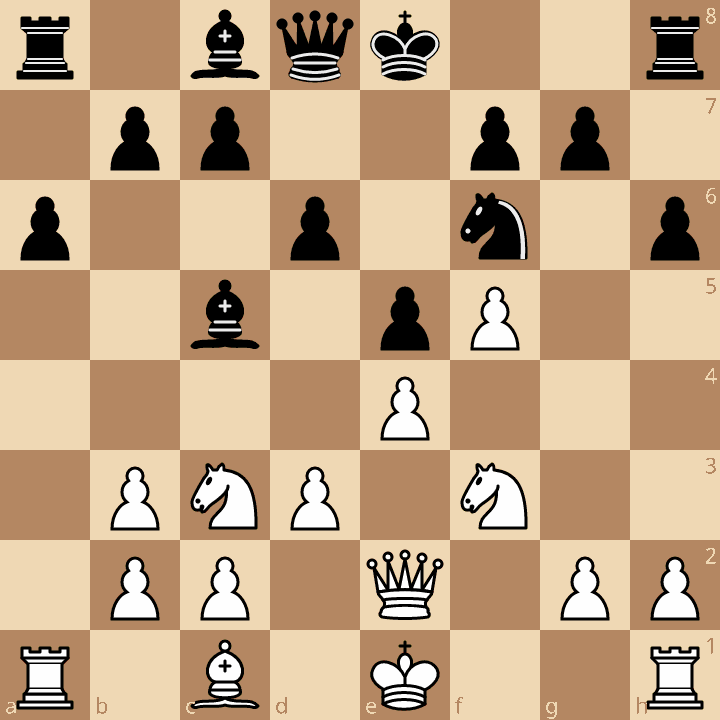
Now play it through
Step through every move on a real board, try the wrong ones, and ask Knighty why they fail.
Related Lessons
Summary
Ready to Practice?
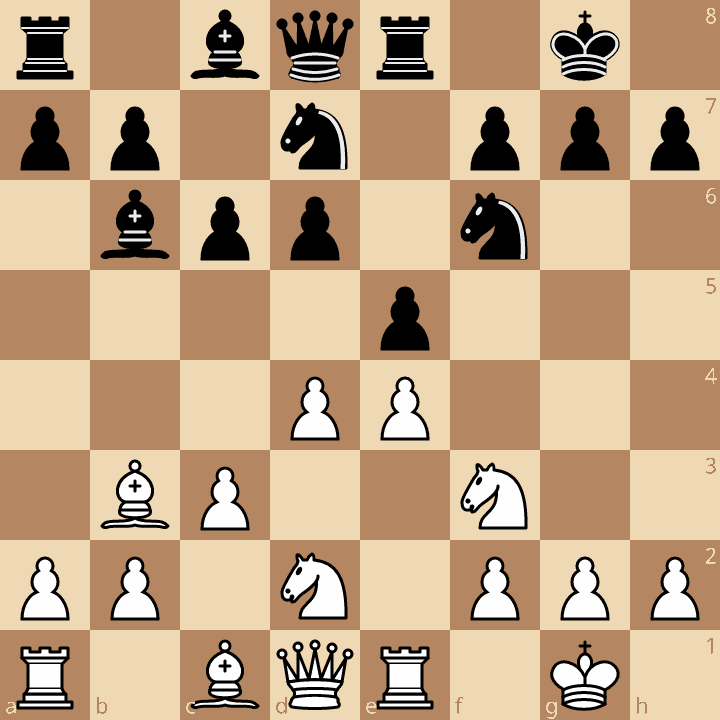
Next in this opening family
Bishop's Opening
Take this lesson with you
Free account requiredWith every variation — opens in Lichess & ChessBase