
QGD Tartakower
Resolva o problema do bispo no QGD com o sistema Tartakower — fianchetto do bispo de casas claras e a ruptura libertadora ...c5.
Experimentar lição interativaIntrodução
Conteúdo da lição
A Abertura do Peão da Dama — as Brancas reivindicam o centro com o peão d, que é imediatamente defendido pela dama. Tende a levar a posições mais estratégicas e fechadas comparadas a 1. e4. Principais respostas das Pretas: - 1. ..d5 — Gambito da Dama e sistemas Eslava - 1. ..Nf6 — Defesas Indianas (Índia do Rei, Nimzo-Indiana, etc.) - 1. ..f5 — Defesa Holandesa
As Pretas igualam as Brancas no centro, levando à Partida do Peão da Dama. O centro simétrico tipicamente resulta em manobras estratégicas em vez de batalhas táticas imediatas. A continuação mais popular das Brancas é 2. c4 — o Gambito da Dama.
O Gambito da Dama — as Brancas oferecem um peão para desviar o peão d5 das Pretas do centro. Não é um gambito verdadeiro, pois as Pretas não conseguem manter o peão a longo prazo. Principais escolhas das Pretas: - 2. ..e6 — Gambito da Dama Recusado, sólido e clássico - 2. ..c6 — Defesa Eslava, apoiando d5 mantendo o bispo livre - 2. ..dxc4 — Gambito da Dama Aceito, cedendo o centro temporariamente
O Gambito da Dama Recusado — as Pretas reforçam d5 solidamente. A desvantagem é a mesma da Francesa: o bispo de casas claras fica bloqueado atrás do peão e6. Este é um dos sistemas de abertura mais clássicos e respeitados do xadrez.
As Brancas desenvolvem o cavalo para sua casa natural, adicionando pressão em d5 e apoiando um futuro avanço e4. Esta é a continuação mais comum. Agora as Pretas devem desenvolver o cavalo do flanco do rei: - 3. ..Nf6 — a mais popular e clássica - 3. ..Be7 — a Variante Charousek - 3. ..c6 — transpondo para estruturas Semi-Eslavas
Lances alternativos
As Pretas desenvolvem o cavalo para sua melhor casa, controlando e4 e d5. É a resposta mais natural e popular. As Brancas devem agora decidir: 4. Bg5 (a Ortodoxa), 4. Nf3, ou 4. cxd5 (Variante da Troca).
Lances alternativos
O QGD Ortodoxo começa. As Brancas cravam o Nf6 contra a dama, criando pressão indireta em d5 — se o cavalo se move, d5 se enfraquece. Alternativas principais das Brancas: - 4. cxd5 — Variante da Troca, simplificando o centro - 4. Nf3 — Três Cavalos, mantendo flexibilidade - 4. Bf4 — Ataque Harrwitz, desenvolvendo sem a cravada
Lances alternativos
As Pretas quebram a cravada com o lance de desenvolvimento mais natural. O bispo em e7 é modesto mas sólido — defende o rei e prepara o roque. Este é o lance definidor do QGD Ortodoxo. Alternativas das Pretas: - 4. ..Nbd7 — Defesa pelo Cavalo - 4. ..dxc4 — Variante de Viena - 4. ..Bb4 — Cambridge Springs (após ..c6 primeiro)
Lances alternativos
As Brancas consolidam o peão d4 e preparam o desenvolvimento do bispo. O peão em e3 apoia d4 e abre a diagonal f1-a6 para o bispo. O bispo de casas escuras já está em g5, então bloqueá-lo com e3 não é problema.
Lances alternativos
As Pretas rocam em segurança antes de se comprometer com um plano específico. A partir daqui, as Pretas têm uma escolha estratégica crucial que define toda a variante: - 6. ..h6 — Sistema Tartakower, desafiando o bispo - 6. ..Nbd7 — Defesa Ortodoxa, rumo à manobra Capablanca
Lances alternativos
As Brancas completam o desenvolvimento do flanco do rei. O cavalo controla e5 e d4, e as Brancas estão prontas para desenvolver o bispo e rocar.
O primeiro passo do Sistema Tartakower! As Pretas fazem ao bispo uma pergunta crucial: ficar, recuar ou trocar? Isso ganha um tempo e prepara o fianchetto b6/Bb7. Após 7. Bh4, o bispo fica ligeiramente fora de jogo e as Pretas podem prosseguir com ..b6 sem temer que Bxf6 perturbe a estrutura de peões em momento inoportuno.
Lances alternativos
As Brancas recuam o bispo, mantendo pressão na diagonal h4-d8. O bispo em h4 ainda vigia o Nf6 através do Be7, mantendo tensão tática latente — se o Be7 se move, a cravada do Nf6 contra a dama é restaurada. A principal alternativa das Brancas é 7. Bxf6 Bxf6 — trocar imediatamente. Isso evita o fianchetto Tartakower mas concede o par de bispos às Pretas.
Lances alternativos
O lance definidor da Defesa Tartakower! As Pretas preparam ..Bb7, resolvendo diretamente o principal problema estratégico do QGD — o bispo de casas claras bloqueado. Ao desenvolver por fianchetto para b7, o bispo ganha uma poderosa diagonal longa (a8-h1) e apoia o peão d5 a distância. Esta é a diferença-chave da Defesa Ortodoxa (6. ..Nbd7), onde as Pretas abordam o problema do bispo com trocas de peças.
Lances alternativos
As Brancas colocam a torre na coluna c semiaberta, antecipando a troca em d5 e pressão potencial pela coluna c. Esta é a continuação mais popular e clássica. Alternativas: - 8. Be2 — desenvolve o bispo modestamente - 8. Bd3 — colocação do bispo mais agressiva - 8. cxd5 — troca imediata
Lances alternativos
O bispo atinge sua diagonal ideal! De b7 exerce pressão ao longo da grande diagonal a8-h1, apoiando d5 e mirando o flanco do rei branco. As Pretas resolveram o problema estratégico central do QGD — o bispo de casas claras agora está ativo. A posição entra agora na fase crítica do meio-jogo onde as Brancas tipicamente trocam em f6 seguido de cxd5.
Lances alternativos
As Brancas trocam o bispo pelo cavalo. É a abordagem mais lógica — as Brancas eliminam um defensor-chave e preparam a abertura do centro com cxd5. A troca concede o par de bispos às Pretas, mas as Brancas ganham clareza estrutural e a capacidade de atacar o peão d5 isolado após cxd5 exd5.
Lances alternativos
As Pretas recapturam com o bispo, obtendo o par de bispos. O Bf6 está bem colocado — controla as casas escuras, apoia o centro e vigia o peão d4. Isto é exatamente o que Tartakower planejou: as Pretas emergem da abertura com bispos ativos e uma estrutura sólida.
As Brancas abrem o centro. Após ..exd5, a coluna e se abre e o peão d5 das Pretas se torna um alvo potencial — especialmente quando as Pretas jogarem a temática ruptura ..c5, que deixará d5 como peão de dama isolado (PDI). Este é o principal campo de batalha teórico do Tartakower.
As Pretas recapturam, abrindo a coluna e. O peão d5 está atualmente apoiado por c7, mas após a próxima ruptura ..c5 se tornará um peão de dama isolado (PDI). As Pretas ganham linhas abertas para os bispos e torres — os bispos em b7 e f6 estão colocados ativamente. O PDI vindouro não é uma fraqueza aqui — é um trunfo dinâmico, e o jogo ativo de peças das Pretas compensa amplamente.
Lances alternativos
As Brancas desenvolvem o bispo para sua casa mais ativa, mirando o flanco do rei (especialmente h7). O bispo em d3 também vigia o peão d5. O plano das Brancas é rocar, centralizar e pressionar o PDI.
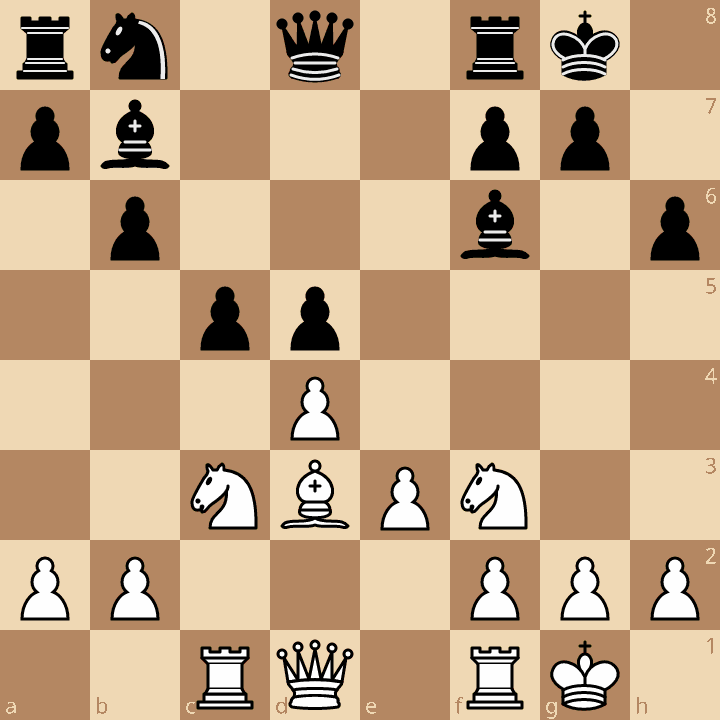
A temática ruptura do Tartakower! As Pretas desafiam o peão d4, ativando ainda mais os bispos e lutando pelo controle central. Após ..c5, o Bb7 ganha mais alcance na diagonal e a posição das Pretas ganha vida. Este é o benefício estratégico de todo o sistema Tartakower — as Pretas resolveram o problema do bispo, obtiveram o par de bispos, e agora golpeiam o centro branco.
Lances alternativos
As Brancas rocam em segurança. A posição está dinamicamente equilibrada — as Brancas têm um bispo bem colocado em d3 e um peão sólido em d4, enquanto as Pretas têm o par de bispos, jogo ativo de peças e a ruptura ..c5 criando tensão central. Uma continuação típica é ..Nd7 seguida de ..Qe7 ou ..Re8, com um rico meio-jogo estratégico pela frente.
Pontos-chave
- 6...h6 seguido de 7...b6 é a ideia característica do Tartakower — o fianchetto do bispo de casas claras para resolver o principal problema estratégico do QGD
- O bispo em b7 controla a grande diagonal e apoia d5 — muito mais ativo do que preso atrás do peão e6
- Após Bxf6 Bxf6, as Pretas obtêm o par de bispos como compensação por qualquer concessão estrutural
- A ruptura ...c5 é a sequência-chave — desafia o peão d4 e ativa ambos os bispos
- As posições resultantes com PDI (após cxd5 exd5) são dinamicamente equilibradas, com jogo ativo de peças compensando o peão isolado
Agora jogue você
Percorra cada lance num tabuleiro de verdade, tente os errados e pergunte ao Knighty por que falham.
Resumo
Pronto para praticar?
Leve esta lição com você
Requer conta gratuitaCom todas as variantes — abre no Lichess e no ChessBase