
Queen's Gambit - Fundamentals
Learn the key ideas behind one of chess's most classical openings
Try Interactive LessonIntroduction
Lesson Content
The Queen's Pawn opening — White claims the center with the d-pawn, which is immediately defended by the queen. This tends to lead to more strategic, closed positions compared to 1. e4. Black's main responses: - 1. ..d5 — Queen's Gambit and Slav setups - 1. ..♘︎f6 — Indian Defenses (King's Indian, Nimzo-Indian, etc.) - 1. ..f5 — Dutch Defense
Black matches White in the center, leading to the Queen's Pawn Game. The symmetrical center typically results in strategic maneuvering rather than immediate tactical battles. White's most popular continuation is 2. c4 — the ♕︎ueen's Gambit.
Attack the d5 pawn with another pawn from the queenside.
c4 — The ♕︎ueen's Gambit — White offers a pawn to lure Black's d5 pawn away from the center. It's not a true gambit since Black can't hold the pawn long-term. Black's main choices: - 2. ..e6 — Queen's Gambit Declined, solid and classical - 2. ..c6 — Slav Defense, supporting d5 while keeping the bishop free - 2. ..dxc4 — Queen's Gambit Accepted, giving up the center temporarily
Alternative Moves
The ♕︎ueen's Gambit Declined — Black reinforces d5 solidly. The downside is the same as in the French: the light-squared bishop is blocked behind the e6 pawn. This is one of the most classical and well-respected opening systems in chess.
Alternative Moves
Develop a piece that attacks the center.
Developing the knight to its most natural square, adding a second attacker to the d5 pawn. With c4 and ♘︎c3 both bearing down on d5, Black's center is under serious pressure. This also prepares the possibility of e4 later, which would give White an overwhelming central presence.
Alternative Moves
Black develops naturally, adding a third defender to d5 while controlling the e4 square. The knight on f6 prevents White from easily achieving e4. This is the most important defensive piece in the ♕︎ueen's Gambit Declined — if it's traded or displaced, Black's position often crumbles.
Develop your bishop with a threat.
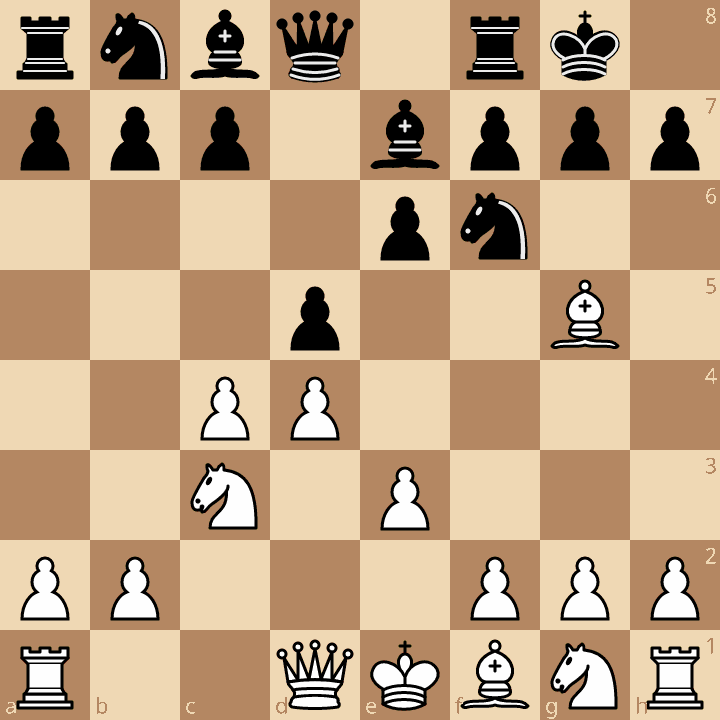
Pinning the f6 knight to the queen! This is one of the most important moves in the ♕︎ueen's Gambit. The pin creates immediate tactical pressure — if the knight moves, the d5 pawn is weakened. The ♗︎g5 pin forces Black to react. The main responses are: - 4. ..♗︎e7 — breaking the pin simply (main line) - 4. ..♘︎bd7 — heading for the Cambridge Springs with ..c6 and ..♕︎a5 - 4. ..h6 — the Moscow Variation, challenging the bishop
Alternative Moves
Black breaks the pin with the most natural developing move. The bishop on e7 defends the f6 knight, prepares kingside castling, and keeps the position solid. While modest, ♗︎e7 is the classic, time-tested response — chosen by world champions from Capablanca to Carlsen. It prioritizes solidity over ambition.
Support your center and free your light-squared bishop.
Solidifying the center with e3 and opening the f1-a6 diagonal for the light-squared bishop. White's pawn structure is now rock-solid with the d4-e3-c4 triangle. White follows a patient strategy: complete development, castle, then use the space advantage to gradually improve the position. There's no rush — the ♕︎GD is a marathon, not a sprint.
Alternative Moves
Black castles to safety, completing the most important opening priority. Both sides have developed naturally, and this is now a textbook ♕︎ueen's Gambit Declined position. Black's main challenge going forward is solving the 'bad bishop' problem — the light-squared bishop on c8, hemmed in by the e6 pawn. Plans include ..b6 and ..♗︎b7, or ..dxc4 followed by ..♘︎d5 and ..b6.
Key Takeaways
- c4 challenges the center without committing the e-pawn early
- The 'gambit' is not a true sacrifice—White can usually regain the pawn
- ♗︎g5 creates a powerful pin on the f6-knight
- Black plays solidly with e6 but must solve the light-squared bishop problem
- Both sides should prioritize development and king safety
Now play it through
Step through every move on a real board, try the wrong ones, and ask Knighty why they fail.
Related Lessons
Summary
Ready to Practice?
Next in this opening family
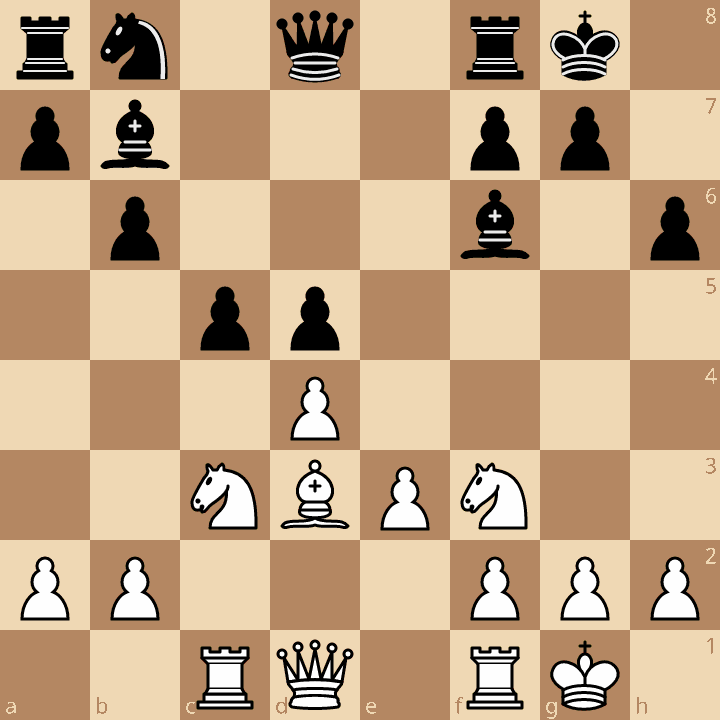
QGD Tartakower Defense
Take this lesson with you
Free account requiredWith every variation — opens in Lichess & ChessBase