
Sistema Rapport-Jobava
Um sistema agressivo com d4 em que as Brancas desenvolvem Nc3 e Bf4 cedo, usando o salto Nb5 para desestabilizar as Pretas.
Experimentar lição interativaIntrodução
Conteúdo da lição
A Partida do Peão de Dama — as Brancas reivindicam o centro com o peão de dama, que é imediatamente defendido pela dama. Isso costuma levar a posições mais estratégicas e fechadas em comparação com 1. e4. Respostas principais das Pretas: - 1. ..d5 — esquemas do Queen's Gambit e Eslava - 1. ..Nf6 — Defesas Indianas (King's Indian, Nimzo-Indian, etc.) - 1. ..f5 — Defesa Holandesa
As Pretas igualam no centro, levando ao Jogo do Peão de Dama. O centro simétrico normalmente resulta em manobras estratégicas em vez de batalhas táticas imediatas. A continuação mais popular das Brancas é 2. c4 — o Queen's Gambit.
O lance que define os sistemas Jobava/Rapport — as Brancas desenvolvem o cavalo em c3 em vez do habitual 2. c4 ou 2. Nf3. O cavalo apoia e4 e, crucialmente, habilita o agressivo salto Nb5 mais adiante. Essa ordem de lances sinaliza a intenção das Brancas de jogar um sistema independente em vez de transpor para o Queen's Gambit.
Lances alternativos
As Pretas se desenvolvem naturalmente, controlando e4 e preparando o roque. O cavalo em f6 é a resposta mais flexível, mantendo opções para diversas estruturas de peões. As Pretas também poderiam jogar 2. ..Bf5 ou 2. ..e6, mas Nf6 é a réplica mais popular e principiada.
O bispo se desenvolve em f4 antes de ser preso por e3 — a marca registrada tanto do London quanto dos sistemas Jobava. Junto com Nc3, isso cria o esquema Rapport-Jobava. Ao contrário do London padrão (Nf3 + Bf4), a combinação Nc3 + Bf4 gera possibilidades muito mais dinâmicas, especialmente o salto Nb5.
Lances alternativos
As Pretas solidificam o peão d5 e preparam o desenvolvimento do bispo de casas escuras. Essa é uma abordagem sólida e clássica contra o Rapport-Jobava. Principais alternativas das Pretas: - 3. ..g6 — esquema de fianchetto, levando ao Jobava London - 3. ..Bf5 — primeira escolha do motor, espelhando o desenvolvimento do bispo das Brancas - 3. ..c5 — desafiando o centro imediatamente
O lance característico do Rapport-Jobava! O cavalo salta para b5, ameaçando o devastador garfo Nc7+, que ganharia a torre em a8. As Pretas devem responder imediatamente. Essa incursão antecipada do cavalo é justamente o objetivo de jogar Nc3 antes de Nf3 — ela força as Pretas a um desenvolvimento levemente desconfortável para lidar com a ameaça de Nc7.
Lances alternativos
As Pretas defendem c7 com o cavalo, impedindo o garfo Nc7+. Embora Na6 pareça incomum — cavalos na beira do tabuleiro são fracos —, é a primeira escolha do motor aqui. A alternativa 4. ..Bb4+ também é viável, ganhando um tempo com xeque, mas após 5. c3 o bispo precisa recuar e as Brancas ganham espaço central.
As Brancas solidificam o peão d4 e abrem uma diagonal para o bispo. O lance e3 é a continuação mais flexível — as Brancas não se apressam, desenvolvem-se com calma, sabendo que o Nb5 já perturbou o desenvolvimento das Pretas. O cavalo em b5 poderá recuar para c3 mais tarde, após as Pretas jogarem ..c6, tendo cumprido sua missão de forçar ..Na6.
Lances alternativos
As Pretas desenvolvem o bispo em e2, uma casa modesta mas sólida. O bispo prepara o roque na ala do rei e fica fora de linhas táticas. As Pretas não podem jogar ..Bd6 de forma eficaz aqui, pois o Bf4 controla essa casa, e ..Bb4+ tem desvantagens após c3.
As Brancas desenvolvem o segundo cavalo, completando o desenvolvimento das peças menores na ala do rei. O cavalo segue para sua casa natural f3, controlando e5 e d4 enquanto prepara o roque. Com ambos os cavalos e o bispo desenvolvidos, as Brancas têm um esquema harmonioso apesar da anterior excursão do cavalo para b5.
Lances alternativos
As Pretas fazem o roque para colocar o rei em segurança, conectando as torres. O roque é praticamente obrigatório aqui — adiá-lo deixaria o rei vulnerável no centro enquanto as Brancas completam o desenvolvimento.
O bispo se desenvolve em e2, uma casa sólida que prepara o roque. Embora menos agressivo que Bd3, Be2 é a primeira escolha do motor — evita bloquear a coluna d e mantém a posição flexível. O plano das Brancas está claro: fazer o roque, recuar o cavalo de b5 após ..c6, e então usar o posto Ne5.
Lances alternativos
As Pretas finalmente expulsam o cavalo de b5. Essa é a resposta temática — o Nb5 precisa recuar, e as Pretas ganham espaço na ala da dama. Mas note o que as Brancas conquistaram: as Pretas gastaram tempos com ..Na6 e ..c6, enquanto as Brancas se desenvolveram tranquilamente. O plano seguinte das Pretas é ..c5, desafiando o centro branco em d4.
O cavalo recua para c3 — missão cumprida. Embora recuar possa parecer perda de tempo, as Brancas forçaram as Pretas ao incômodo ..Na6 e fizeram gastar um tempo em ..c6 (que poderia ter sido usado no desenvolvimento). O cavalo está perfeitamente posicionado em c3, apoiando e4 e controlando d5. Esse é o benefício estratégico da incursão Nb5: perturbação em troca de ganho posicional.
As Pretas desafiam o centro em d4 com a temática ruptura ..c5. Essa é a principal ideia de igualação das Pretas — abrir a posição e ativar as peças. O peão precisou primeiro ir para c6 (para expulsar o Nb5), então essa ruptura representa um investimento de dois tempos.
O cavalo ocupa o poderoso posto avançado em e5! Essa é a segunda manobra-chave de cavalo no Rapport-Jobava — após a incursão com Nb5, agora Ne5 reivindica o centro. O cavalo em e5 controla d7, f7, c6 e d3. As Brancas ficam satisfeitas em ver ..c5 porque isso permite essa forte centralização.
Lances alternativos
As Pretas reagrupam o cavalo deslocado em Na6 via b8 para d7, de onde pode desafiar o poderoso Ne5. Esse reagrupamento é comum — o cavalo foi forçado para a6 pela ameaça antecipada de Nb5 e agora retorna a um circuito melhor. Essa manobra evidencia o impacto duradouro da incursão Nb5 das Brancas.
As Brancas capturam em c5, abrindo a coluna d e criando uma estrutura de peões favorável. Com o cavalo firmemente em e5 e a coluna d prestes a se abrir, as Brancas têm excelente controle central. O momento é ideal — capturar agora, enquanto o cavalo das Pretas ainda está se reagrupando, maximiza a vantagem estrutural.
As Pretas recapturam com o bispo, posicionando-o em uma diagonal ativa. O bispo em c5 pressiona a casa d4 e mira o peão e3 das Brancas. Essa é a melhor recaptura — desenvolve enquanto recaptura.
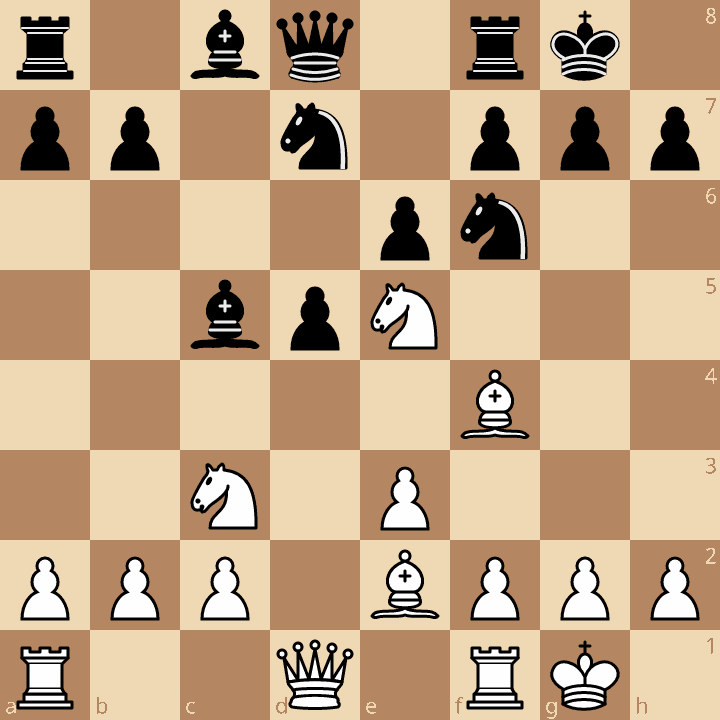
As Brancas fazem o roque, completando o desenvolvimento. A torre fica em f1 com visão pela coluna f, e o rei está seguro. As Brancas alcançaram uma posição excelente: o Ne5 domina o centro, todas as peças estão desenvolvidas e as Pretas ainda estão reagrupando o Nb8. Daqui em diante, os planos típicos incluem Nd3 (atacando o Bc5), Bf3 (pressionando d5) ou f4 (apoiando o cavalo).
As Pretas finalmente reagrupam o cavalo para d7, desafiando o poderoso Ne5. Isso completa a longa jornada do cavalo: g8 → f6 (inicialmente), depois b8 → d7. A posição está aproximadamente equilibrada, mas a harmoniosa coordenação de peças das Brancas oferece uma ligeira vantagem prática.
Pontos-chave
- Nc3 + Bf4 é o esquema Rapport-Jobava — desenvolva o bispo antes de e3 prendê-lo
- O salto Nb5 é a ideia característica, ameaçando Nc7+ e desestabilizando as Pretas
- Após ...c6 das Pretas, recue para Nc3 — a incursão do cavalo já forçou concessões
- Ne5 é a segunda manobra-chave, conquistando o posto central
- O cavalo das Pretas em ...Na6 frequentemente precisa de reagrupamento via b8-d7, custando tempos
Agora jogue você
Percorra cada lance num tabuleiro de verdade, tente os errados e pergunte ao Knighty por que falham.
Resumo
Pronto para praticar?
Leve esta lição com você
Requer conta gratuitaCom todas as variantes — abre no Lichess e no ChessBase