
Ruy López - Variante de Troca
As Brancas trocam o bispo pelo cavalo cedo, criando uma vantagem estrutural duradoura com uma maioria de peões superior
Experimentar lição interativaIntrodução
Conteúdo da lição
A Abertura do Peão do Rei — as Brancas ocupam o centro e abrem diagonais para a dama e o bispo do rei. O primeiro lance mais popular no xadrez. Respostas principais das Pretas: - 1. ..e5 — Jogo Aberto, igualando o centro das Brancas - 1. ..c5 — Defesa Siciliana, lutando por d4 assimetricamente - 1. ..e6 — Defesa Francesa, preparando ..d5 - 1. ..c6 — Caro-Kann, também preparando ..d5
Lances alternativos
As Pretas espelham a reivindicação central das Brancas, estabelecendo um centro de peões simétrico. Isto leva aos Jogos Abertos — a família de aberturas mais antiga e clássica. O peão e5 controla d4 e f4, limitando as opções de expansão das Brancas.
As Brancas desenvolvem o cavalo para sua casa mais natural, atacando o peão e5 imediatamente. O cavalo também controla d4 e prepara o roque curto. Este é o segundo lance mais comum, levando a uma vasta árvore de aberturas incluindo a Italiana, Ruy López e Escocesa.
Lances alternativos
As Pretas defendem o peão e5 com o lance de desenvolvimento mais natural. O cavalo em c6 também controla as importantes casas d4 e e5. A partir daqui, o terceiro lance das Brancas define a abertura: - 3. Bc4 — Abertura Italiana - 3. Bb5 — Ruy López - 3. d4 — Abertura Escocesa - 3. Nc3 — Quatro Cavalos / híbrido Vienense
A Ruy López (Abertura Espanhola) — uma das aberturas mais profundas e respeitadas. As Brancas pressionam o Nc6 — o defensor chave de e5. Se as Pretas moverem o peão d7 depois, o cavalo fica cravado ao rei. A ideia não é capturar imediatamente mas manter pressão a longo prazo. Respostas principais das Pretas: - 3. ..a6 — Defesa Morphy (mais popular), questionando o bispo - 3. ..Nf6 — Defesa Berlinense, sólida e com tendência a empates - 3. ..d6 — Defesa Steinitz, passiva mas sólida
Lances alternativos
A Defesa Morphy — as Pretas questionam imediatamente a posição do bispo. As Brancas devem decidir: recuar (4. Ba4, mantendo a tensão) ou trocar (4. Bxc6, dobrando peões mas cedendo o par de bispos). 4. Ba4 é a linha principal, mantendo a pressão e a opção de trocar mais tarde.
A Variante de Troca! As Brancas trocam imediatamente o bispo pelo cavalo, criando uma vantagem estrutural permanente. Após ..dxc6, os peões das Pretas ficam dobrados na coluna c e as Brancas têm uma saudável maioria 4 contra 3 no flanco do rei. É uma decisão estratégica — as Brancas cedem o par de bispos em troca de uma estrutura de peões superior que se torna decisiva nos finais.
Lances alternativos
Recapturar em direção ao centro é correto — 4. ..bxc6 deixaria o peão a6 isolado e fraco. Após ..dxc6, as Pretas têm peões dobrados em c mas abrem a coluna d para a dama e ganham o par de bispos. O plano de longo prazo das Pretas é usar os bispos e o jogo ativo de peças para compensar a fraqueza estrutural.
Rocar imediatamente é a abordagem mais flexível. As Brancas protegem o rei e conectam as torres antes de se comprometer com uma estrutura de peões específica. A torre em f1 observa a coluna f e apoia uma possível ruptura f4 mais tarde. Não há pressa para jogar d4 — as Brancas podem escolher entre d3 (sólido) ou d4 (ambicioso) conforme o esquema das Pretas.
Lances alternativos
As Pretas desenvolvem o bispo para sua casa mais ativa, cravando o Nf3 contra a dama. É a primeira escolha do motor — o bispo foi liberado por ..dxc6 e imediatamente encontra uma diagonal forte. As Pretas criam ameaças concretas (Bxf3, danificando a estrutura das Brancas) enquanto se desenvolvem naturalmente.
Lances alternativos
Fazendo ao bispo uma pergunta importante — recuar ou se comprometer? O bispo deve decidir entre o agressivo ..h5 (mantendo a pressão) ou o tranquilo ..Bh5 (que permite g4 depois). É uma ideia padrão contra a cravada do Bg4. As Brancas obtêm informações úteis sobre as intenções das Pretas enquanto criam uma casa de escape para o rei.
Lances alternativos
A resposta mais ambiciosa — as Pretas mantêm o bispo na agressiva casa g4 e ameaçam mantê-lo lá permanentemente. O peão em h5 impede que g4 expulse o bispo. É uma escolha de duplo gume: o peão h está avançado e pode se tornar alvo, mas o bispo permanece ativo.
Lances alternativos
Um lance de peão sólido e flexível que apoia e4 e abre a diagonal c1-h6 para o bispo de casas escuras. As Brancas evitam d4 por enquanto — o peão fica melhor em d3 em muitas linhas da Variante de Troca onde uma abordagem lenta e estratégica funciona melhor. O plano é desenvolver com Nbd2, Re1 e preparar d4 apenas quando totalmente prontas.
Lances alternativos
As Pretas centralizam a dama em f6 — uma casa incomum mas eficaz. A dama apoia o peão e5, observa o flanco do rei e mantém a opção de O-O-O. Na Variante de Troca, as Pretas frequentemente atrasam o roque para manter flexibilidade. A dama também protege contra ideias de Nxe5 e prepara uma possível expansão com ..g5.
Lances alternativos
Desenvolver o cavalo para d2 em vez de c3 é uma marca registrada da Variante de Troca. De d2, o cavalo apoia a casa c4 (um posto avançado chave) e pode ser redirecionado para f1-g3 ou c4 conforme a posição. O cavalo em d2 também evita bloquear o peão c, preservando a opção de c3 para apoiar um futuro d4.
Lances alternativos
As Pretas desenvolvem o cavalo para e7, preparando redirecioná-lo para g6 onde controla f4 e h4. O cavalo em e7 também apoia o peão c6 e evita bloquear a coluna f. Esta é uma manobra comum na Variante de Troca — o cavalo encontra sua melhor casa via e7-g6.
A torre move para a coluna e semiaberta, aumentando a pressão sobre o peão e5. É um lance de desenvolvimento natural que prepara d4 adicionando apoio ao centro. Com Re1, as Brancas completam o desenvolvimento de todas as peças menores e torres. A posição está pronta para a ruptura central.
Lances alternativos
O cavalo chega à sua casa ideal — g6 controla as casas f4 e h4, impede que as Brancas joguem f4 facilmente e apoia a defesa do flanco do rei. Isto completa o desenvolvimento de peças das Pretas. De g6, o cavalo também pode saltar para f4 se tiver oportunidade, criando forte pressão sobre a posição das Brancas.
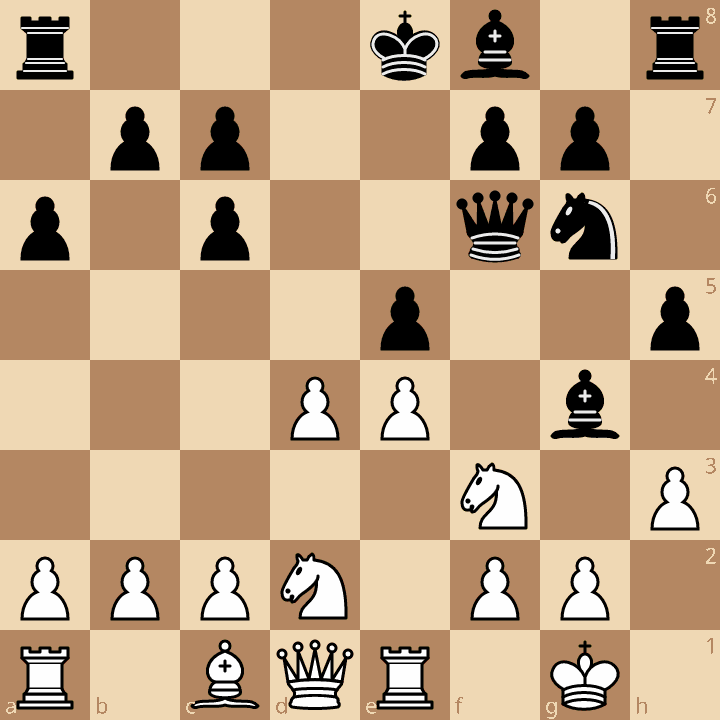
A ruptura central temática! Após preparação cuidadosa com d3, Nbd2 e Re1, as Brancas finalmente golpeiam no centro. O avanço d4 desafia a fortaleza e5 das Pretas e abre linhas para as peças das Brancas. Esta é a culminação da estratégia das Brancas — a estrutura de peões superior torna-se mais relevante quando o centro se abre e o jogo transiciona para um final.
Lances alternativos
Pontos-chave
- 4.Bxc6 dxc6 cria uma vantagem estrutural permanente — a maioria do flanco do rei das Brancas contra os peões c debilitados das Pretas
- As Pretas compensam com o par de bispos e jogo ativo de peças
- As Brancas desenvolvem com O-O, h3, d3, Nbd2, Re1 antes de se comprometer com d4
- O cavalo vai para d2 (não c3) para manter o peão c flexível e mirar c4
- A ruptura d4 é o objetivo estratégico principal das Brancas — o momento certo é fundamental
Agora jogue você
Percorra cada lance num tabuleiro de verdade, tente os errados e pergunte ao Knighty por que falham.
Resumo
Pronto para praticar?
Leve esta lição com você
Requer conta gratuitaCom todas as variantes — abre no Lichess e no ChessBase