
Ataque Muro de Pedra
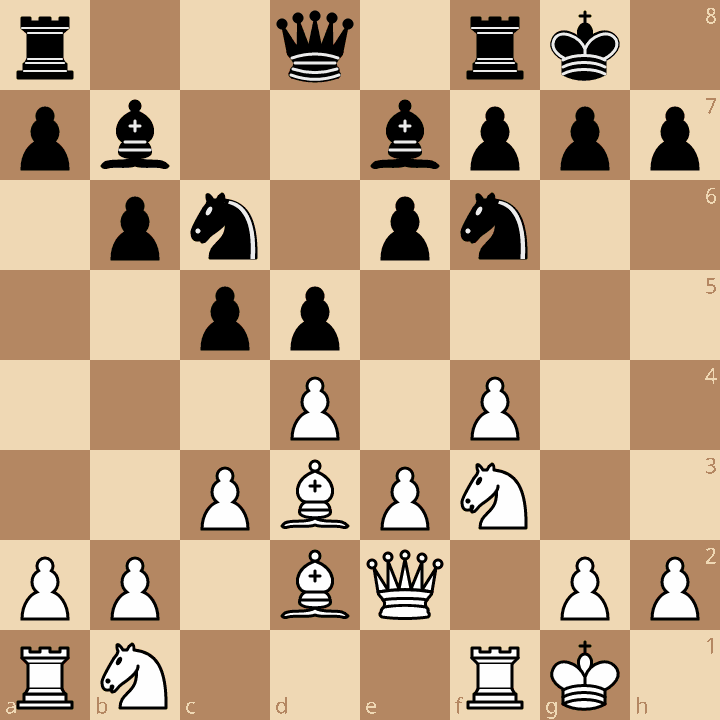
Um sistema rígido mas poderoso das Brancas com peões em d4-e3-f4-c3 e bispo em d3, visando um ataque no flanco do rei.
Experimentar lição interativaIntrodução
Conteúdo da lição
A Abertura do Peão da Dama — as Brancas reivindicam o centro com o peão d, que é imediatamente defendido pela dama. Isso tende a levar a posições mais estratégicas e fechadas comparado a 1. e4. Principais respostas das Pretas: - 1. ..d5 — Gambito da Dama e formações Eslava - 1. ..Nf6 — Defesas Indianas (Índia do Rei, Nimzo-Indiana, etc.) - 1. ..f5 — Defesa Holandesa
As Pretas equilibram o centro, levando ao Jogo do Peão da Dama. O centro simétrico normalmente resulta em manobras estratégicas em vez de batalhas táticas imediatas. A continuação mais popular das Brancas é 2. c4 — o Gambito da Dama.
As Brancas apoiam d4 e abrem a diagonal para o bispo de casas claras. O peão e3 é a base tanto do Sistema Colle quanto do Ataque Muro de Pedra — a diferença principal é se as Brancas depois jogam e4 (Colle) ou f4 (Muro de Pedra). A desvantagem: o bispo de casas escuras fica trancado atrás da cadeia de peões. No Muro de Pedra, esse bispo permanece passivo durante a maior parte da partida.
Lances alternativos
As Pretas se desenvolvem naturalmente, controlando e4 e preparando o roque no flanco do rei. Esta é a resposta mais comum e flexível.
O bispo vai para sua casa ideal, mirando o flanco do rei — especialmente o peão h7. Este é o lance definidor do Ataque Muro de Pedra (ECO D00). De d3, o bispo apoia o futuro avanço f4 e cria ameaças latentes contra o rei rocado das Pretas. No Sistema Colle, Bd3 prepara e4. Aqui, Bd3 prepara f4 — um plano estratégico completamente diferente.
Lances alternativos
As Pretas desafiam o peão d4 imediatamente — a resposta mais principiada. Ao atacar o centro das Brancas antes que o Muro de Pedra esteja totalmente construído, as Pretas tentam abrir a posição e explorar o bispo de casas escuras bloqueado.
Reforçando d4 e completando o esqueleto de peões do Muro de Pedra no flanco da dama. A cadeia c3-d4 é sólida como rocha — as Pretas não conseguem romper apenas com ..c5. O centro das Brancas está seguro, permitindo direcionar o foco para o flanco do rei com f4. Este peão em c3 também prepara Nd2, mantendo a coluna f livre para o avanço f4.
Lances alternativos
As Pretas reforçam d5 e abrem a diagonal para o bispo de casas escuras. O peão em e6 cria uma cadeia sólida com d5, mas também tranca o bispo de casas claras — um espelho do problema das Brancas do outro lado.
O Muro de Pedra está completo! Os peões em c3-d4-e3-f4 formam uma muralha impenetrável pelo centro. As Brancas agora controlam a casa e5 — um posto avançado perfeito para um cavalo — e têm um plano claro: atacar no flanco do rei. O peão f4 também apoia um futuro cavalo em e5 e pode às vezes avançar para f5 para abrir a posição do rei das Pretas.
Lances alternativos
As Pretas desenvolvem o bispo modestamente para e7, preparando o roque. O bispo permanece flexível — pode depois ir para d6 para desafiar o peão f4 ou para f6 para controlar e5.
Agora que f4 foi jogado, o cavalo se desenvolve para f3 — sua casa natural. O cavalo controla e5, a casa mais importante no Muro de Pedra, e prepara o roque no flanco do rei. O plano das Brancas a partir daqui: rocar, depois manobrar o cavalo para e5 (via Nf3-e5 ou Nd2-f3-e5) para um poderoso posto avançado.
As Pretas rocam para segurança. O rei agora está no flanco do rei — exatamente onde o ataque das Brancas é direcionado. Este é um lance natural, mas as Pretas devem ficar atentas à construção das Brancas no flanco do rei.
As Brancas rocam, assegurando o rei e conectando as torres. A torre em f1 depois apoiará a coluna f, que pode se tornar uma poderosa avenida de ataque se o peão f4 avançar para f5 ou se a posição se abrir. Com ambos os lados rocados, o plano das Brancas é claro: construir no flanco do rei com Qe2, Bd2 e visar Ne5.
As Pretas preparam fianchetar o bispo de casas claras em b7, onde pressiona a grande diagonal (a8-h1). Esta é a melhor peça das Pretas contra o Muro de Pedra — o bispo em b7 mira e4 e g2, criando contrajogo.
A dama vai para e2, apoiando o peão e3 e vigiando o flanco do rei. De e2, a dama pode se deslocar para o flanco do rei (Qf2 ou até Qh5 em algumas posições) e respalda um potencial avanço f5. A dama também libera d1 para uma torre, que pode depois se juntar ao ataque.
Lances alternativos
O bispo fiancheta em b7, tornando-se a peça mais ativa das Pretas. Ele controla a grande diagonal e pressiona e4 e g2. Este bispo frequentemente se torna a base do contrajogo das Pretas contra o Muro de Pedra.
As Brancas desenvolvem a última peça menor. O bispo de casas escuras é a peça mais fraca do Muro de Pedra — bloqueado pelo peão e3, tem alcance limitado. Em d2, ele conecta as torres e pode ser redirecionado para e1-h4 ou apoiar o flanco da dama. Apesar da passividade, o bispo em d2 cumpre um papel defensivo importante e mantém a posição das Brancas sólida.
Lances alternativos
As Pretas desenvolvem o cavalo para c6, adicionando pressão em d4 e controlando e5. O cavalo pode depois saltar para a5 para pressionar c4 ou para e7-f5 para desafiar o flanco do rei das Brancas.
Pontos-chave
- Os peões do Muro de Pedra (c3-d4-e3-f4) criam um centro inquebrável
- Bd3 deve vir antes de Nf3 — o cavalo bloquearia o avanço f4
- e5 é o posto avançado chave — o objetivo é instalar um cavalo ali
- O bispo de casas escuras é a principal fraqueza — aceite e compense
- O Muro de Pedra funciona contra quase qualquer formação das Pretas — uma arma de sistema confiável
Agora jogue você
Percorra cada lance num tabuleiro de verdade, tente os errados e pergunte ao Knighty por que falham.
Resumo
Pronto para praticar?
Leve esta lição com você
Requer conta gratuitaCom todas as variantes — abre no Lichess e no ChessBase