
French Defense - Tarrasch Open System
Learn the main line of the Tarrasch Variation where Black gets active piece play with an isolated d-pawn.
Try Interactive LessonIntroduction
Lesson Content
The King's Pawn opening — White claims the center and opens diagonals for the queen and kingside bishop. The most popular first move in chess. Black's main responses: - 1. ..e5 — Open Game, matching White's center - 1. ..c5 — Sicilian Defense, fighting for d4 asymmetrically - 1. ..e6 — French Defense, preparing ..d5 - 1. ..c6 — Caro-Kann, also preparing ..d5
Prepare to challenge the center with ...d5 next move.
The French Defense — Black prepares ..d5 to challenge White's center on the next move. The pawn on e6 supports d5 but blocks the light-squared bishop, which is the main strategic downside of the French. The French leads to rich strategic battles around White's pawn chain.
White builds the ideal pawn center. Now Black will challenge it with 2. ..d5, creating the characteristic French pawn tension. White's third-move choice defines the variation: - 3. ♘︎c3 then 3. ..♗︎b4 (Winawer) or 3. ..♘︎f6 (Classical) - 3. e5 — Advance Variation - 3. ♘︎d2 — Tarrasch Variation
Challenge the center as planned.
d5 — Black challenges White's e4 pawn head-on. This is the defining move of the French Defense — creating immediate central tension that White must resolve.
The Tarrasch Variation — White develops the knight to d2 instead of c3. This avoids the Winawer (3. ♘︎c3 ♗︎b4) where Black can double White's c-pawns. The knight on d2 is less active but keeps the pawn structure intact. The downside: d2 blocks the c1-bishop and is less centralized than c3.
Alternative Moves
Strike at White's d4 pawn.
c5 — The Open System — Black immediately strikes at White's d4 pawn, the heart of White's center. This is the most popular and theoretically important response to the Tarrasch. By attacking d4, Black aims to open the position and create an asymmetric pawn structure. The alternatives lead to quieter play: - 3. ..♘︎f6 — Closed Tarrasch, more restrained - 3. ..♗︎e7 — Morozevich Variation, flexible
Alternative Moves
White exchanges on d5, releasing the central tension. This is the most popular choice, leading to positions where Black will have an isolated d-pawn but active pieces. The alternative 4. ♘︎gf3 maintains the tension and transposes to a different type of game.
Alternative Moves
Recapture to open lines for your pieces.
exd5 — Black recaptures with the e-pawn, accepting the isolated queen pawn (IQP) on d5. This is a fundamental strategic decision — the d5 pawn cannot be supported by other pawns, making it a long-term target. In return, Black gets open lines for all pieces, especially the c8-bishop which was previously blocked. The alternative 4. ..♕︎xd5 is also very popular but leads to different pawn structures.
Alternative Moves
White develops the second knight to its best square. The knight controls d4 and e5 — key squares around Black's isolated pawn. White plans to castle kingside and later pressure d5.
Develop your knight toward the center.
♘︎c6 — Black develops the knight to attack d4 and control the center. This is the main line leading to C09 — the theoretical heart of the Open Tarrasch. The knight supports potential ..d4 pawn advances and eyes the e5 square.
Alternative Moves
White pins the ♘︎c6, which is a key defender of the d-pawn complex. The bishop on b5 also prepares to exchange on c6, potentially doubling Black's pawns or forcing a structural concession. This is the overwhelmingly most popular move (2,200+ master games).
Alternative Moves
Develop your bishop to an active diagonal aimed at the kingside.
♗︎d6 — The bishop develops to an active diagonal, eyeing the kingside (h2 in particular). On d6 the bishop supports potential ..♘︎c6-e5 maneuvers and keeps options for both sides of the board. This is the most popular choice by far in master play (1,800+ games). The alternative 6. ..♕︎e7+ forces a queen trade after ♕︎e2 but simplifies prematurely.
Alternative Moves
White captures on c5, forcing Black to recapture with the bishop. This isolates Black's d-pawn permanently — it can never be supported by another pawn. White's plan is to target this weakness in the long run while maintaining a solid structure.
Alternative Moves
Recapture with the bishop to stay active.
♗︎xc5 — Black recaptures, maintaining an active position. The isolated d5 pawn is now a permanent feature — Black must generate enough piece activity to compensate before White can blockade and pressure it.
White castles to safety. The king leaves the center as the position opens up. White's next goal is to bring the d2-knight to a more active square.
Develop the knight to keep flexible options — f5 and g6 are both possible later.
A key move in the Tarrasch — the knight goes to e7 rather than f6. From e7, the knight can reroute to f5 (pressuring d4) or g6 (supporting the kingside). Crucially, ♘︎e7 also keeps the f-pawn free to advance after castling. This nuance — ♘︎e7 over ♘︎f6 — is one of the hallmarks of the Open Tarrasch.
Alternative Moves
The knight reroutes from d2 to b3, targeting the c5-bishop and controlling the d4 square. From b3, the knight can later jump to d4 — the ideal blockade square for the isolated pawn. This is the most popular move by far (1,370+ master games).
Retreat the bishop to its best diagonal, aimed at the kingside.
♗︎d6 — The bishop retreats to d6, maintaining its active diagonal aimed at h2. From d6 the bishop is perfectly placed — it supports a future ..♘︎e5 maneuver. The bishop is more useful here than on b6 where it would be passive.
Alternative Moves
White activates the rook on the open e-file. The rook eyes the e7-knight and puts pressure along the open file. White is building up slowly, preparing to exploit the IQP in the long run.
Alternative Moves
Castle to safety and prepare for the middlegame battle.
O-O — Black castles to safety, completing development. The position is roughly equal — White has a target in the d5 pawn, but Black has active piece play. The middlegame battle will revolve around whether Black can generate enough activity before White blockades d5.
Key Takeaways
- 3.♘︎d2 avoids the Winawer (3.♘︎c3 ♗︎b4) but the knight is less active on d2
- 3...c5 is the most dynamic response — the Open System
- After 4.exd5 exd5, Black's IQP is a weakness but grants open lines and active pieces
- ♘︎e7 (not ♘︎f6) is key — it keeps the f-pawn free and allows ♘︎f5 or ♘︎g6
- Black's piece activity compensates for the isolated pawn
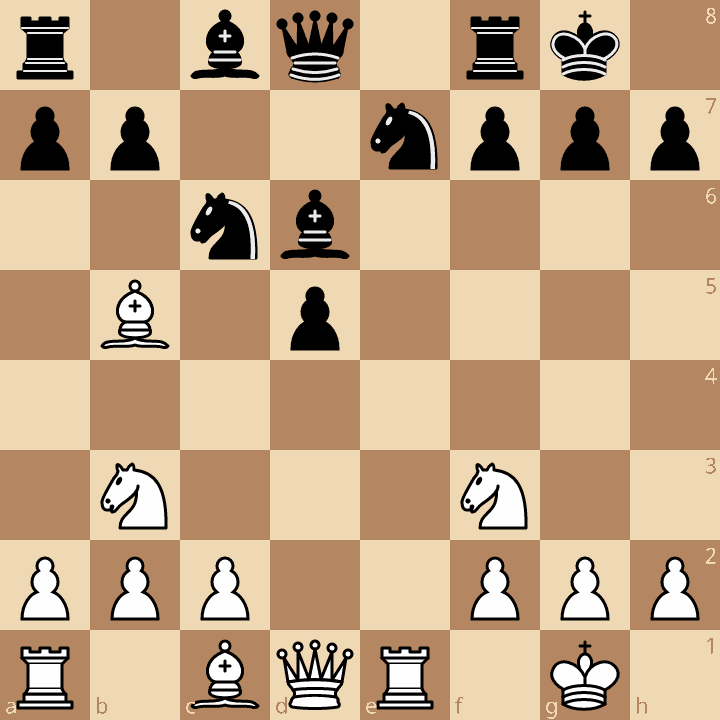
Now play it through
Step through every move on a real board, try the wrong ones, and ask Knighty why they fail.
Related Lessons
Summary
Ready to Practice?
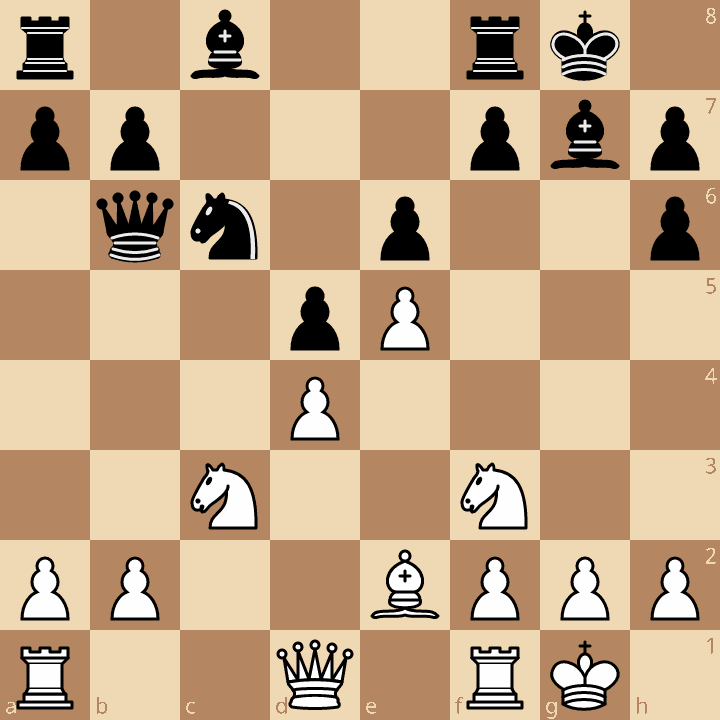
Next in this opening family
French Defense - Advance Variation
Take this lesson with you
Free account requiredWith every variation — opens in Lichess & ChessBase