
King's Indian Attack
A flexible White system built on ♘︎f3, g3, ♗︎g2, d3, and ♘︎bd2 — delay central commitments and launch a kingside attack with e4.
Try Interactive LessonIntroduction
Lesson Content
Develop flexibly without committing your pawn structure.
♘︎f3 — The Reti Opening — White develops a piece and controls e5/d4 without committing any pawns. This is the ultimate flexible opening, keeping all options open. Can transpose into the English, Queen's Gambit, King's Indian Attack, or remain in pure Reti territory with a fianchetto setup.
Alternative Moves
Black claims the center with the d-pawn — the most classical response. By occupying d5, Black stakes out central space and prepares to develop naturally. Other common responses: - 1. ..♘︎f6 — flexible, can transpose to many systems - 1. ..c5 — fighting for d4, Sicilian-like ideas - 1. ..d6 — modest, preparing a King's Indian-type setup
Prepare the bishop fianchetto on g2.
g3 — The defining move of the King's Indian Attack setup. White prepares to fianchetto the bishop on g2, where it will exert long-term pressure on the long diagonal (a8-h1). Combined with ♘︎f3, this creates a harmonious kingside development scheme. White deliberately avoids committing the d-pawn to d4, choosing a quieter, more flexible approach.
Alternative Moves
Black develops the knight to its most natural square, controlling e4 and d5. This prevents White from playing an early e4 and prepares kingside castling. Black mirrors White's flexible development, waiting to see how the pawn structure will take shape.
Complete the fianchetto — the bishop belongs on the long diagonal.
The bishop takes its place on the long diagonal, completing the fianchetto. From g2, it supports a future e4 push and exerts pressure through the center toward Black's queenside. The ♗︎g2 is the backbone of the KIA — it works in harmony with the ♘︎f3 and will become especially powerful once the center opens after e4.
Alternative Moves
Black reinforces the d5 pawn and prepares to develop the dark-squared bishop. The e6+d5 pawn chain is solid but restricts Black's light-squared bishop — a common theme in these structures. Black's alternatives: - 3. ..c5 — more aggressive, immediately fighting for space - 3. ..g6 — setting up a King's Indian-style structure - 3. ..♗︎f5 — developing the bishop while it's still free
Castle to safety before committing your center pawns.
O-O — White castles early, securing the king. This is the KIA trademark — complete kingside development before any central pawn commitments. The rook on f1 will support a future f4 push or shift to e1 after e4. With the king safe, White can focus entirely on preparing the e4 break.
Alternative Moves
Black develops the bishop to a solid square, preparing to castle. ♗︎e7 is the most classical choice — the bishop defends the kingside and doesn't commit to an aggressive diagonal yet. Black's alternatives: - 4. ..♗︎d6 — more active but more exposed to attack - 4. ..c5 — immediately fighting for space, delaying development
Support the upcoming e4 push with a modest pawn move.
The quiet pawn move that defines the King's Indian Attack. Rather than playing the ambitious d4, White keeps the center flexible and prepares to build with e4 and ♘︎bd2. The d3 pawn supports e4 without overextending. This is the philosophical core of the KIA: develop first, keep the center compact, then strike with e4 when fully prepared.
Alternative Moves
Black castles kingside, completing basic development. Both sides have castled and now the strategic battle begins — White will push for e4, while Black looks for queenside counterplay. The position is balanced and rich in plans for both sides.
Develop the knight to support e4 without blocking the c-pawn.
The knight develops to d2 — another key KIA move. From d2, it supports the e4 push and can reroute to f1-e3 or f1-g3 for a kingside attack later. White avoids ♘︎c3, which would block the c-pawn and commit to a structure too early. The full KIA setup is now in place: ♘︎f3, g3, ♗︎g2, O-O, d3, ♘︎bd2. Time to execute the plan with e4!
Alternative Moves
Black grabs queenside space and prepares counterplay on that wing. The c5 pawn controls d4 and opens lines for Black's pieces — this is Black's primary plan against the KIA. Black may follow up with ..♘︎c6, ..b5, and ..♕︎c7, building a queenside initiative to counter White's kingside ambitions.
Strike in the center — this is what the entire setup was building toward!
The central break — the whole point of the KIA setup! After careful preparation with d3 and ♘︎bd2, White finally pushes e4, challenging Black's d5 pawn and opening the position for the ♗︎g2. White's plan from here typically involves e5 (locking the center and attacking the kingside), ♖︎e1, and possibly f4. The KIA transitions from a quiet buildup into an active middlegame.
Alternative Moves
Black develops the queenside knight, adding control of d4 and e5. The knight on c6 is well-placed to contest the center, and it joins the c5 pawn in pressing on d4. Black's position is solid with good central control — the battle is now about whether White can generate a kingside attack before Black's queenside play becomes decisive.
Place the rook behind your central pawn to support the advance.
♖︎e1 — The rook moves to e1, supporting the e4 pawn and preparing a potential e5 advance. This is the natural continuation of White's plan — the rook behind the e-pawn adds power to the central push. From here, White can play e5 (gaining space and attacking the ♘︎f6), or maintain the tension with moves like c3, a4, or ♘︎f1-e3.
Alternative Moves
Key Takeaways
- The KIA setup (♘︎f3, g3, ♗︎g2, O-O, d3, ♘︎bd2) can be played against almost any Black response
- d3 instead of d4 keeps the center flexible and prepares the e4 break
- ♘︎bd2 (not ♘︎c3) supports e4 while keeping c-pawn options open
- The e4 push is the strategic goal — everything else is preparation
- White's plan transitions to kingside attack with e5, f4, and piece maneuvers after e4
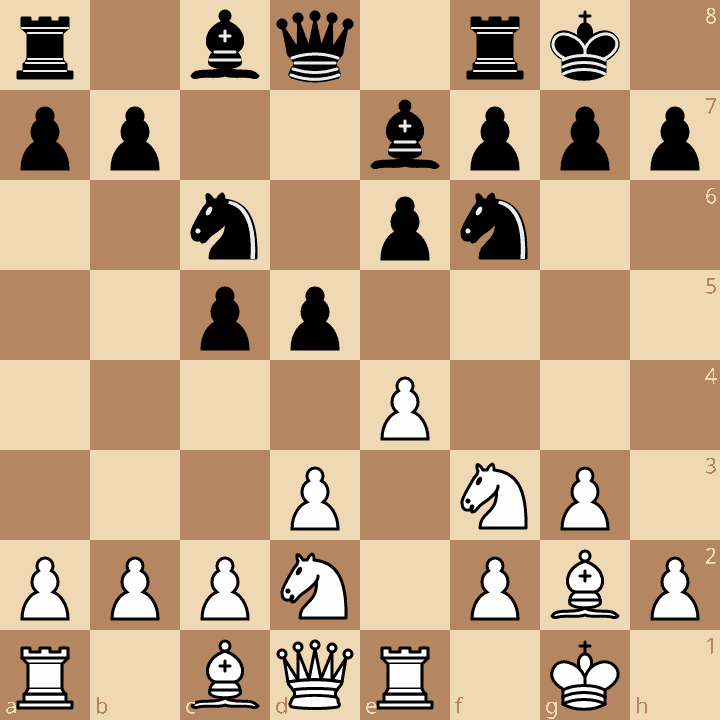
Now play it through
Step through every move on a real board, try the wrong ones, and ask Knighty why they fail.
Related Lessons
Summary
Ready to Practice?
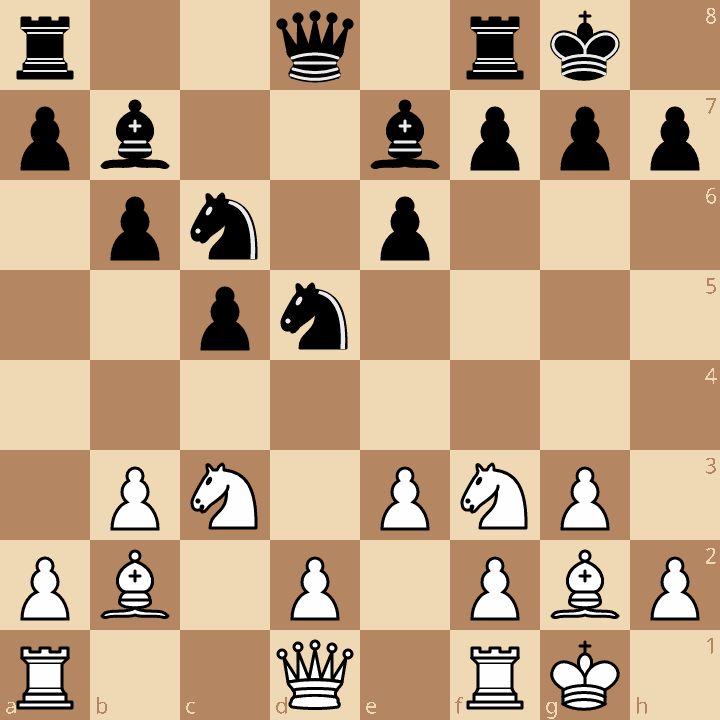
Next in this opening family
Reti Opening - Neo-Catalan Declined
Take this lesson with you
Free account requiredWith every variation — opens in Lichess & ChessBase