
Stonewall Attack
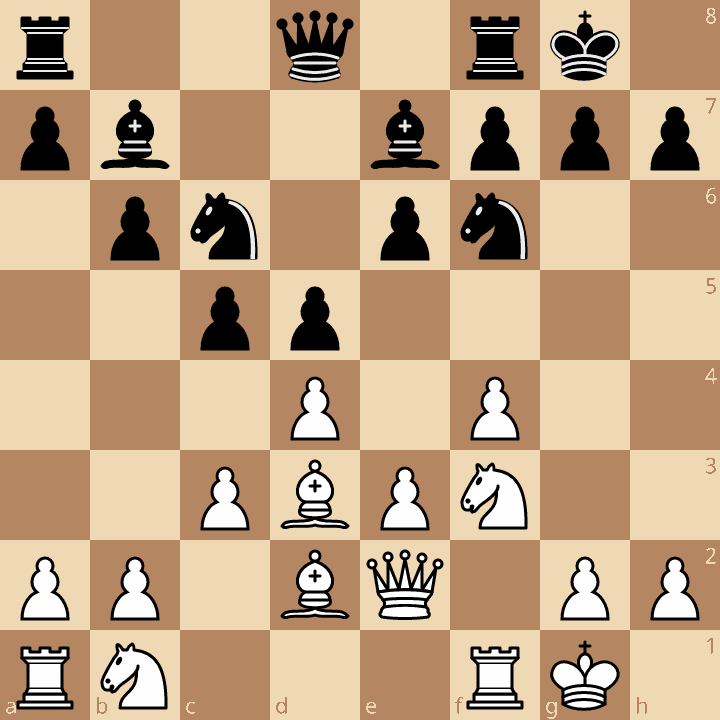
A rigid but powerful White system with pawns on d4-e3-f4-c3 and bishop on d3, aiming for a kingside attack.
Try Interactive LessonIntroduction
Lesson Content
Claim the center with your queen pawn.
d4 — The Queen's Pawn opening — White claims the center with the d-pawn, which is immediately defended by the queen. This tends to lead to more strategic, closed positions compared to 1. e4. Black's main responses: - 1. ..d5 — Queen's Gambit and Slav setups - 1. ..♘︎f6 — Indian Defenses (King's Indian, Nimzo-Indian, etc.) - 1. ..f5 — Dutch Defense
Black matches White in the center, leading to the Queen's Pawn Game. The symmetrical center typically results in strategic maneuvering rather than immediate tactical battles. White's most popular continuation is 2. c4 — the Queen's Gambit.
Support the center and prepare to develop your bishop.
White supports d4 and opens the diagonal for the light-squared bishop. The e3 pawn is the foundation of both the Colle System and the Stonewall Attack — the key difference is whether White later plays e4 (Colle) or f4 (Stonewall). The downside: the dark-squared bishop is locked behind the pawn chain. In the Stonewall, this bishop stays passive for most of the game.
Alternative Moves
Black develops naturally, controlling e4 and preparing to castle kingside. This is the most common and flexible response.
Develop your bishop to its most aggressive diagonal.
The bishop goes to its ideal square, aiming at the kingside — especially the h7 pawn. This is the defining move of the Stonewall Attack (ECO D00). From d3, the bishop supports the future f4 advance and creates latent threats against Black's castled king. In the Colle System, ♗︎d3 prepares e4. Here, ♗︎d3 prepares f4 — a completely different strategic plan.
Alternative Moves
Black challenges the d4 pawn immediately — the most principled response. By striking at White's center before the Stonewall is fully built, Black tries to open the position and exploit the locked dark-squared bishop.
Reinforce your center — keep the wall solid.
Reinforcing d4 and completing the Stonewall pawn skeleton on the queenside. The c3-d4 chain is rock-solid — Black cannot break through with ..c5 alone. White's center is secure, allowing the focus to shift to the kingside with f4. This pawn on c3 also prepares ♘︎d2, keeping the f-file clear for the f4 push.
Alternative Moves
Black reinforces d5 and opens the diagonal for the dark-squared bishop. The pawn on e6 creates a solid chain with d5, but it also locks in the light-squared bishop — a mirror of White's problem on the other side.
Complete the Stonewall pawn formation!
The Stonewall is complete! The pawns on c3-d4-e3-f4 form an impenetrable wall through the center. White now controls the e5 square — a perfect outpost for a knight — and has a clear plan: attack on the kingside. The f4 pawn also supports a future knight on e5 and can sometimes advance to f5 to crack open Black's king position.
Alternative Moves
Black develops the bishop modestly to e7, preparing to castle. The bishop stays flexible — it can later move to d6 to challenge the f4 pawn or to f6 to control e5.
Develop the knight now that the f-pawn is in place.
Now that f4 is played, the knight develops to f3 — its natural square. The knight controls e5, the most important square in the Stonewall, and prepares kingside castling. White's plan from here: castle, then maneuver the knight to e5 (via ♘︎f3-e5 or ♘︎d2-f3-e5) for a powerful outpost.
Black castles to safety. The king is now on the kingside — exactly where White's attack is aimed. This is a natural move, but Black must be alert to White's kingside buildup.
Castle to safety before launching your attack.
O-O — White castles, securing the king. The f1 rook will later support the f-file, which can become a powerful attacking avenue if the f4 pawn advances to f5 or if the position opens. With both sides castled, White's plan is clear: build up on the kingside with ♕︎e2, ♗︎d2, and aim for ♘︎e5.
Black prepares to fianchetto the light-squared bishop to b7, where it pressures the long diagonal (a8-h1). This is Black's best piece against the Stonewall — the bishop on b7 supports the d5 pawn, creating counterplay.
Centralize your queen to support the kingside.
♕︎e2 — The queen moves to e2, supporting the e3 pawn and keeping an eye on the kingside. From e2, the queen can swing to the kingside (♕︎f2 or even ♕︎h5 in some positions) and backs up a potential f5 advance. The queen also clears d1 for a rook, which can later join the attack.
Alternative Moves
The bishop fianchettoes to b7, becoming Black's most active piece. It sits on the long diagonal and supports the d5 pawn. This bishop often becomes the cornerstone of Black's counterplay against the Stonewall.
Develop your bishop — even a passive bishop has a role to play.
♗︎d2 — White develops another minor piece. The dark-squared bishop is the Stonewall's weakest piece — blocked by the e3 pawn, it has limited scope. On d2, it can reroute to e1-h4 or support the queenside. Despite its passivity, the bishop on d2 fulfills an important defensive role and keeps White's position solid.
Alternative Moves
Black develops the knight to c6, adding pressure to d4 and controlling e5. The knight may later jump to a5 heading for c4 or to e7-f5 to challenge White's kingside.
Key Takeaways
- The Stonewall pawns (c3-d4-e3-f4) create an unbreakable center
- f4 must come before ♘︎f3 — the knight would block the f4 push
- e5 is the key outpost — aim to plant a knight there
- The dark-squared bishop is the main weakness — accept and compensate
- The Stonewall works against almost any Black setup — a reliable system weapon
Now play it through
Step through every move on a real board, try the wrong ones, and ask Knighty why they fail.
Related Lessons
Summary
Ready to Practice?
Next in this opening family
Albin Counter-Gambit - Fianchetto Line
Take this lesson with you
Free account requiredWith every variation — opens in Lichess & ChessBase